Fabrics and care · 8 October 2026 · 3 min read
Soft net vs stiff net: what is can-can?
Soft net vs hard net: how drapey net for dupattas and sleeves differs from stiff can-can net, which sits hidden under a hem to give a frock or skirt its flare.
 Inspiration
Two nets with opposite jobs
Soft net and stiff net are both open mesh fabrics, usually nylon or polyester, but they are made to do opposite things. Soft net drapes and is meant to be seen, in dupattas, sleeves and overlays. Stiff net, often sold as can-can, holds its shape and is meant to stay hidden, gathered under a skirt or set inside a hem so the outer layer stands away from the body.
If a shop lists “hard net”, it usually means the stiff kind. For how net compares with tulle and lace as outer fabrics, see our net and lace guide; this article is about the difference in stiffness and what each is for.
Soft net: the layer you see
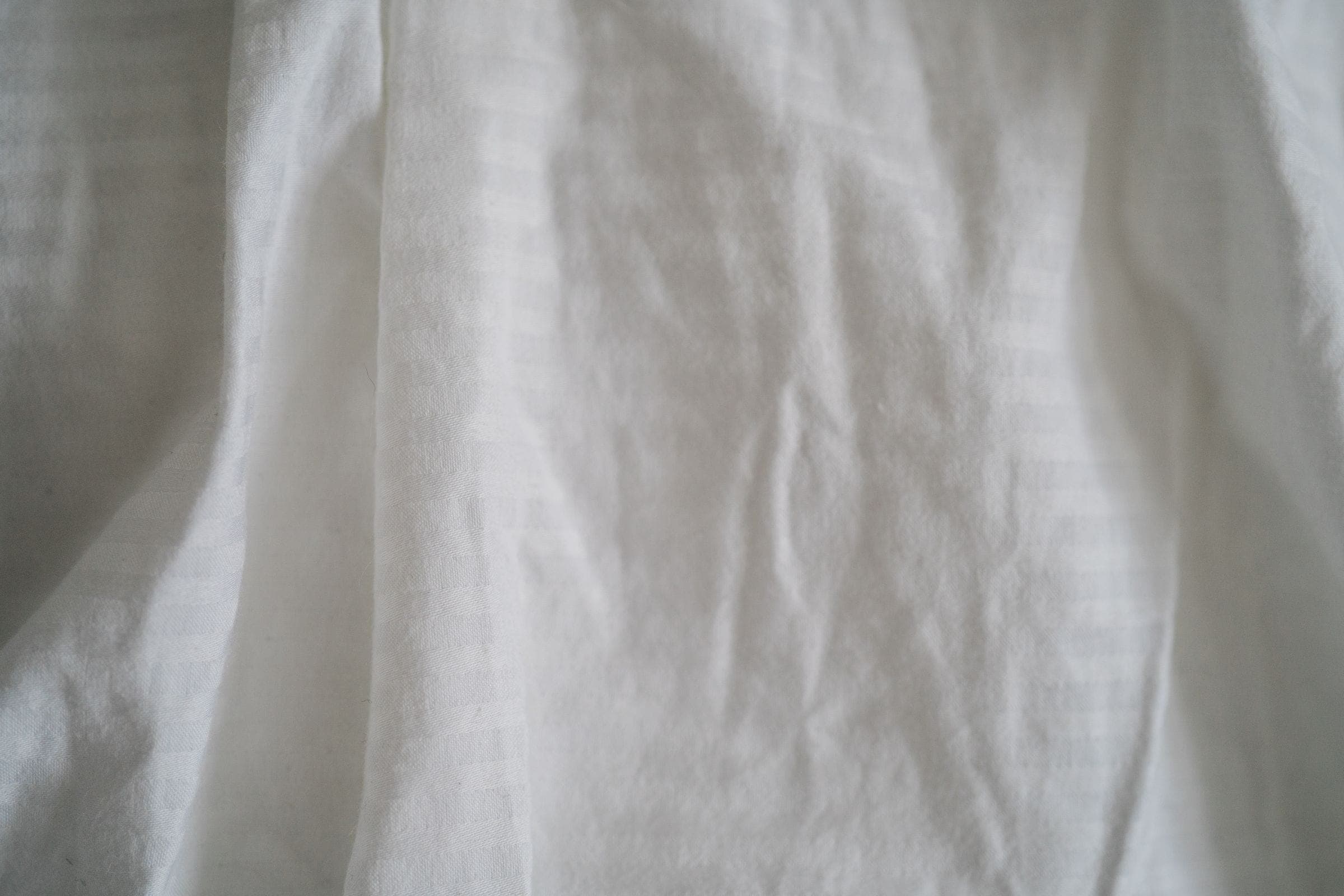
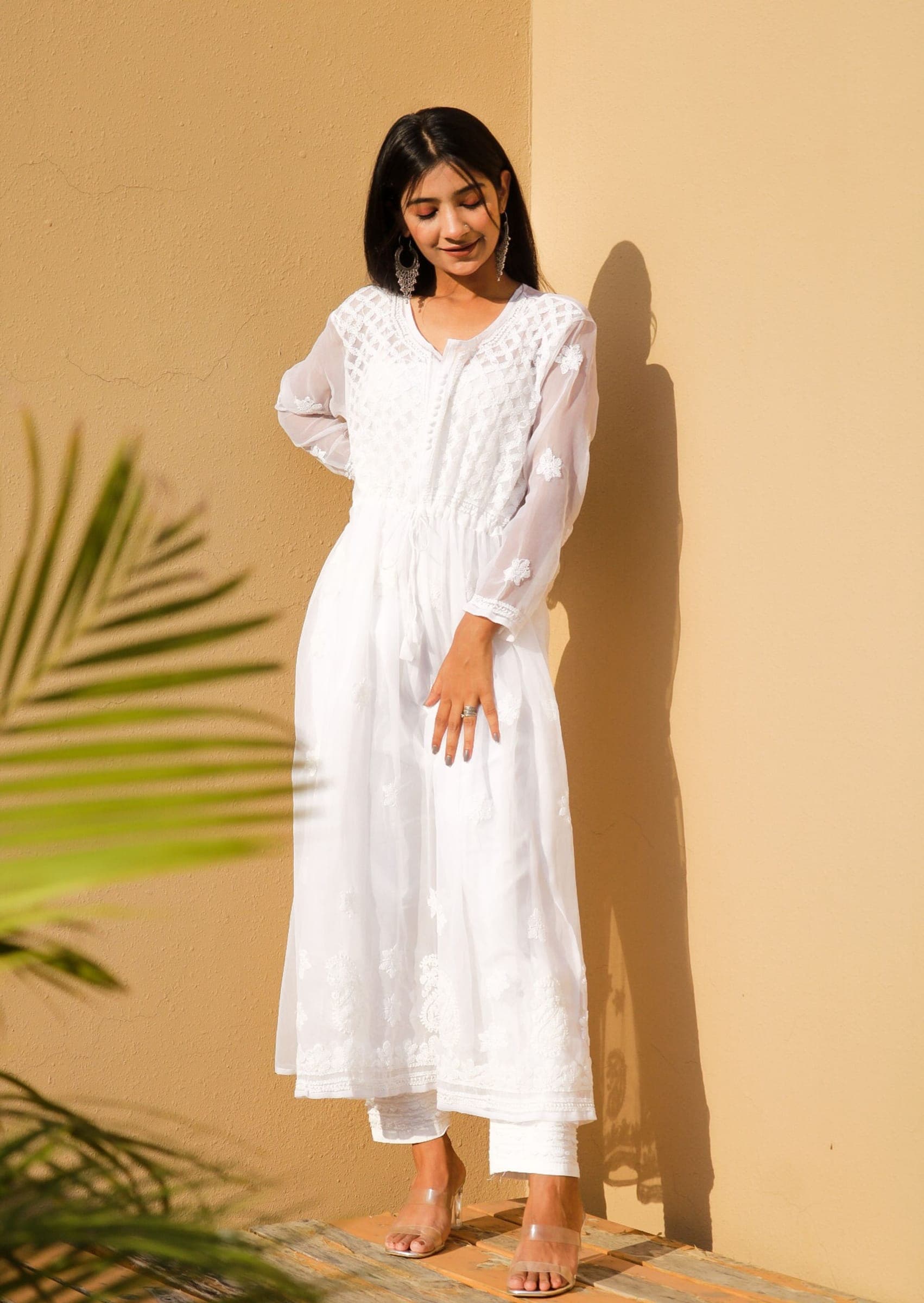
Soft net has a fine, flexible mesh that falls in folds rather than holding a shape. It is light, see-through and has a gentle sheen or a matt look depending on the yarn. Because it is so open it is often embroidered or edged with lace, and it is the base of many formal dupattas.
Wherever soft net covers the body, think about what sits underneath. Our article on kameez lining covers when a lining or a separate inner slip is needed. Typical uses:
- Dupattas: it lies over the shoulder without bulk and shows off a border.
- Sleeves: sheer sleeves on a lined kameez, with or without a lining inside the sleeve.
- Overlays: a layer over a plain kameez or skirt that softens the colour beneath.
- Yokes and panels: set into a heavier fabric for a lighter, airier section.
Can-can: the layer you do not see
Can-can is a stiffened net that springs back when you crush it. The name is borrowed from the very full petticoats worn for the French can-can dance. In dressmaking it goes under skirts and flared kameez to push the outer fabric out, either as a separate petticoat made of gathered tiers or as a band stitched inside the lower part of a skirt or frock.
It is scratchy and catches on tights, so it normally sits between the outer fabric and a soft lining, never against the skin. It also adds weight and some warmth, which you notice on a hot day. It earns its place in pieces such as these:
- A kalidar frock or long flared kameez that should stand out rather than cling.
- A gathered or circle skirt in a soft fabric that would otherwise collapse against the legs.
- A full party skirt where the shape of the hem is the whole point of the design.
Telling them apart in a shop or a parcel
Labels are not always helpful, since “net” covers both. A few quick checks settle it.
- Squeeze it: soft net stays crumpled or falls flat; can-can springs back.
- Hold it by one corner: soft net hangs in folds; stiff net sticks out at an angle.
- Rub it on your wrist: soft net feels smooth or faintly silky; can-can feels rough.
- Listen: stiff net rustles when it moves.
Asking for flare in a made-to-measure order
Flare comes first from the cut: more panels, a wider hem or a circular shape. A stiffened layer then holds that shape out. If you want a fuller look, describe it or send a photo, and say whether you want visible volume or only a soft lift. We confirm what is possible with your fabric and design in the written quote, including whether a stiff layer makes sense or a fuller cut alone will do.
For a piece based on your own idea, the Send Your Design page explains how we work from photos and notes, and you can start a design quote whenever you are ready.
Common questions
Does can-can lose its stiffness?
It can soften with heat, humidity, washing and being crushed in storage. Hanging the garment, or storing it loosely rather than packed tight, helps it keep its spring for longer.
Can soft net be used for a whole kameez?
Yes, as an outer layer over a lining or inner slip, since net on its own is see-through. The lining colour shows through and changes the overall shade, so choose it with care.
Is can-can the same as tulle?
Not quite. Tulle is a fine, light net that can be soft or slightly crisp, while can-can is made specifically to be stiff. Several layers of crisp tulle can do a similar job with a lighter result.