Ordering to Dubai and across the Emirates
Most of our UAE enquiries mention Dubai, so here is what helps there. Give a mobile number that you answer, because UAE couriers usually call or message before they deliver, and include your building name, area and, if you have one, your Makani number. If you live in a tower with a concierge, say whether the parcel can be left there.
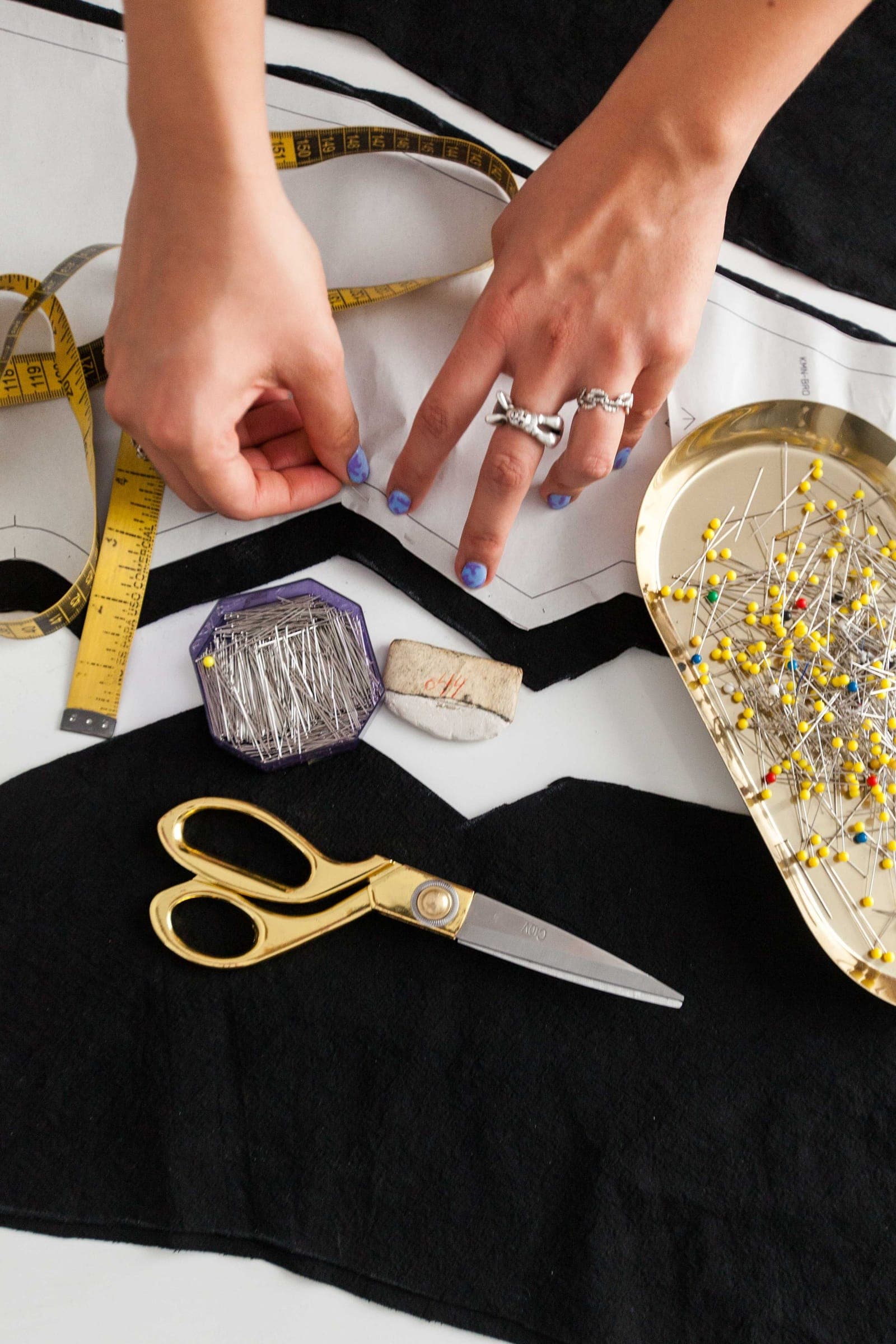
Dubai already has plenty of tailors, so why order from us? Because you can send a photo from Instagram at midnight, choose the fabric from home, and have the outfit made to your measurements without visits back and forth. If you have fabric you bought at Meena Bazaar in Bur Dubai or in Satwa, Stitching Only works too, as long as we confirm it before you send it.
We deliver to every emirate: Dubai, Abu Dhabi, Sharjah, Ajman, Umm Al Quwain, Ras Al Khaimah and Fujairah. Ordering works the same everywhere, and the quote covers delivery to your address wherever it is.
If you sell abayas or occasion wear in the Emirates, through an Instagram shop or a boutique in Dubai, and need an abaya manufacturer for your brand, brand manufacturing covers design development from your references and samples, cut and sew production with embroidery, fabric sourcing, attaching your own labels, and packaging. We have no factory, office or warehouse in the UAE: everything is made in Pakistan and shipped to you. Quantities, development costs and timelines are quoted for each project, and the 5 to 7 working days for a single personal order do not apply to brand work.
Ordering from elsewhere in the Gulf? Our Gulf overview covers ordering across the region, and we also have guides for Saudi Arabia, Qatar, Kuwait and Bahrain. You can also see all our locations.
Custom abayas for the UAE: black, white, butterfly and more
An abaya is often the piece you wear most, so it is worth having one that fits. Custom abaya stitching starts the same way as a suit: you choose the cut, an open or closed front, the sleeve shape and the length with the shoes you actually wear, and we make a made-to-measure abaya to those numbers. If you already own an abaya that sits well, you can measure that instead; just tell us they are garment measurements, not body measurements. Our custom abayas page explains each choice, and our abayas for the UAE page shows eight designs picked for the Emirates.
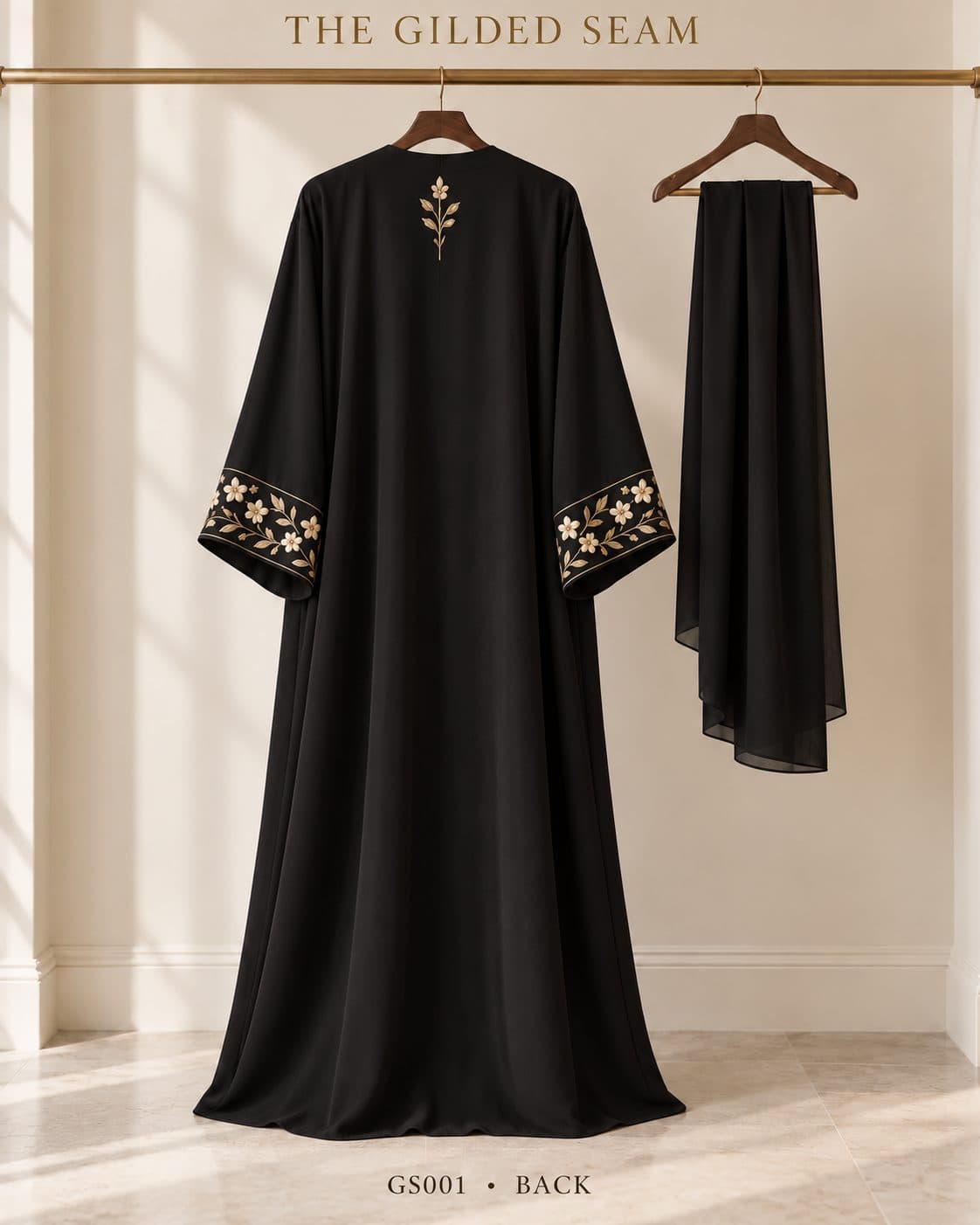
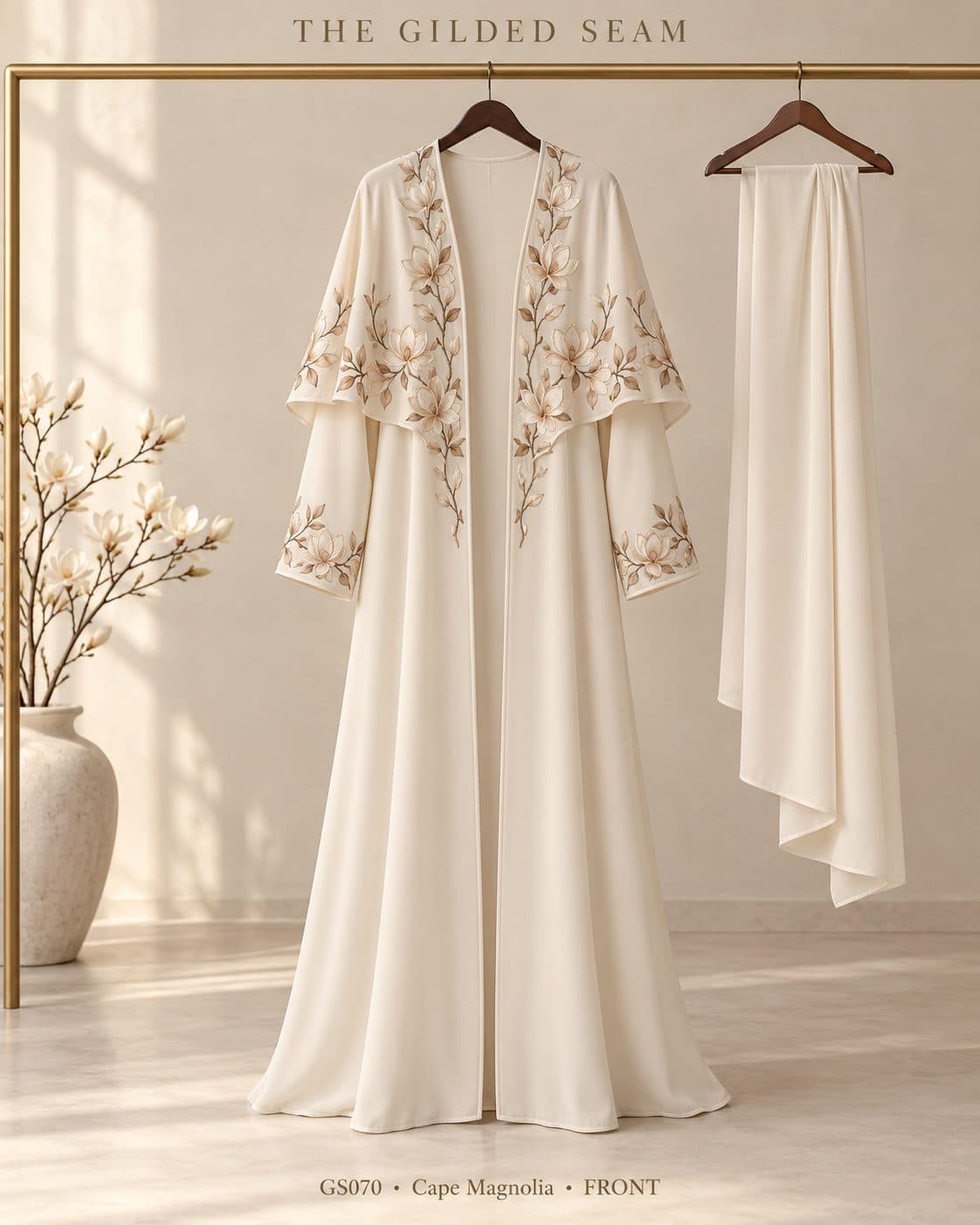
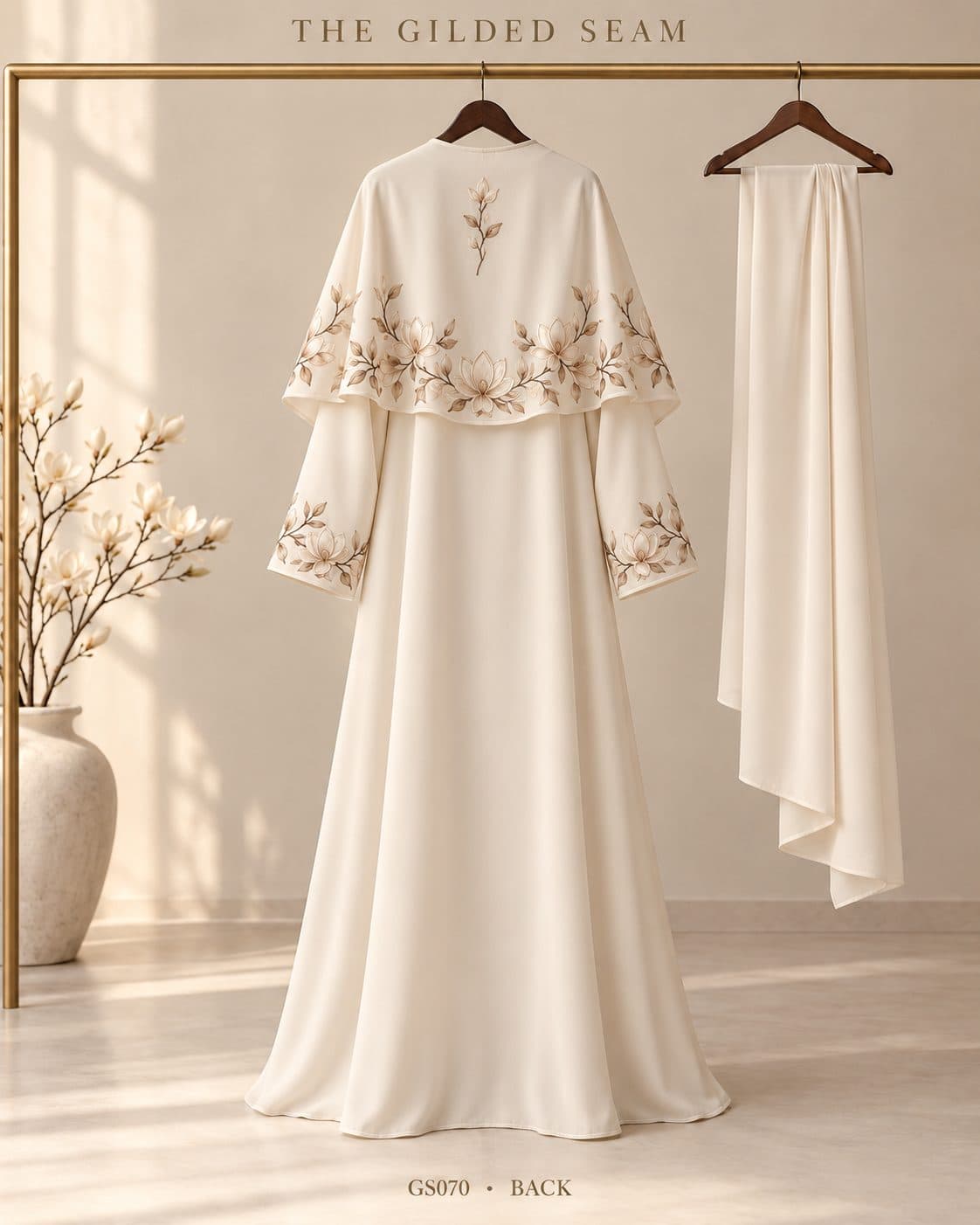
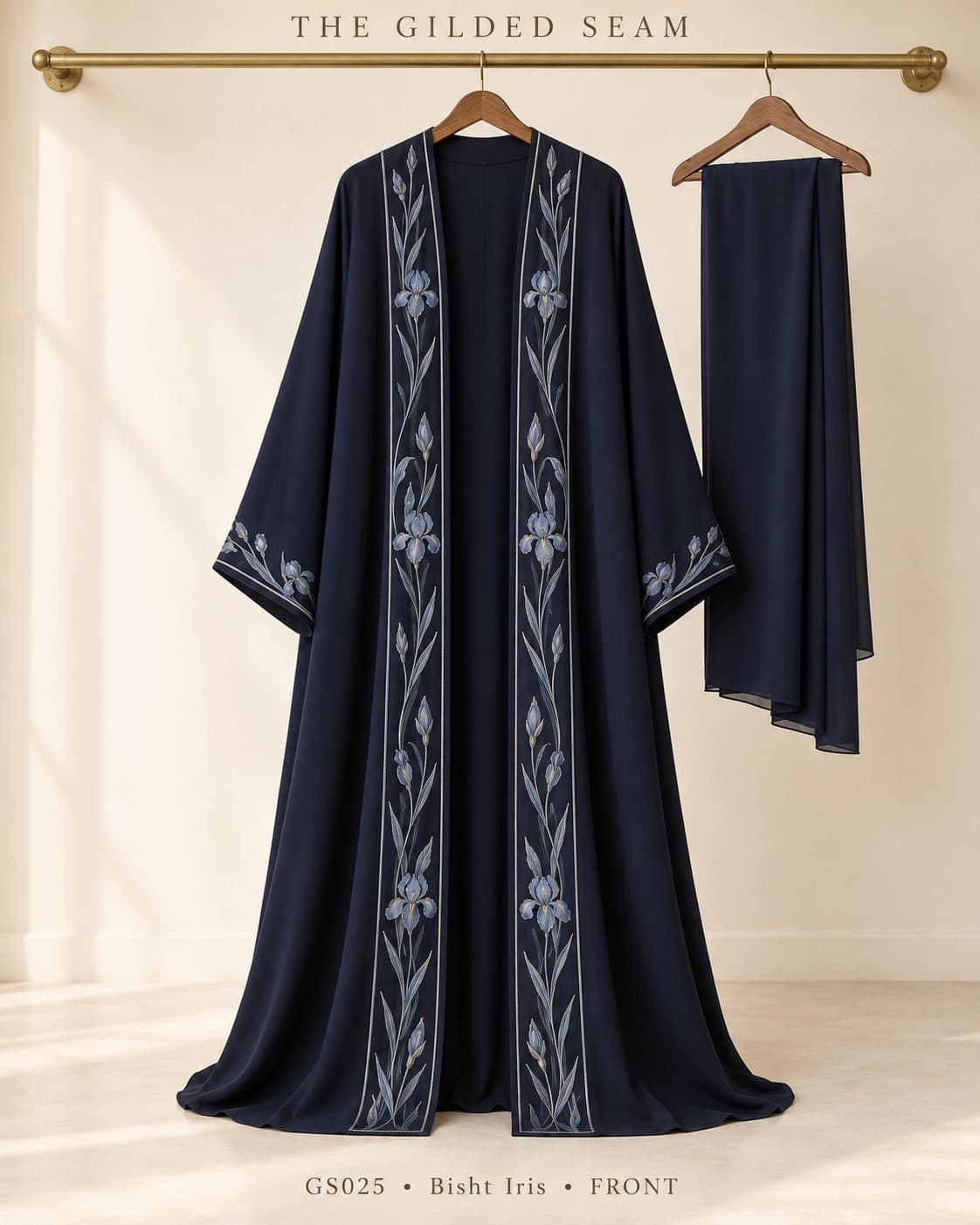
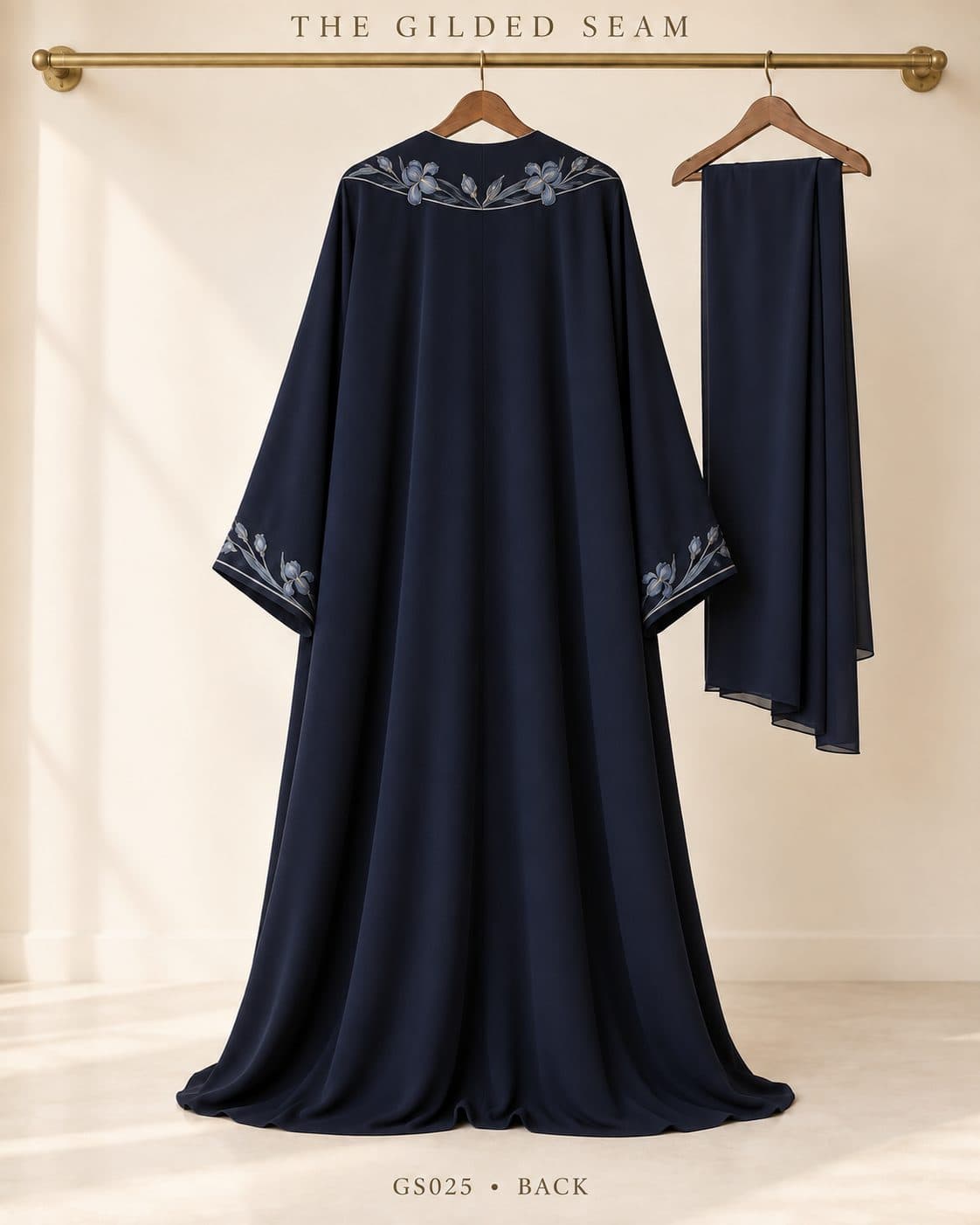
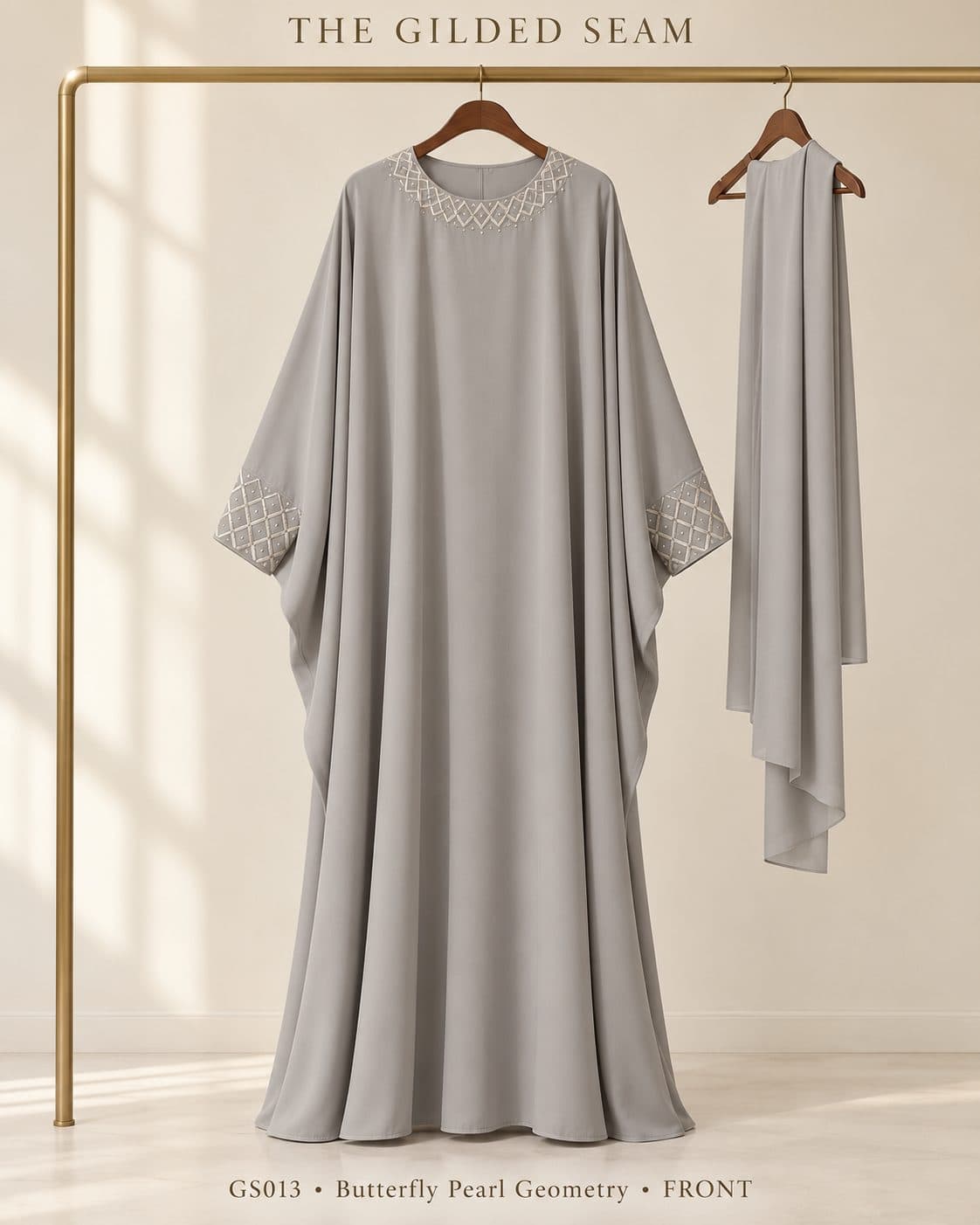
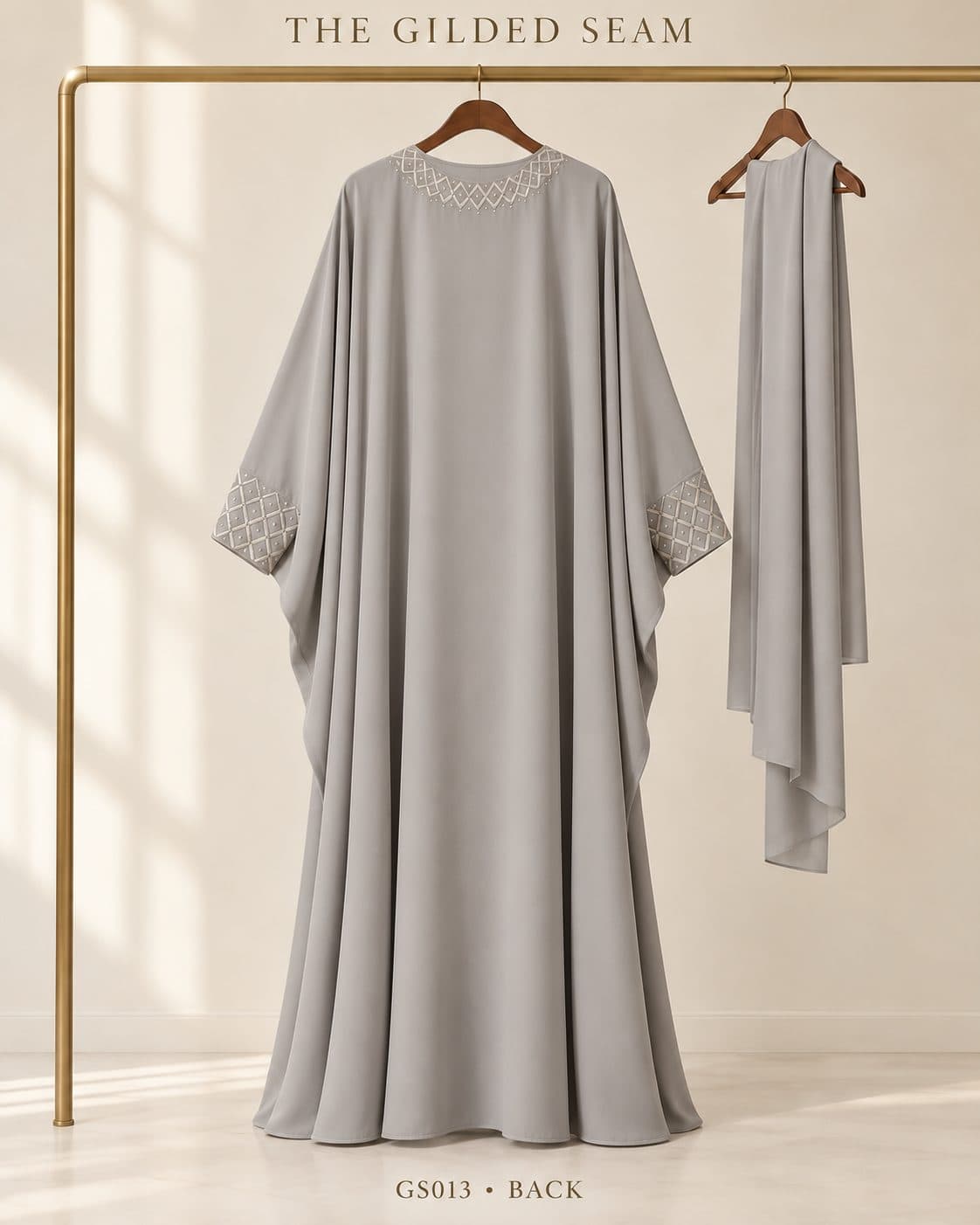
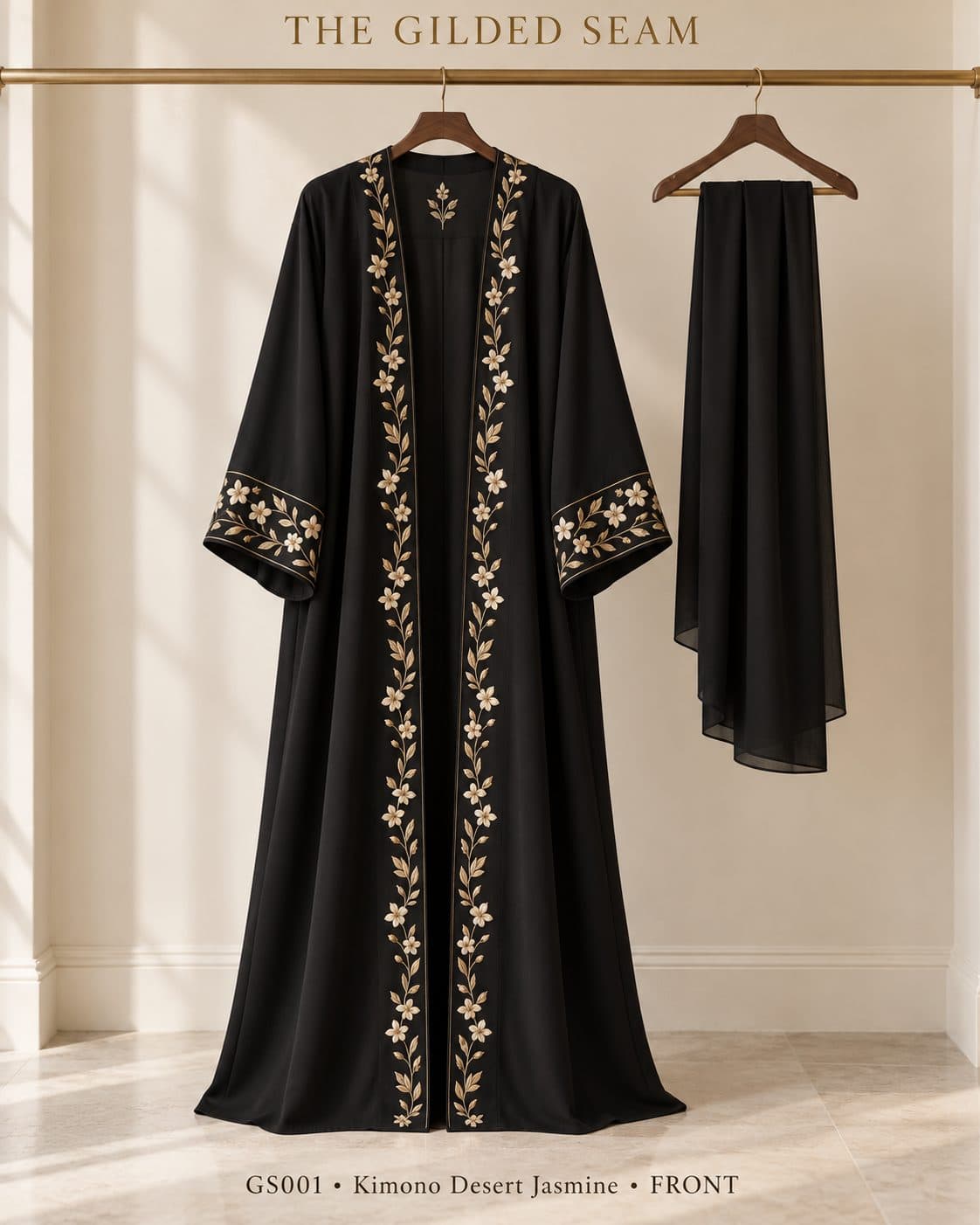
For a ready starting point, the abaya collection has kimono, butterfly, bisht, cape and layered shapes among others, each with a matching scarf, in nida, crepe or chiffon, in sizes S to XL or made to measure. The pictures show how each design is planned; they are not photographs of finished pieces. Nida is a practical choice for the school run or the office, and chiffon makes a lighter layer for the hottest months.
Any of our abaya designs can be made in any colour, agreed in your quote. Black is the classic everyday choice, and a basic black abaya with no embroidery at all is a perfectly good order. White and ivory look fresh on a summer morning, while pink, dusty mauve, maroon and burgundy suit Eid visits and evenings out. If you have a classic Emirati abaya in mind, plain and floor length with the detail kept to the cuffs and front edges, send a photo and we cut it to your length.
The butterfly abaya, also called farasha, has wide sleeves joined to the body, so it moves well and hides the outline; our butterfly abaya guide shows how it drapes. A kaftan abaya is the loosest closed shape, wide and straight from the shoulders with a simple neckline, and our guide to the abaya and the kaftan explains where one ends and the other begins.
Embroidered abayas are where most of the choices sit. With custom embroidery we work by hand or by machine, and with zari, beadwork or sequins. Not every method suits every piece: it depends on the fabric, how the garment is made, how dense the design is and where it goes, so the method is confirmed in your quote. Fine zari along the cuffs suits an evening out in Abu Dhabi, while a lighter machine border is easier to live with on an abaya you wear every day.
Jalabiyas and kaftan dresses for the UAE
A jalabiya is a dress, not a cover. It is long and loose, pulled on over the head and worn on its own at home, when you host, and at Ramadan and Eid gatherings, with its embroidery on the neckline, the front and the cuffs. We make custom jalabiyas to your measurements from a photo or a short description, with the length, sleeves and embroidery agreed in your quote. If the difference still feels blurry, our guide to the abaya and the jalabiya sets it out.
A kaftan dress is wider and straighter again, with nothing fitted at the waist, which makes it one of the easiest things to wear in a UAE summer. Through custom kaftans you can send your own design, or start from the Sage Arch Kaftan in our designs: long and sage green, with a band collar and arches embroidered down the front and around the wide cuffs.
Tell us where you will wear it. For a jalabiya at home in July we suggest something light; for an iftar you are hosting, a fabric with more drape and fuller embroidery. We send photos of the fabric we propose with your quote, and nothing is cut until you agree it.
Pakistani dresses in Dubai, made to measure
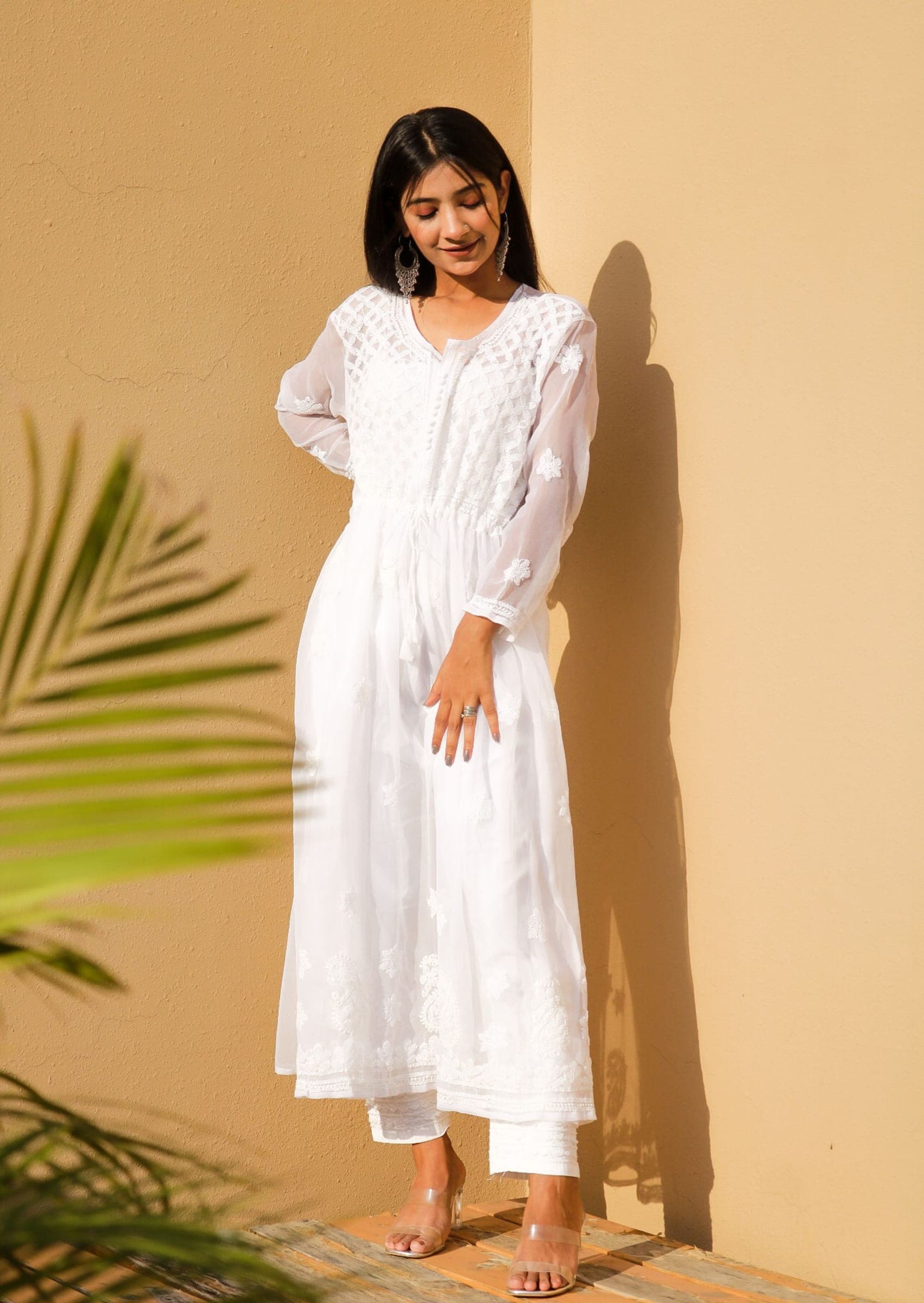
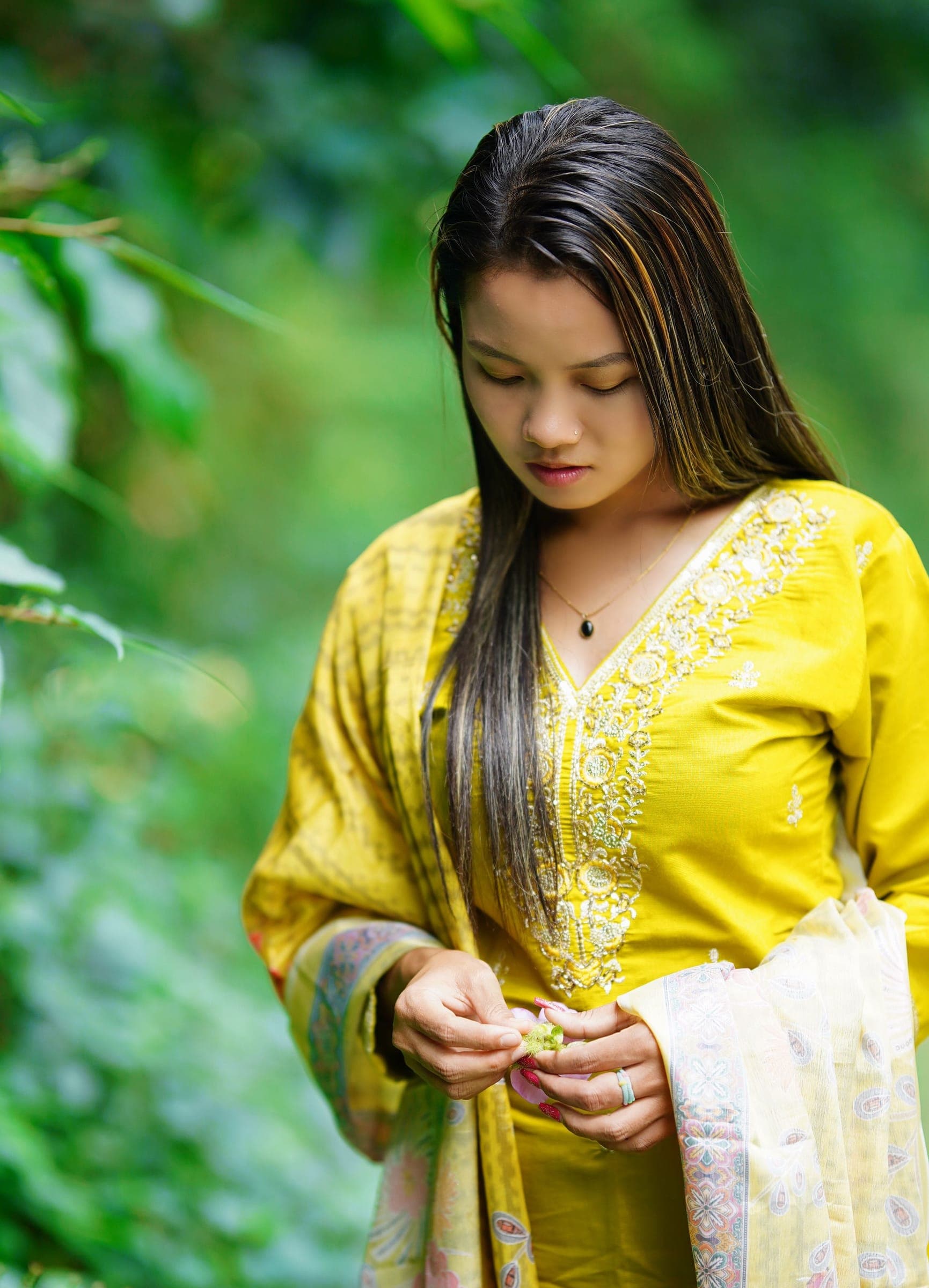
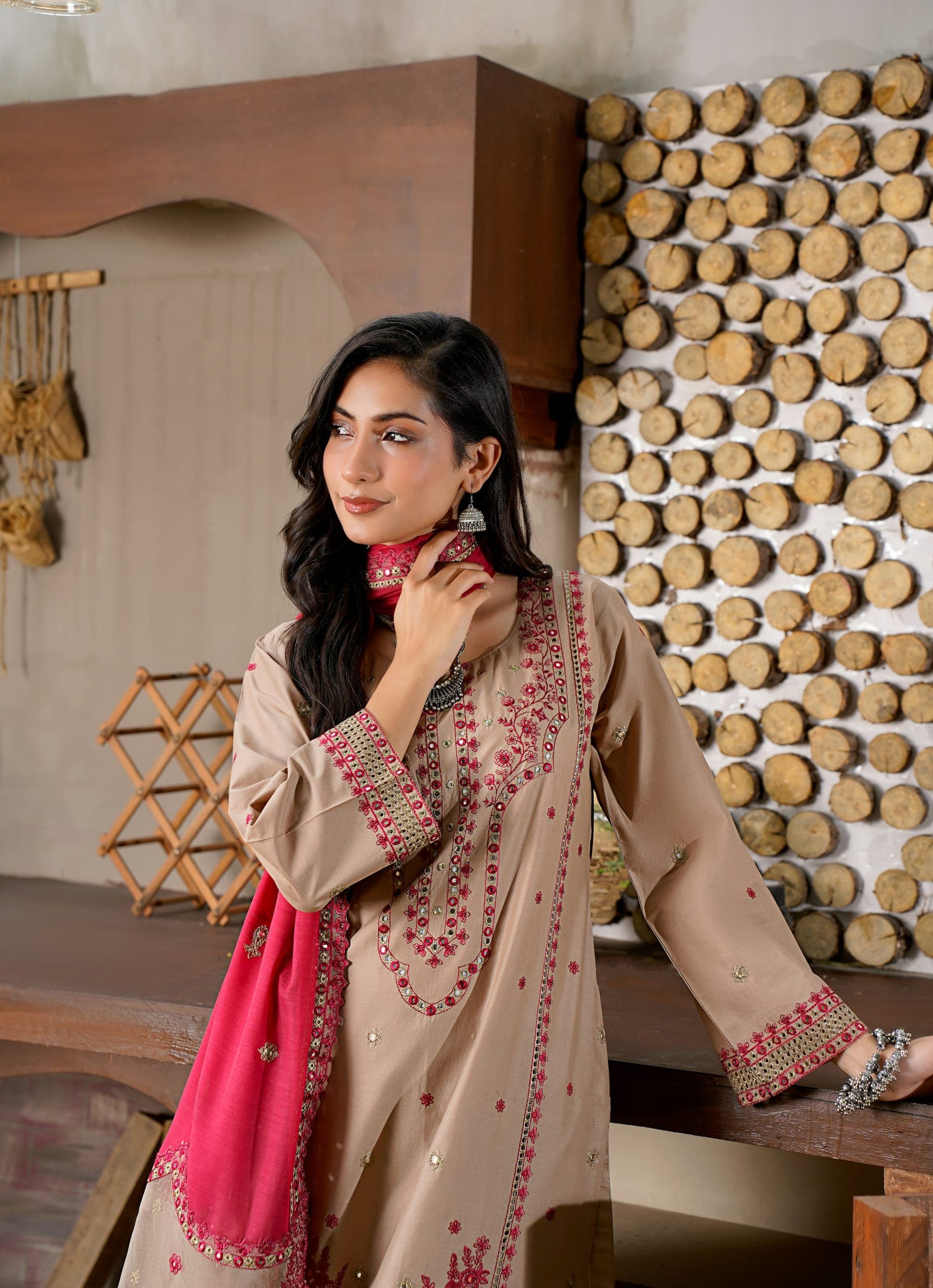
If you grew up in shalwar kameez and miss suits from home, the choice in Dubai is often a readymade salwar kameez in set sizes or a tailor who needs two visits. We make Pakistani dresses for women to your measurements in Pakistan instead: three-piece and two-piece salwar kameez, kurtas, embroidered suits for Eid, and frocks, from a flared kalidar frock to a long, plain dress that sits smoothly under an open abaya. Each one is cut after you order, so the sleeves and kameez length are yours, not a size chart’s.
For a wedding you are attending in Dubai, as a guest, we make Eid outfits and casual party wear, dressed up without being heavy. If your idea comes from an Instagram photo, upload it and tell us which details matter to you; we will say honestly if anything needs to change for your fabric. Our buying guide to Pakistani suits in Dubai and our notes on an online ladies tailor for Dubai go further.
For most of the year the right fabric is light and breathable: lawn and cambric are cool against the skin in the heat and hold up to frequent washing. Offices, malls and cars are often cold with air conditioning, so a lined kameez or a slightly heavier cotton is worth thinking about for workwear. From December to February the evenings cool down, and linen or khaddar suits a desert evening or a winter Eid.
If you wear an abaya over your outfit, tell us. A kameez that sits smoothly underneath, with a softer collar and sleeves that do not bunch at the wrist, is easy to plan into the design. The fabric guide compares every fabric we use, and our designs show the shapes you can start from.
Delivery to the UAE and import charges
Your outfit is made in Pakistan and couriered to you, so it enters the UAE as an import. The UAE government portal u.ae says a 5 per cent customs duty is imposed on goods imported from abroad, and the Ministry of Finance explains that VAT applies to imports of goods, at the standard rate of 5 per cent. In 2026 Dubai Customs raised the customs duty exemption for e-commerce shipments to AED 1,000 of CIF value.
You do not need to work any of that out. Your written quote includes delivery to your address and whatever duty, VAT and courier fees apply, so nothing is due at the door. Shipping time is separate from the 5 to 7 working days we take to make the outfit, and our guide to processing and worldwide delivery explains how the two add up.
 £100Regular £125· 20% offDesign previewSale20% OFF