
Unstitched suits · 8 October 2026 · 4 min read
Can an embroidered front have a button opening?
A front open kameez with an embroidered neck works when the design has a plain or mirrored centre. When a placket spoils it, and which openings to ask for instead.
 Inspiration
Sometimes, depending on the centre line
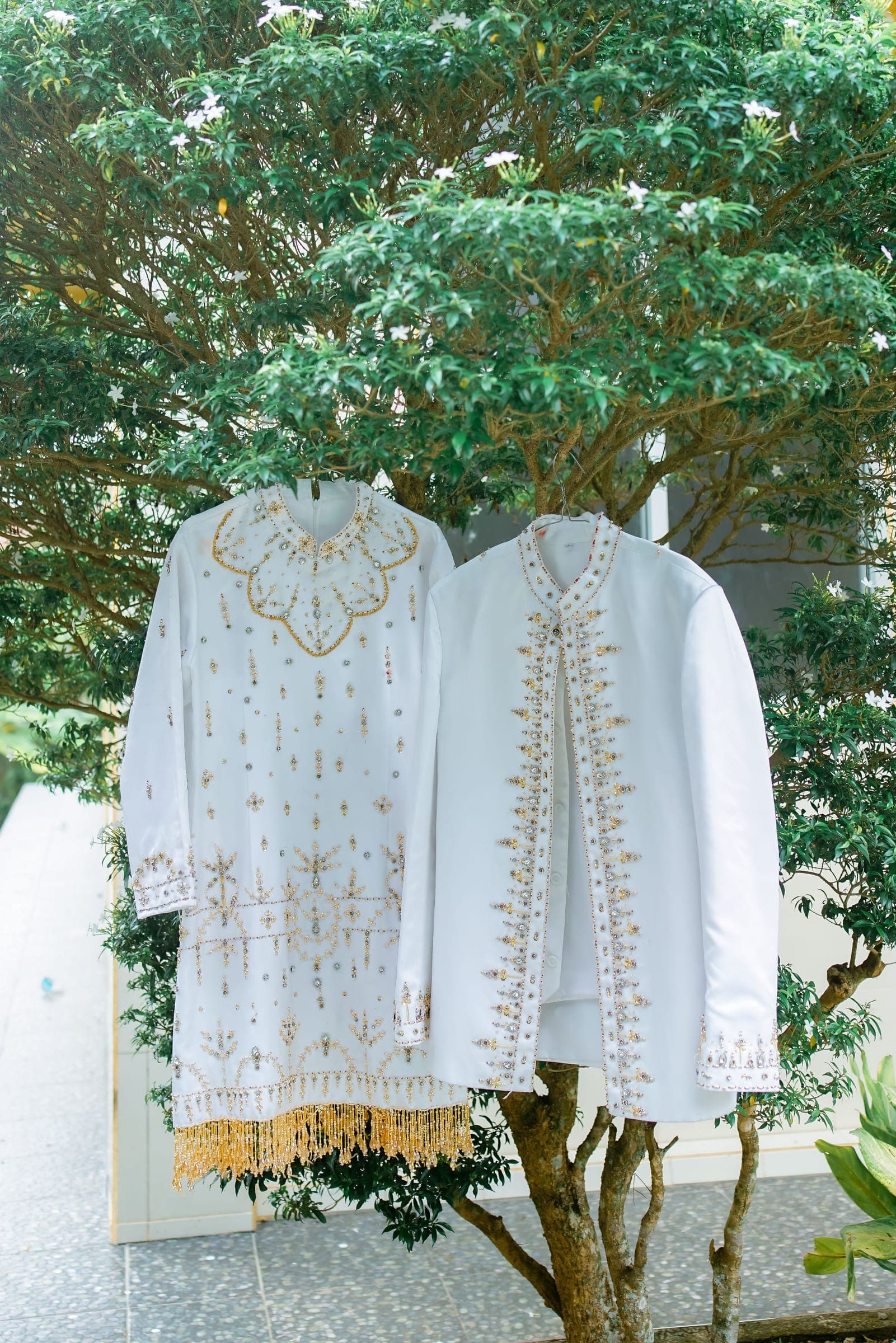
Yes, when the embroidery leaves the centre-front line plain or is mirrored either side of it, and when the opening can be cut without going through dense work. When a single motif sits right on the centre, ask for the opening at the side, the shoulder or the back instead, so the design stays whole.
If you want an opening on the front of the kameez, decide before the fabric is cut. Once the front has been made without one, adding it means taking the garment apart, which we do not do.
What a centre opening does to the design
A button placket needs the front cut down the middle and one side to overlap the other where the buttons fasten. That overlap hides a strip of the design, so a centred motif ends up with its two halves sitting slightly off, unless the cut is planned around it. A concealed placket, with the buttons hidden under a flap, is neater, but still needs that strip.
Cutting through embroidery also leaves thread ends at the cut edge. Machine embroidery can be secured and enclosed in the placket, but dense or raised work makes a bulky, stiff edge that does not lie flat and is hard to button through.
When a front opening works
Look at where the embroidery actually sits on your front. A placket is usually possible in these cases.
- The embroidery is two mirrored panels with a plain strip running down the middle.
- The work is a frame around the neckline, with plain fabric below it where the placket runs.
- The embroidery is light and scattered, so a lost strip does not break a motif.
- The opening is short and stops above the worked area, like a keyhole or a round neck with a slit.
Other openings to ask for
When the centre should stay whole, the opening can go somewhere the embroidery is not. Each one is a general option to ask about, confirmed for your fabric in the written quote.
- A side-seam zip: a concealed zip in one side seam makes a fitted kameez easier to put on and leaves the front untouched.
- A shoulder opening: a short opening along one shoulder seam, closed with buttons or press studs.
- A back opening: a keyhole with a button loop, or a back zip, under the hair or dupatta.
- An off-centre front edge: an overlap running along the edge of the embroidered panel rather than through it, in the spirit of an angrakha.
Openings for nursing
If the opening is for feeding, a centre placket is often not the most practical place anyway. Vertical openings at the side fronts, hidden under a pleat or behind the side seam, keep the embroidered centre intact and stay discreet. Our guide to nursing-friendly kurtas compares the common types.
Tell us what the opening is for, where you would like it and how you want it to close, and include photos of the embroidered front laid flat. With Stitching Only, start with a quote for your own fabric; we confirm what is possible on your fabric and design before you send it.
Common questions
Can buttons be sewn on top of embroidery?
Flat buttons can sit on lightly embroidered areas, but buttonholes through dense work are bulky and can fray. Loops or press studs are usually kinder to the embroidery than buttonholes.
Is a zip or a button placket better for an embroidered kameez?
A zip in a side seam avoids the embroidery entirely, so it is often the safer choice. A front zip needs a straight cut through the design, much like a placket.
Can an opening be added to a kameez I already own?
Not by us, as we do not alter existing clothes. The opening needs to be planned before the fabric is cut for a new outfit.
