Fabrics and care · 5 October 2026 · 4 min read
Satin vs silk: a weave and a fibre
Satin vs silk explained: silk is a fibre, satin a weave that can be made from silk or polyester. How they differ in shine, slip and breathability, and what to ask.
 Inspiration
Is satin silk?
Not necessarily. Silk is a fibre and satin is a weave, so they are not two versions of the same thing. Silk is the natural filament spun by silkworms. Satin is a method of weaving fine threads so that the face of the cloth is smooth and glossy. Satin can be woven from silk, but a great deal of it is polyester, and the word alone tells you nothing about the fibre.
So the real comparison is three-sided: silk woven as satin, polyester woven as satin, and silk woven as something else entirely.
What the satin weave does
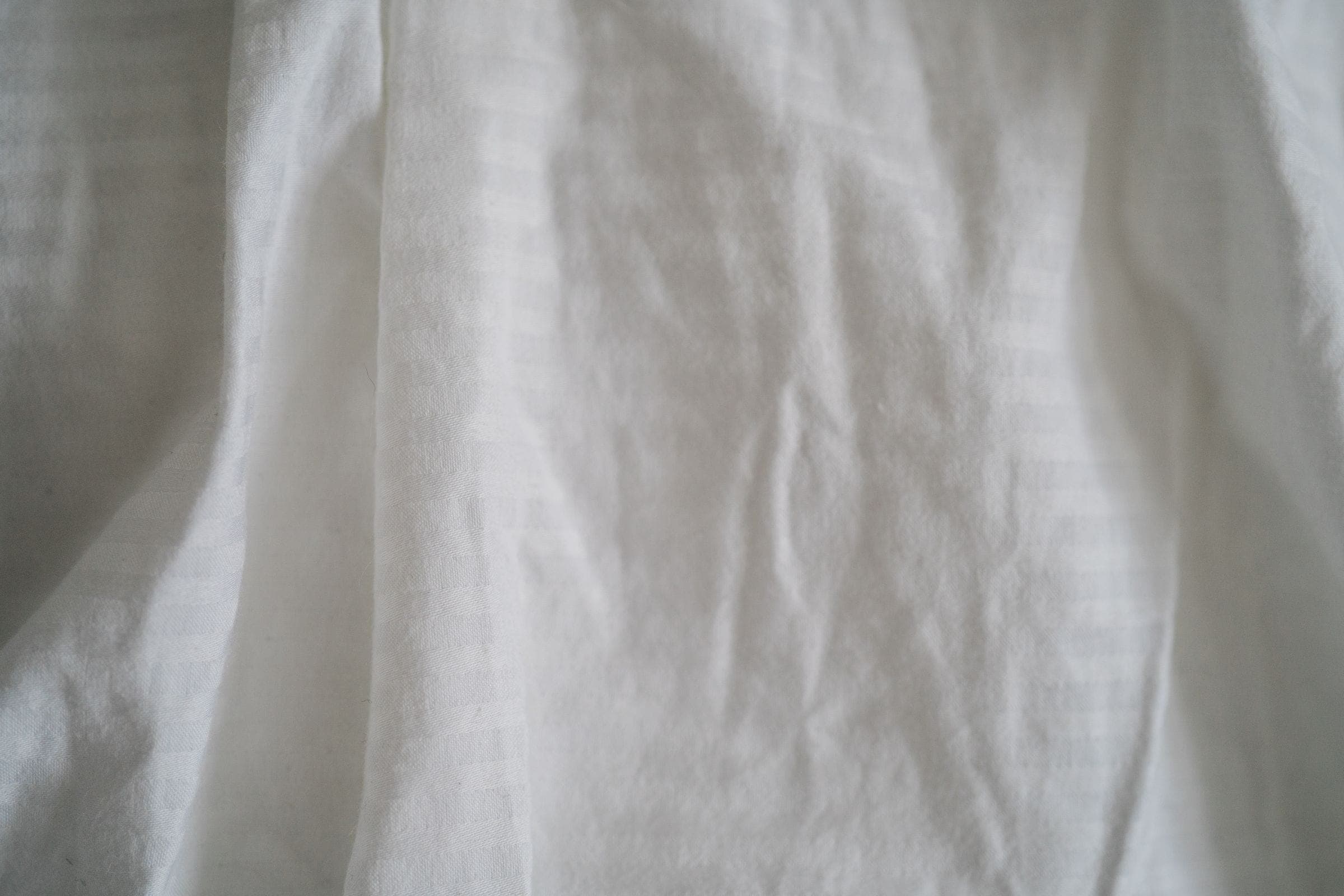
In an ordinary plain weave, each thread goes over one and under one, like a darned patch. In satin, each thread on the face passes over several others before it dips under a single one, and those dips are scattered so that they do not line up. Long stretches of thread lie side by side on the surface and reflect light evenly. That is the shine.
The same structure explains satin’s habits. With so few crossings the cloth is supple and slippery, the back is duller than the face, and the long surface threads catch on rough skin, rings and bag clasps. When the same weave is made in cotton it is usually called sateen, and the gloss is gentler.
Silk satin and polyester satin compared
- Shine: silk satin glows softly and changes as it moves. Polyester satin is brighter and more uniform, closer to a mirror.
- Touch: silk feels warm, dry and almost weightless. Polyester satin feels cooler and slicker at first and can turn clammy.
- Breathability: silk absorbs moisture and lets the skin breathe. Polyester absorbs almost none, so it holds heat and can build up static.
- Slip: both slide off a hanger and off the shoulder. Silk satin is, if anything, the more fluid of the two.
- Creasing and marks: polyester satin shrugs off creases and water. Silk satin creases, and some silks show a mark where water has dried.
- Care: polyester satin is usually washable at home. Silk satin is commonly dry cleaned or washed very gently; the label decides.
- Cost: silk satin costs far more to produce, which is why most satin in everyday collections is polyester.
Silk that is not satin
Shine is not proof of silk, and a matt surface is not proof against it. Silk is woven into chiffon, organza, crepe and the slubby, low-sheen cloth sold as raw silk, none of which looks like satin. Our guide to cotton silk and raw silk describes the quieter members of the family, and our piece on matte or shiny abaya fabric looks at how sheen changes an outfit.
What to ask a seller
In fabric shops, “satin silk” and “silk satin” are often used loosely for any glossy cloth, including pure polyester. A few direct questions sort it out.
- What is the composition? Ask for the fibre in plain words: silk, polyester, viscose, acetate or a blend.
- Is it washable? A confident “yes, in the machine” usually points to polyester.
- How heavy is it? Light satin drapes and clings; heavy satin holds a shape. The right one depends on the garment.
- Can a thread be tested? Some sellers will burn a loose thread: silk smoulders and smells like singed hair, while polyester melts into a hard bead.
Having satin stitched
Satin of either fibre is demanding to sew. It slides while it is being cut, frays readily, and keeps the holes left by pins and unpicked stitches, so the design and measurements need to be settled before the first cut. Its sheen also changes with direction, so pieces are laid the same way up. Simple shapes with few seams show it off, and a lining helps a satin kameez hang without clinging; see whether a kameez needs lining.
If you have a satin outfit in mind, send your design with a reference photo and say what you know about the fabric. Ask for any detail you want in the quote, and we confirm what is possible on your fabric and design. You can start with your design here.
Common questions
Which is better in hot weather, silk satin or polyester satin?
Silk satin, because silk absorbs moisture and breathes, while polyester traps warmth. In real heat a light cotton is cooler than either, so satin of any kind is more comfortable in the evening or indoors.
Is sateen the same as satin?
They share the same kind of weave. Satin is normally made from continuous filament such as silk or polyester and is very glossy; sateen is made from cotton and has a softer, quieter sheen.
Can polyester satin be ironed?
Yes, with care: a low setting, on the reverse side, ideally through a pressing cloth. Too much heat can glaze or melt the surface, so test a hidden corner first and follow the care label.