
Unstitched suits · 5 October 2026 · 3 min read
What does semi-stitched mean, and what is left to sew?
The semi stitched meaning: a suit, frock or gown that is partly sewn and left open for final sizing. What is done, what is left and how “fits up to” works.
 Inspiration
The short definition
Semi-stitched means partly sewn. The decorated body of the garment has been cut and put together, but the seams that set the size are left open or loosely tacked, and several pieces still have to be attached before anyone can wear it. It is sold that way so that one garment can be finished for a range of sizes.
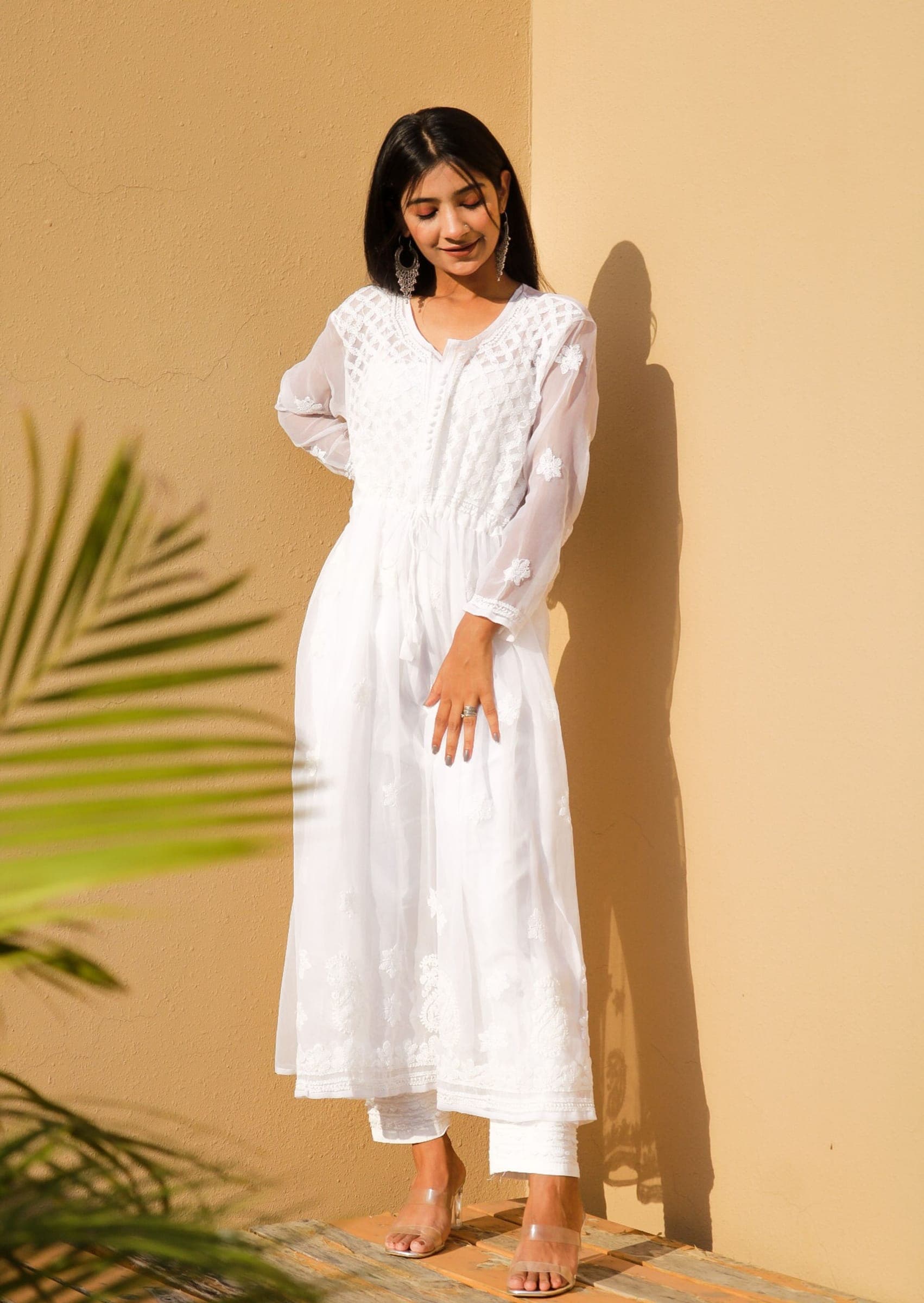
The term is used mostly for heavily worked occasion wear: flared frocks and anarkalis, gowns, lehenga-style skirts and some embroidered suits. Everyday lawn is rarely sold like this. It comes either unstitched or ready to wear.
What has been done, and what has not
Listings vary, so read yours line by line. As a general pattern:
- Usually done: the embroidery, the joining of flared panels into a skirt or body, the hem, and often the neckline.
- Usually left open: the side seams, so the bust and waist can be set.
- Usually loose in the pack: the sleeves, which arrive flat and unattached, and any lining.
- Usually untouched: the trouser or shalwar fabric and the dupatta, which are plain unstitched lengths.
- Still to add: fastenings such as a zip or hooks, and the final press.
How “fits up to” sizing works
A semi-stitched listing gives one number, most often a bust measurement, described as the size it fits up to. That is the largest the garment can be made. For anyone smaller, the open side seams are closed further in, and the surplus is trimmed or left inside as seam allowance.
What the number does not tell you is everything that is already fixed. The length, the depth and shape of the neckline, the amount of flare and, on a frock, the height of the waist seam were all decided when the body was assembled. Shoulder width and armhole size can often be adjusted only a little. If you are much shorter, taller or smaller than the design assumes, taking in the sides will not put the proportions right. Our kalidar frock guide shows where those proportions sit on a flared cut.
Semi-stitched compared with unstitched
An unstitched suit is flat fabric. Nothing has been decided, so the neckline, sleeve length, kameez length and ease can all be set from your measurements. A semi-stitched piece has traded most of that freedom for speed: less sewing remains, but less can be changed. Our guides to stitched vs unstitched and to Indian dress material cover the wider family of terms.
Who should finish one
Finishing a semi-stitched garment is closer to an alteration than to making something new. The seams have to be pinned on the body, checked and adjusted, so it is a job for a tailor who can see it on you in person.
We do not finish semi-stitched suits, and we do not alter existing clothes. Our Stitching Only service is for uncut, unstitched fabric that we cut and sew to your measurements from the start. If you have not bought yet and like the idea of a flared frock or gown made to your own numbers, look at Fabric + Stitching, where we supply the agreed fabric, and send a photo of the design for a written quote.
Common questions
Can a semi-stitched suit be made bigger than the stated size?
Not by much. The stated size is the maximum the open seams allow. A tailor may find a little spare seam allowance, but there is no hidden extra fabric in the body.
Is semi-stitched the same as ready to wear?
No. A ready-to-wear garment can be worn out of the bag. A semi-stitched one cannot: the sides are open, the sleeves are separate and the bottom is still plain fabric.
Can the length of a semi-stitched frock be changed?
Only with care. The hem is usually embroidered or bordered, so shortening from the bottom spoils it. Lifting the garment at the shoulder or waist seam is sometimes possible, and a tailor has to judge that on the piece itself.
