
Unstitched suits · 30 September 2026 · 4 min read
Indian dress material vs Pakistani unstitched suits: what’s the difference?
How Indian dress material compares with Pakistani unstitched suits: the pieces, fabrics and lengths, semi-stitched sets, and what each one needs for stitching.
 Inspiration
Different names, the same idea
In India, an unstitched suit is usually called dress material, an unstitched salwar suit or a suit piece, and many people in the UK and USA say Punjabi suit. In Pakistan the same idea is sold as unstitched, ready to stitch or a 3-piece. Either way, you are buying fabric for a top, a bottom and usually a dupatta, to be tailored to your measurements.
The differences are in how the packs are made up and which fabrics are common, and they affect what you can make from them. Our guide to stitched vs unstitched covers the basics for both.
How the packs tend to differ
These are general tendencies, not rules; both markets sell a huge range, so always check the listing.
- The top: Indian dress material often gives the top as one length, sometimes with an embroidered yoke or neckline worked straight into it. Pakistani embroidered packs are more likely to split the kameez into a front, back, sleeves and separate patches and borders.
- The bottom: Indian sets may be sold for a salwar, churidar or Patiala, sometimes with extra length for the fuller styles. Pakistani trouser pieces are usually a plain dyed length for straight trousers or a shalwar.
- Fabrics: Indian suits commonly use cotton, georgette, crepe, chanderi and silk blends; Pakistani collections are built around lawn in summer, with cambric, khaddar and karandi for cooler months.
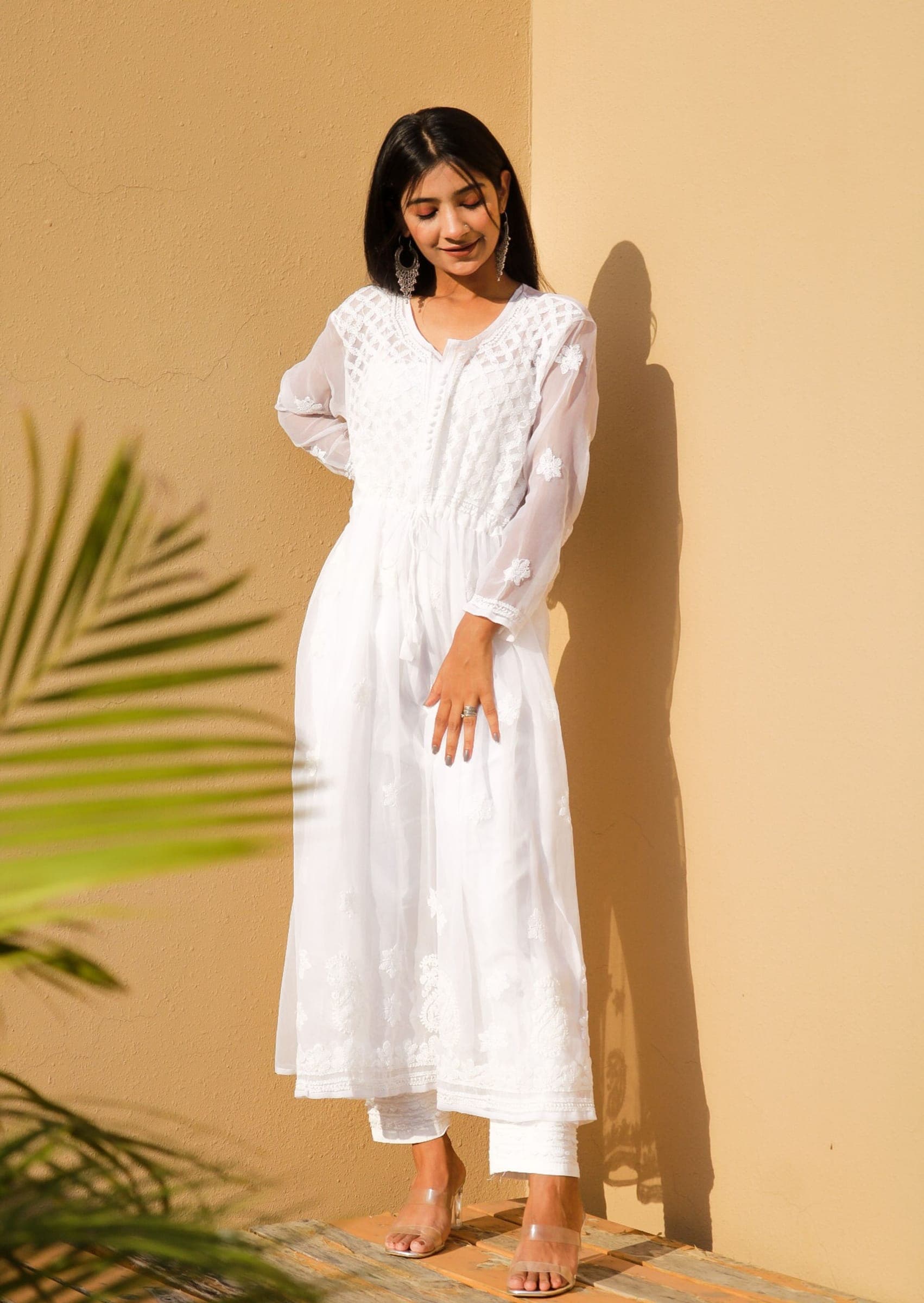
- Embellishment: Indian dress material can feature techniques such as chikankari, thread work or zari on the yoke, while Pakistani lawn more often has machine-embroidered panels and borders supplied as separate pieces.
- The dupatta: similar in both, typically around 2.25 to 2.5 metres; see our guide to dupatta sizes.
- Labels: Indian listings often give a top length, bottom length and dupatta length; Pakistani ones list each piece. Our guide to reading an unstitched suit label explains both.
Semi-stitched suits
Indian ethnic wear also has a halfway option: the semi-stitched suit, common for anarkali and gown styles. The main body is partly made, often with the side seams left open so it can be fitted up to a bust size stated on the listing, while the sleeves, bottom and finishing still need doing.
Check that “fits up to” size against your own measurement, and remember that the flare and length are already set. Finishing a semi-stitched suit is closer to an alteration than to stitching from scratch, and is usually best done by a tailor who can fit it on you. Our Stitching Only service is for unstitched fabric that we cut and stitch to your measurements. Our guide to kalidar and anarkali cuts explains the shapes.
Stitching either one
Both are stitched the same way: cut to your measurements, with the neckline, sleeves, length and trouser style you choose. An embroidered yoke on Indian dress material decides the neckline much as a Pakistani neckline patch does. Sheer georgette and chiffon need lining in both; our guide to georgette vs chiffon explains how they differ. Some Indian sets include a lining piece for a sheer top, so check the listing before buying extra. Georgette and crepe fray and shift more than cotton, so tell us the exact fabric from the listing and it can be planned for.
With Stitching Only, we stitch unstitched suits from Indian and Pakistani brands alike, bought anywhere. Photograph the pieces and the listing and send them through the stitching quote form, or read more on the unstitched suit stitching page. For Pakistani labels, our brand guides explain how each one packs its suits.
Common questions
What does dress material mean?
Dress material is the common Indian term for an unstitched suit: fabric for the top, the bottom and usually a dupatta, sold as lengths to be tailored. It is the same idea as a Pakistani unstitched suit, though the pieces and fabrics often differ.
What is a semi-stitched suit?
A semi-stitched suit is partly made: the main body, often of an anarkali, is stitched but left open at the sides so it can be fitted up to a stated size. The sleeves, bottom and finishing usually still need to be done.
Can Indian and Pakistani unstitched suits be stitched the same way?
Yes. Both are cut to your measurements with the neckline, sleeves and length you choose; the differences come only from the pieces in the pack and how the fabric behaves.
