Fabrics and care · 8 October 2026 · 3 min read
What is khaddi net? The handloom-look sheer
What is khaddi net? A sheer with a handloom-style texture, often with woven stripes or metallic yarn. Where sellers disagree, and how it behaves once stitched.
 Inspiration
A sheer with a handwoven look
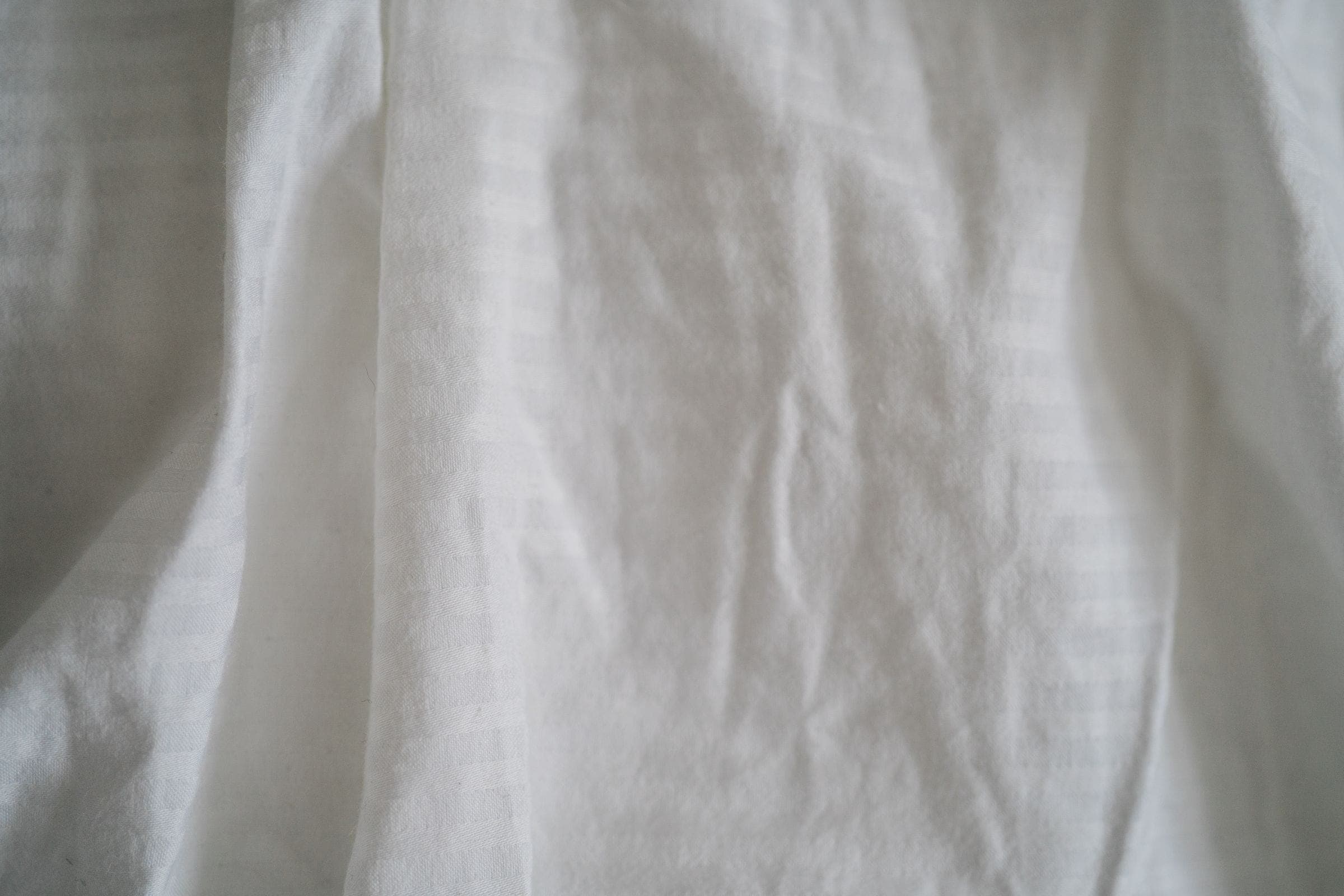
Khaddi net is a market name for a sheer, fairly open fabric with a slightly irregular, handloom-style texture, often woven with stripes, checks or lines of metallic yarn. Khaddi is the Urdu word for a handloom, and the name points to the look rather than promising the cloth was woven by hand; most of what is sold today comes off power looms. It appears in summer formal and party collections as a dupatta, a sheer kameez front or a pair of sleeves.
Because the name describes an appearance, sellers disagree about what qualifies. Some use it for a fine cotton or cotton-blend sheer with a slub; others for a crisp synthetic with woven metallic stripes; others for almost any textured net. The composition line on the label is the only firm guide.
What you may find under the name
Four broad kinds turn up, sometimes in the same shop.
- Slubby cotton or cotton-blend sheers: soft, matt and slightly uneven, and the coolest on the skin.
- Striped or checked versions: thicker threads or a different yarn woven in at intervals, sometimes as satin-like bands.
- Metallic khaddi net: fine gold, silver or copper-coloured yarn running through the cloth, usually a synthetic metallic thread rather than real metal.
- Synthetic khaddi net: polyester or nylon versions with more crispness and sheen, closer to organza in handling.
Khaddi net or organza?
The two are often sold side by side. Organza is smooth, tightly woven and glassy, with an even surface and a strong, springy crispness. Khaddi net is more open and textured, with visible irregularities in the yarn, and usually softer and less stiff. Organza holds volume in a puffed sleeve; khaddi net falls more gently and gives a relaxed, crafted look. Our guides to organza and to net and lace cover its neighbours.
How it behaves in a kameez or dupatta
Khaddi net is sheer, so a kameez body needs a lining or an inner slip, as explained in does my kameez need lining. Sleeves are often left unlined for an airy look if you are comfortable with that; the sleeve styles guide helps you pick a shape. A lining in a close shade keeps the colour true, while a contrast lining changes the whole effect.
The open weave frays and can shift while being cut, so narrow, neatly enclosed seams suit it best. Metallic yarns can feel scratchy at the neckline and underarm, which a soft lining eases. In wear, snags are the main risk: watch for rings, bag zips and rough nails, and ease a pulled thread back rather than cutting it.
As a dupatta it is light and drapes softly, and its texture means a simple edge already looks finished. A plain kameez in matching cotton or silk lets that texture show. Care is usually a gentle, cool hand wash, or dry cleaning for metallic versions; follow the label and never wring it.
Ordering with khaddi net
If your suit includes a khaddi net dupatta, front or sleeves, our Stitching Only service can make it up. Share photos with the label on the quote form and say whether you want the sleeves lined; we confirm the fabric suits your design before you post anything.
Common questions
Is khaddi net handwoven?
Usually not. The name describes a handloom-style look, and most khaddi net on the market is machine woven. A seller claiming handwoven cloth should say so clearly on the label.
Is khaddi net good for summer?
Cotton-rich khaddi net is airy and pleasant in warm weather, especially as a dupatta or sleeves. Synthetic versions with metallic yarn feel warmer and can be scratchy against the skin.
Does khaddi net need a lining?
For a kameez body, yes, because it is sheer. Sleeves and dupattas are often worn unlined, depending on how much coverage you want.