Fabrics and care · 8 October 2026 · 3 min read
What is two-tone fabric? Shot colour explained
What is two-tone fabric? Cloth woven with one colour lengthwise and another across so it shifts in the light, and what that means for trousers, dupattas and thread.
 Inspiration
Two colours in one weave
Two-tone fabric, also called shot fabric, is woven with threads of one colour running lengthwise and threads of another colour running across. Each colour dominates from a different angle, so the cloth seems to change as you move: a shot silk might look teal from one side and violet from another, with a glow where the two mix.
The effect is strongest in smooth, slightly shiny yarns, such as silk, taffeta and organza, and in colours that contrast. With close colours it is subtle and gives the fabric depth rather than a dramatic flip.
Where you meet it
In shops, two-tone is also used loosely for any fabric with two colours, such as a print in two shades or a jacquard with a contrasting motif. If the shifting effect is what you want, ask whether the colour change comes from the weave. True two-tones include:
- Shot silk and taffeta: the classic examples, crisp, with a strong colour change.
- Two-tone organza: sheer, so the shift combines with whatever sits underneath.
- Two-tone raw silk and cotton silk: a softer change, often in festive suits; our guide to cotton silk and raw silk describes those cloths.
- Chambray: an everyday two-tone, usually a blue lengthwise yarn with white across.
Why it changes with the light
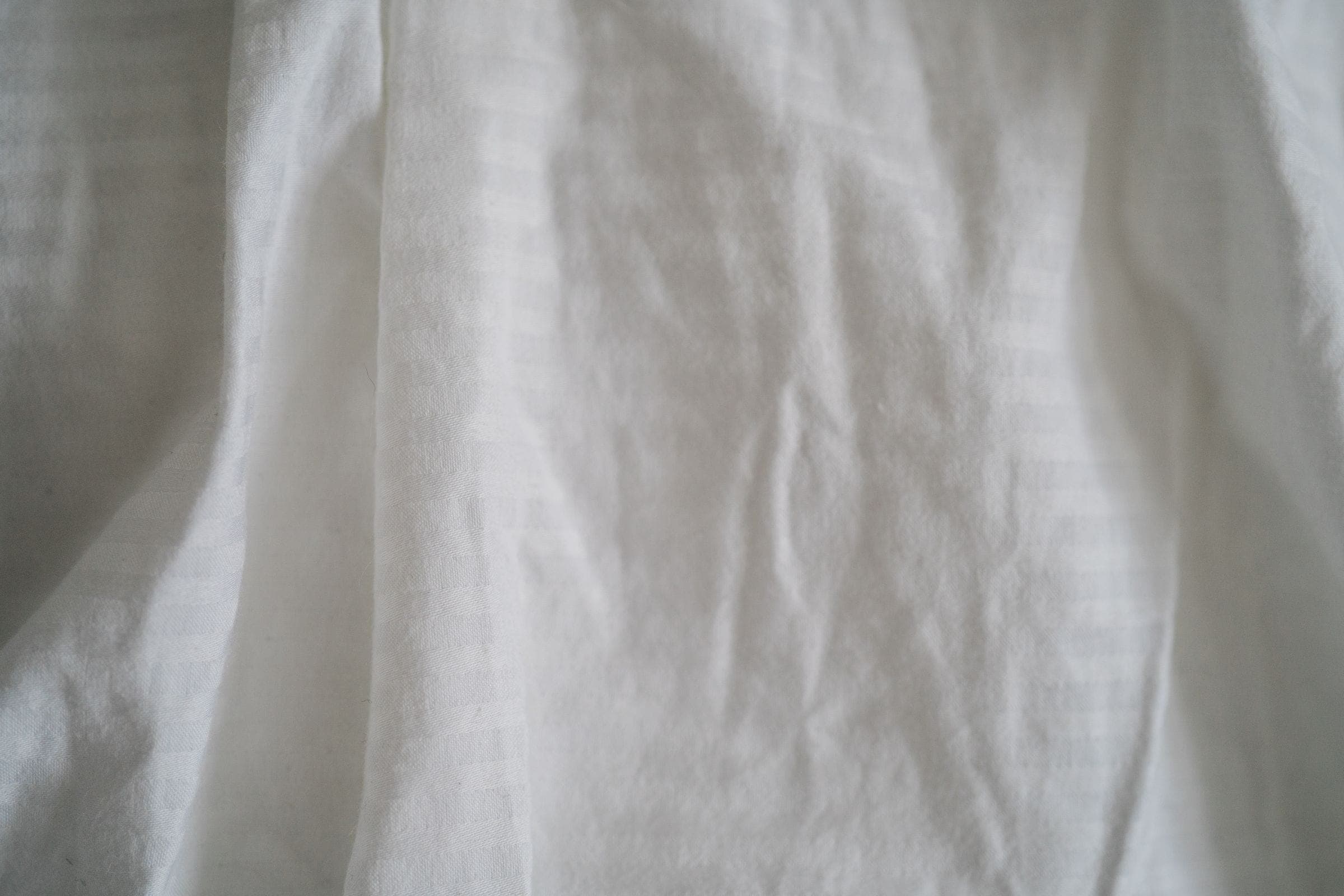
In a plain weave both sets of threads show, but light catches them differently depending on your viewing angle and the direction of the cut. Look along the length and the lengthwise colour tends to lead; turn it and the crosswise colour comes forward. Folds and gathers make the effect stronger, because each fold shows a different angle.
It also means pieces cut in different directions can look like different colours, a cousin of the shading problem described in our article on nap. For an even look, every piece is cut the same way.
Matching trousers, dupattas and thread
Since the cloth holds two colours at once, everything around it has to work with both. Our guide to matching dupatta and trouser colours has broader ideas.
- Trousers: choose one of the two colours, usually the one that reads from a distance, or a plain in a deeper shade of it. A mid-tone between the two can look muddy.
- Dupattas: a plain dupatta in either colour works, and a sheer two-tone dupatta over a plain kameez creates its own glow.
- Thread: stitching usually follows the colour that dominates on the face, so seams disappear from a normal viewing angle.
- Lining: under sheer two-tone organza the lining colour changes the result, so look at the fabric over a few colours before deciding.
Ordering a two-tone outfit
Two-tone fabric shines in simple shapes with some movement, such as an A-line kameez, a softly gathered sleeve or wide trousers, where folds show off the change. Photos rarely capture it well, so name both colours when you send a design. With custom stitching, the fabric, colours and lining are agreed in the written quote before cutting; start with a design quote.
Common questions
Is two-tone fabric the same as iridescent fabric?
Two-tone weaving is the usual way of making a cloth look iridescent. Some iridescent effects also come from special yarns or coatings, so the word iridescent covers a little more.
Does two-tone silk show water marks?
Silk taffeta and shot silks can mark with water spots. Keep rain and spills in mind, and follow the label for cleaning, which is often dry cleaning.