Styles and design · 8 October 2026 · 4 min read
What colour should your first formal suit be?
What colour formal suit should you choose when one outfit must cover several events? A deep jewel shade usually works hardest; here is how it compares with pastels.
 Inspiration
The short answer
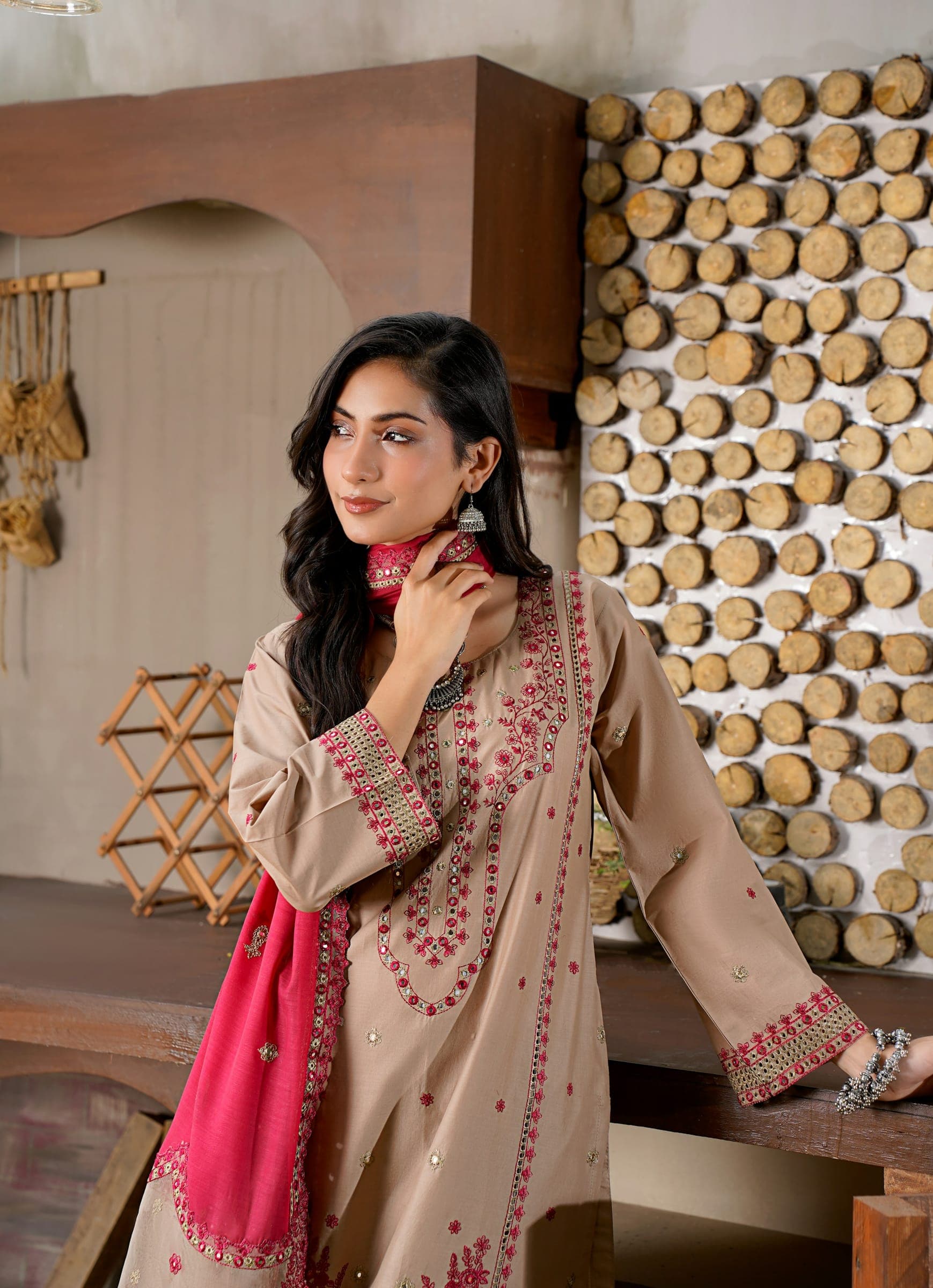
If one formal suit has to see you through a wedding, an Eid dinner and a few parties, a deep jewel shade such as emerald, sapphire, deep teal or wine is usually the hardest-working first choice. It looks dressy in evening light, hides small marks, and changes character easily when you swap the dupatta.
That is a starting point, not a rule. A soft pastel or a warm neutral can be just as useful if it is the colour you feel most like yourself in. What matters is how the colour behaves across the events you actually go to, which is what the rest of this article weighs up.
Jewel shades, pastels and neutrals compared
Each family of colour has its own strengths for a suit you plan to wear again and again. Think about the halls, gardens and homes where you will be wearing it, and how often the same people will see you.
- Jewel shades (emerald, sapphire, ruby, plum, deep teal): rich under warm indoor lighting and camera flash, forgiving of spills, and easy to dress up with a gold or silver dupatta. They are memorable, so a second outing to the same family may be noticed, though a new dupatta goes a long way.
- Pastels (mint, powder blue, blush, lilac, pistachio): fresh at daytime events, garden parties and summer gatherings. Under yellow evening lighting some pale shades can look washed out in photos, and light colours show marks sooner.
- Neutrals and metallic tones (ivory, champagne, gold, silver-grey, soft taupe): calm, elegant and easy to repeat, because people remember them less. They rely on texture or embroidery to look formal, and very pale ones sit close to colours some families reserve, as explained below.
How it photographs and how it repeats
Formal events are photographed heavily, often indoors and at night. Mid to deep colours with a little sheen, such as a raw silk look, velvet or a smooth satin finish, tend to hold their colour in those pictures. Very bright shades can glow or shift on phone cameras, and pale shades can drift towards white or grey.
Repeating a suit is easier when the kameez is plain or lightly worked and the interest sits in a removable layer. A bottle green kameez with matching trousers can be worn with a gold tissue dupatta at one wedding, a contrast pink chiffon dupatta at the next and a printed silk shawl in winter. Our guides to matching dupatta and trouser colours and monochrome and tonal suits show how far one base colour can travel.
Colours some hosts prefer guests to leave alone
Customs differ between families and regions, so treat these as things to check, not fixed rules. At many Pakistani weddings deep red is the colour the bride wears, and some guests avoid it for the main event. Plain all-white is linked with mourning in some South Asian families, while in others white with colour or embroidery is perfectly usual. Some families also set a colour theme for a mehndi or a dholki, often yellow, green or orange.
When in doubt, ask the hosts or someone close to them. A first formal suit in a jewel shade other than red, or in a pastel, avoids most of these questions. For event-by-event ideas, see Pakistani wedding guest outfits for every event.
Putting the colour into your order
Colour names vary between sellers and screens: one shop’s emerald is another’s bottle green. Send a photo or a fabric reference with your enquiry and describe how deep or bright you want it. If you would like us to source the fabric, ask for a Fabric + Stitching quote; the colour and fabric are agreed in your written quote before anything is cut, and a small difference in shade between screen and cloth is normal.
If you already own a formal fabric, the Stitching Only service lets you send it to us in Pakistan once we have confirmed it is suitable. Making takes 5 to 7 working days from approval and full payment (for Stitching Only, from your fabric reaching us), with shipping time on top, so leave room before the first event.
Common questions
Is black a good colour for a first formal suit?
It can be. Black with gold or silver work looks formal and repeats well, but some families avoid black at weddings, so check with the hosts if you plan to wear it to one.
Can I change the look of one formal suit for different events?
Yes. Keep the kameez and trousers in one solid colour and change the dupatta, shawl or jewellery. A metallic dupatta dresses it up, and a printed or contrast dupatta makes it feel new.
Do pastels work for evening events?
They can, especially in fabrics with a little shine or with some embroidery. Look at the colour under warm indoor light before you decide, because some pale shades lose depth at night.