
Embroidery and fancy work · 8 October 2026 · 3 min read
Embroidery on a maxi dress: neckline, waist or hem?
Where embroidery sits best on an embroidered maxi dress: neckline, waist, cuffs or hem, how a full skirt changes hem work and how to keep weight off light fabrics.
 Inspiration
Pick one focal point, then echo it
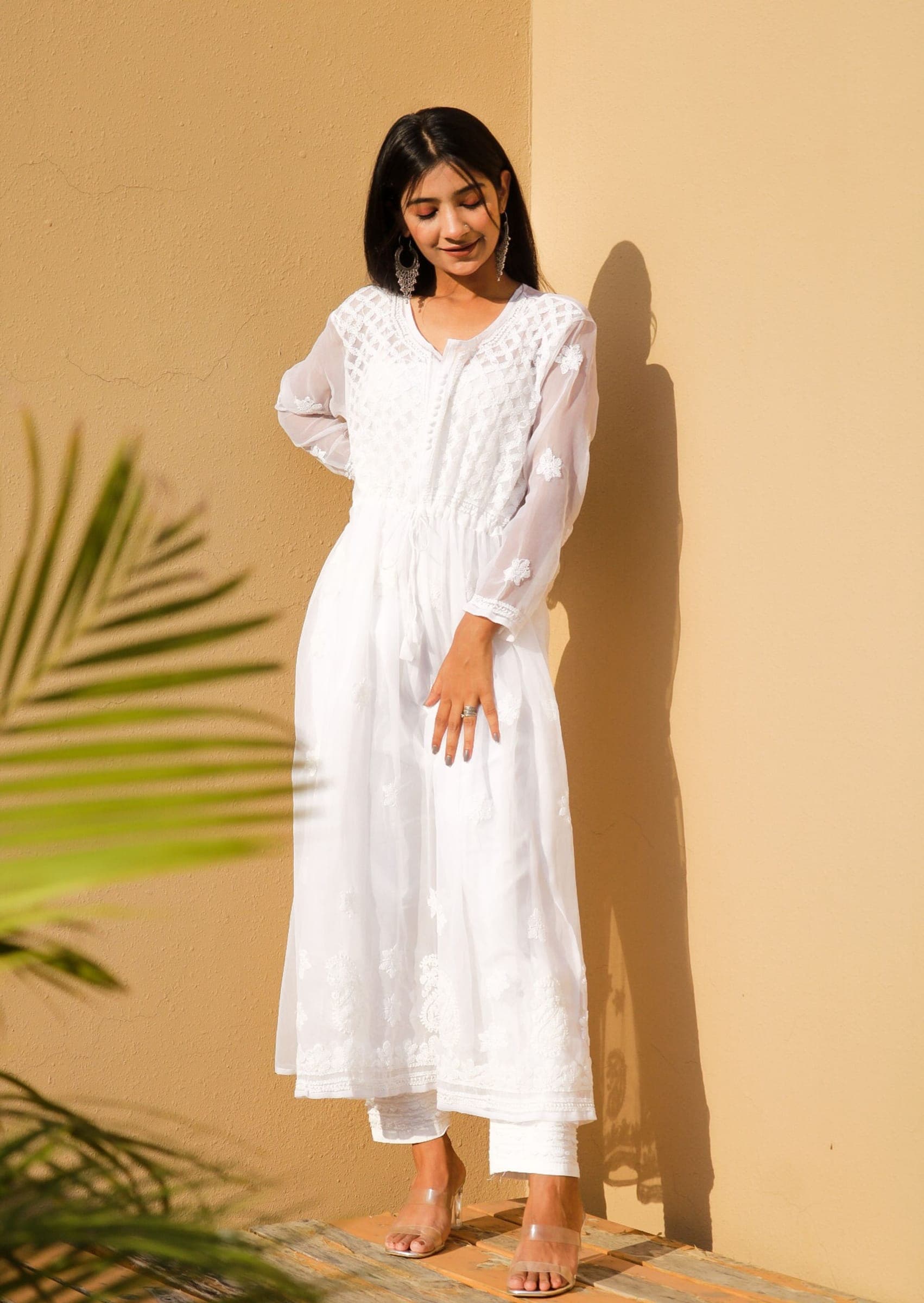
On a maxi dress, embroidery works best when it has one clear home, usually the neckline, the waist or the hem, with lighter echoes elsewhere such as the cuffs. A long dress is a large canvas, and spreading work evenly over it tends to look busy and adds a lot of weight; one strong area keeps the line long and graceful.
Which home you pick depends on the shape of the dress, the fabric and where you want the eye to go.
Three placements compared
Each area has its own effect on how the dress looks and hangs.
- Neckline and yoke: draws attention to the face and works with any skirt shape. A worked yoke or a band around a round or high neck is the most versatile choice, and it suits a modest cut with long sleeves.
- Waist: a band at the natural waist or under the bust defines the shape and divides a long dress into two calmer halves. It works well on empire and gathered styles.
- Hem: a border at the bottom adds movement and a little weight, which helps the skirt hang. It is the boldest choice on a full skirt, because the hem is so wide.
- Cuffs: rarely the main feature, but a narrow band at the cuffs links the sleeves to the neckline or hem.
How a full skirt changes hem work
The fuller the skirt, the longer the hem. A straight column dress has a modest hem, but a flared, circular or tiered skirt can be several times wider at the bottom than at the waist, so a hem border becomes a long run of embroidery with real weight and cost. It also changes how the skirt swings, and heavy hem work on a full skirt can pull the flare flat.
On a tiered skirt there is another option: placing narrow bands along the tier seams rather than at the very bottom. The seams already break up the length, so the work follows lines that are there anyway and keeps each band short.
Keeping weight off light fabrics
Chiffon, georgette and lawn are popular for maxi dresses because they drape and stay cool, but they cannot carry much embroidery without puckering or dragging.
- Keep heavy work near the shoulders, where the dress is supported, rather than in the middle of the skirt.
- Choose thread work over dense metallic or beaded fills on the lightest fabrics.
- Ask for a lining behind embroidered areas, which supports the work and keeps it off the skin.
- Use a narrow hem band rather than a deep one on a very full chiffon skirt.
Ordering an embroidered maxi made to measure
The length and the skirt shape set where the work can go, so start with your measurements; our guide to measuring for a maxi dress shows how, and made-to-measure maxi dresses covers sleeves and shape. Then choose an embroidery level and describe the placement, with a photo if you have one. Embroidery on outfits we stitch is planned through custom embroidery, and we confirm what is possible on your fabric and design in your written quote.
If you like our tiered maxi dress, you can ask for an embroidery level as a change to that design with a customise quote.
Common questions
Is an embroidered maxi dress suitable for modest dressing?
Yes. A high neckline, long sleeves and a lined skirt with embroidery at the yoke or cuffs gives a modest look that still feels special.
Should the lining be embroidered too?
No. The lining sits behind the work to support it and keep the back of the stitches away from skin; it stays plain.
Which placement makes me look taller?
A vertical band down the front or work kept at the neckline draws the eye up and along the body. A deep hem border tends to anchor the eye low instead.
More guides
- Choosing embroidery placement for a suit, piece by piece
- Embroidery on organza: crisp, sheer and delicate
- What is jaal embroidery? All-over patterns explained
- Types of lace for suits: names, looks and uses
- Embroidered trouser hems: what a paincha can carry
- What is kantha embroidery? Running stitch explained
