Embroidery and fancy work · 8 October 2026 · 3 min read
Embroidery on organza: crisp, sheer and delicate
Embroidery on organza looks crisp when the work is light. How the sheer fabric shows threads, why it puckers and which placements suit it on an outfit.
 Inspiration
Does organza take embroidery well?
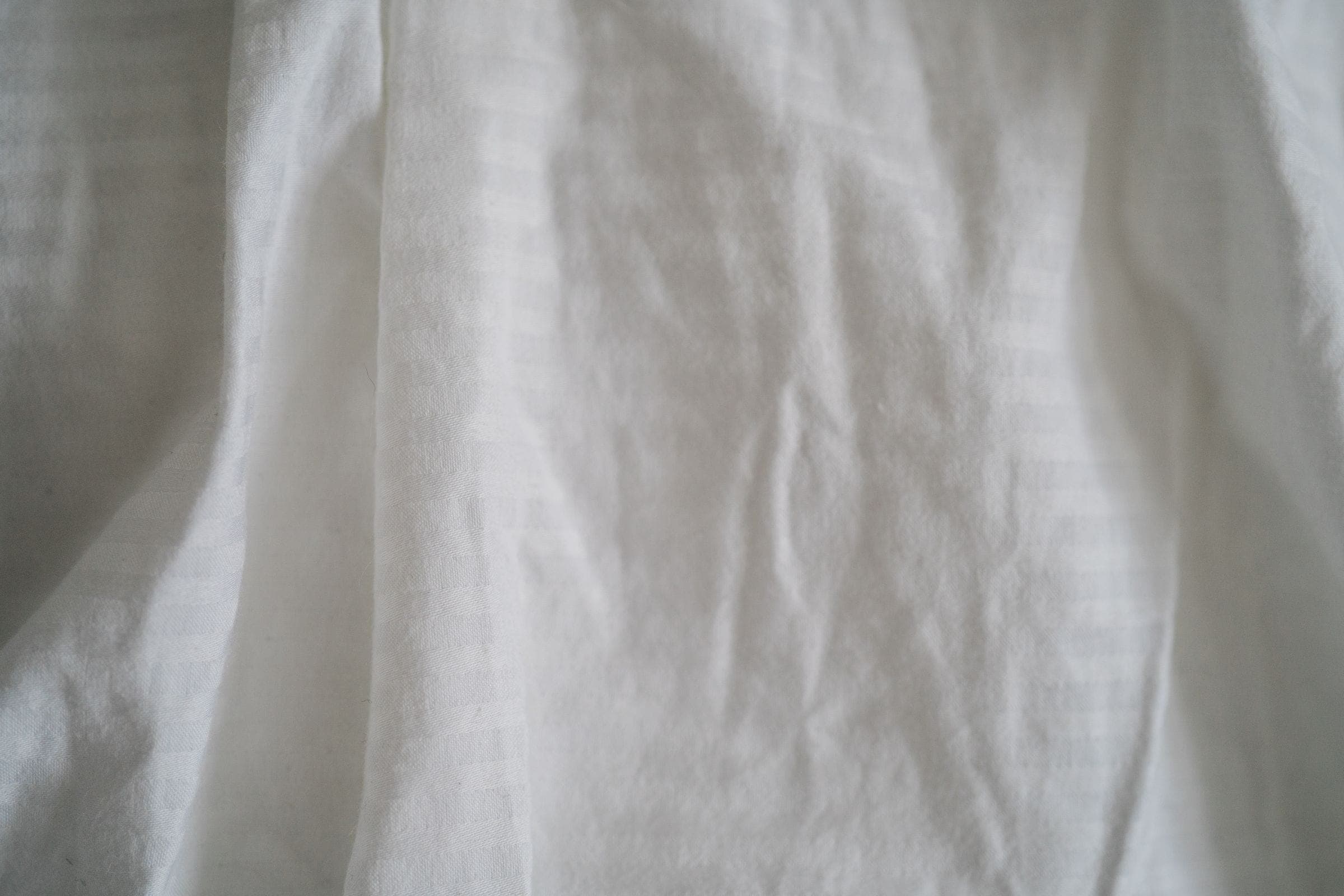
Yes, embroidery on organza works well when the stitching is light and well spaced. Organza is a thin, crisp, sheer plain weave, so it holds fine outlines, small motifs and scalloped edges cleanly, but it shows every thread on the reverse, buckles under dense work and creases sharply around it.
That mix of strengths and limits decides where organza embroidery belongs on an outfit. This article is about working on the fabric; for wearing it, see our guide to organza in everyday outfits.
Why the reverse shows through
On an opaque cotton, the back of the embroidery is hidden. On organza you look straight through the cloth, so the reverse becomes part of the front. Three things show:
- Carried threads: a thread that travels from one motif to the next shows as a faint line, so each motif is normally finished and trimmed on its own.
- Knots and tails: thread ends that would vanish inside a cotton kameez sit in plain view and need trimming close.
- Backing: the supporting layer used during stitching has to come away cleanly, which is why a wash-away or tear-away type is the usual choice on sheers.
Puckering and creasing
Organza embroidery puckering happens when stitches pull the fine yarns closer together than the weave allows. A soft fabric relaxes around the pull. Organza is stiff, so it buckles into small ridges instead, and those ridges rarely press out. The remedies are decided before stitching, not after: a supporting layer under the fabric, a fine needle and thread, and a design with open space in it. Outline stitches, small flowers and vine borders sit flat. Large areas of solid filling are where the trouble starts.
Creasing is the second limit. An embroidered patch is firmer than the bare organza beside it, so the fabric folds sharply along the edge of the work when it is packed or sat on. Polyester organza also dislikes heat and can glaze or melt under a hot iron, and silk organza can mark with water, so pressing is done on low heat, from the reverse, through a cloth.
Thread colour plays a part too. A dark thread on pale organza shows its whole path, while a tonal thread hides small untidiness.
Placements that suit embroidered organza
The pieces that work are the ones where organza hangs free and is not under strain.
- Dupatta: an organza embroidered dupatta with a border on all four sides and a scatter of small motifs is the classic use. The border adds a little weight, which helps the crisp fabric hang instead of standing away from the body.
- Sleeves: embroidered organza sleeves on a lawn or cotton kameez, with the work kept to the lower sleeve and hem, away from the elbow crease and the armhole.
- Daman: a worked organza band joined to the hem of the kameez. Our daman with organza page shows the idea.
- Small overlays: a panel laid over an opaque fabric at a yoke or trouser hem, where the layer beneath hides the reverse.
What to avoid, and how to ask
Dense work across the whole body of a kameez, anything close to the armholes and heavy beading that drags the weave are the placements to avoid. Where an embroidered panel rests on the skin, a lining or facing helps, as our guide to embroidery and lining explains.
When we stitch your outfit, embroidery is chosen by level, and the delicate level usually suits organza. Tell us which piece is organza, where you want the work and how open you want the pattern, and attach a photo of the look. We confirm what is possible on your fabric and design in the written quote. The custom embroidery page explains both routes, including embroidery on an organza dupatta or fabric of your own once we have checked photos of it. Start with the quote form.
Common questions
Can you iron embroidered organza?
Yes, with care. Use low heat, press from the reverse through a thin cotton cloth and keep the iron moving. Polyester organza can glaze or melt under high heat, so test a hidden corner first.
Does an embroidered organza kameez need lining?
The body normally does, because organza is sheer and the back of the work is rough. Sleeves and dupattas are usually left unlined so the fabric keeps its transparency.
Is silk or polyester organza better for embroidery?
Both can be embroidered. Silk organza is softer with a gentler glow and creases more easily. Polyester organza is stiffer and shinier and copes better with washing, but it is more sensitive to a hot iron.
More guides
- Choosing embroidery placement for a suit, piece by piece
- What is jaal embroidery? All-over patterns explained
- Types of lace for suits: names, looks and uses
- Embroidered trouser hems: what a paincha can carry
- What is kantha embroidery? Running stitch explained
- What is broderie anglaise? Eyelet embroidery explained