Embroidery and fancy work · 8 October 2026 · 5 min read
Choosing embroidery placement for a suit, piece by piece
Where to put embroidery on a custom suit: neckline, front panel, sleeves, daman, trouser hem and dupatta border, plus density, fabric and the methods that suit each.
 Inspiration
Treat the suit as one picture
A three-piece suit has three surfaces that can carry embroidery: the kameez, the shalwar or trousers, and the dupatta. When each piece is planned on its own, the result can look busy, with work fighting for attention at the neck, the hem and the dupatta border all at once. A calmer approach is to choose one main area where the eye lands first, then one or two supporting areas that echo it in a lighter way.
For example, a dense neckline with a narrow matching band at the trouser hem reads as one idea. A heavy daman with a heavy dupatta border and a heavy neckline usually reads as three. Our guide to where to place embroidery on a kameez looks at the kameez alone; this one plans the whole outfit, for a custom shalwar kameez or any suit we stitch with customised embroidery.
The kameez: neckline, front panel and sleeves
The neckline is the most common focal point because it frames the face and shows in every photo, even when the dupatta is draped. Work can follow the edge of the neckline, fill a yoke shape below it, or run down a placket. If you wear a scarf or hijab pinned close at the neck, much of a neckline design will be covered, so a front panel or sleeves may be the better place to spend the embroidery.
A front panel runs from the neckline towards the waist, or the whole length of the kameez. It suits straight and A-line cuts and makes the figure look longer. On a kameez with a front opening, the panel has to be split around the buttons, so say which you want first. The necklines guide helps you picture the shapes.
Sleeves can carry a band at the cuff, a motif above the elbow, or scattered sprigs from shoulder to wrist. Cuff bands are practical and pair well with a trouser hem band. Keep heavy work away from the inner arm and the elbow crease, where it rubs.
Hem and daman
A border along the hem, or daman, gives a long kameez weight at the bottom and helps it hang straight. On a frock or kalidar cut, the hem is wide, so a border there becomes the main feature and the rest of the outfit should step back. Our page on the kalidar frock shows how much hem a flared cut has, and custom frocks explains how we make them.
Side slits interrupt a hem border, so decide whether the work should stop at the slit or turn up its edge. Heavy work at the hem also adds weight to a light fabric, which brings us to density, below.
Shalwar and trouser hems
Embroidery on the shalwar or trouser hem, sometimes called the paancha, is the quiet partner in a suit. On straight or cigarette trousers, a band around the hem shows clearly below the kameez. On a gathered shalwar, the fullness folds the work, so a bolder, simpler motif reads better than fine detail. Our trousers guide shows how each style sits at the ankle.
Trouser hems brush against shoes and floors, so keep the work low and firm, without raised beads or loose sequins that could catch. Embroidered trousers are also a neat way to lift a plain kameez, if you would rather keep the top simple.
The dupatta border
A dupatta can have a border on all four sides, on the two short ends only, or a scattered pattern across the whole piece. Two-end borders show when the dupatta is draped over one shoulder; four-side borders show more when it is worn open across both. A heavy border on a sheer chiffon dupatta pulls the edges down and can make it slip, so match the weight of the work to the cloth.
If your dupatta will carry most of the embroidery, keep the kameez lighter, and if you plan to wear a separate scarf instead, you may not need dupatta work at all.
Density, fabric and method
How much embroidery a fabric can carry depends on its weight and weave. Fine lawn takes delicate work well but puckers under dense filling; heavier cloth such as khaddar supports bolder designs. The methods we offer behave differently:
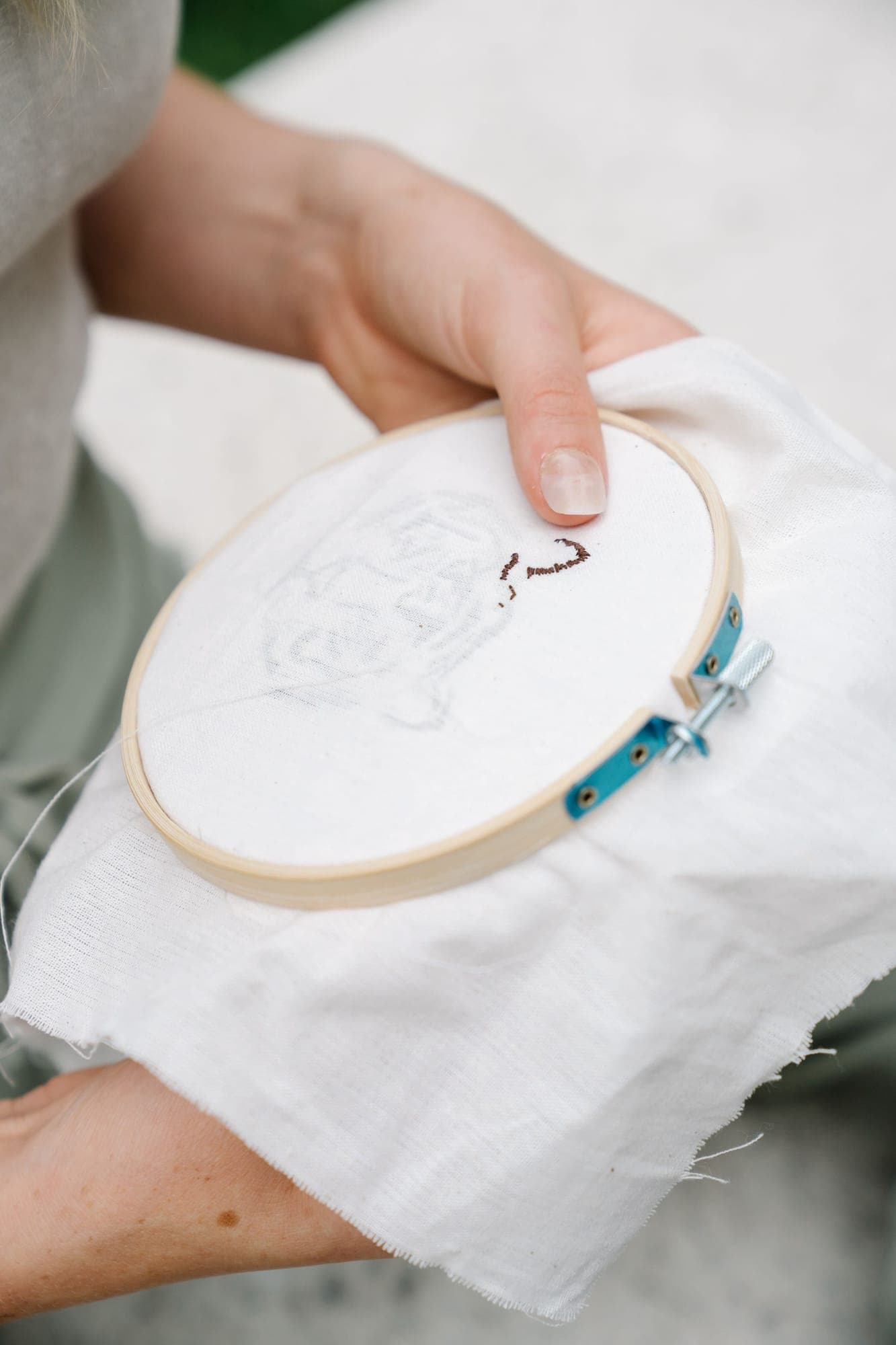
- Hand embroidery: fine, slightly irregular stitches with a soft finish. Good for detailed necklines and small motifs.
- Machine embroidery: even, repeatable work, well suited to borders that must match on the kameez, trousers and dupatta.
- Zari: metallic thread with a festive shine. It can feel stiff or scratchy right against the skin, so think twice before using it on an inner neckline edge.
- Beadwork: adds sparkle and weight. Best placed where it will not rub, such as a yoke or panel, rather than under the arms.
- Sequins: catch the light well but can snag on bags and jewellery, so keep them away from cuffs and trouser hems.
Putting your placement in the brief
Mark up a photo with circles or arrows, or describe each piece in turn: “neckline, medium density, hand work; trouser hem, narrow matching band; dupatta, plain”. Say which area matters most if something has to give. Whether a method suits your chosen fabric, the construction and the density you want is confirmed in your written quote, and any design or set-up work is included in that quote. Start on the quote form; we make every suit in Pakistan and ship worldwide, including to the UK.
Common questions
Where should embroidery go on a suit?
Choose one main area, usually the neckline, front panel or hem, and echo it lightly elsewhere, for example a narrow band at the trouser hem. Spreading heavy work everywhere tends to look busy.
Can you embroider the shalwar or trouser hem?
Yes, trouser and shalwar hems are a common place for a matching band. Flat, firm work is best there because the hem brushes against shoes and floors.
Which embroidery methods do you offer?
Hand embroidery, machine embroidery, zari, beadwork and sequins. Whether each suits your fabric, design density and placement is confirmed in your written quote.