Styles and design · 27 September 2026 · 6 min read
Machine or hand embroidery on a made-to-measure kameez: which to choose?
How machine embroidery, hand embroidery and light zardozi differ on a made-to-measure kameez, kurta or dupatta: the look, the care and where each works best.
 Inspiration
Embellishment, as part of the outfit
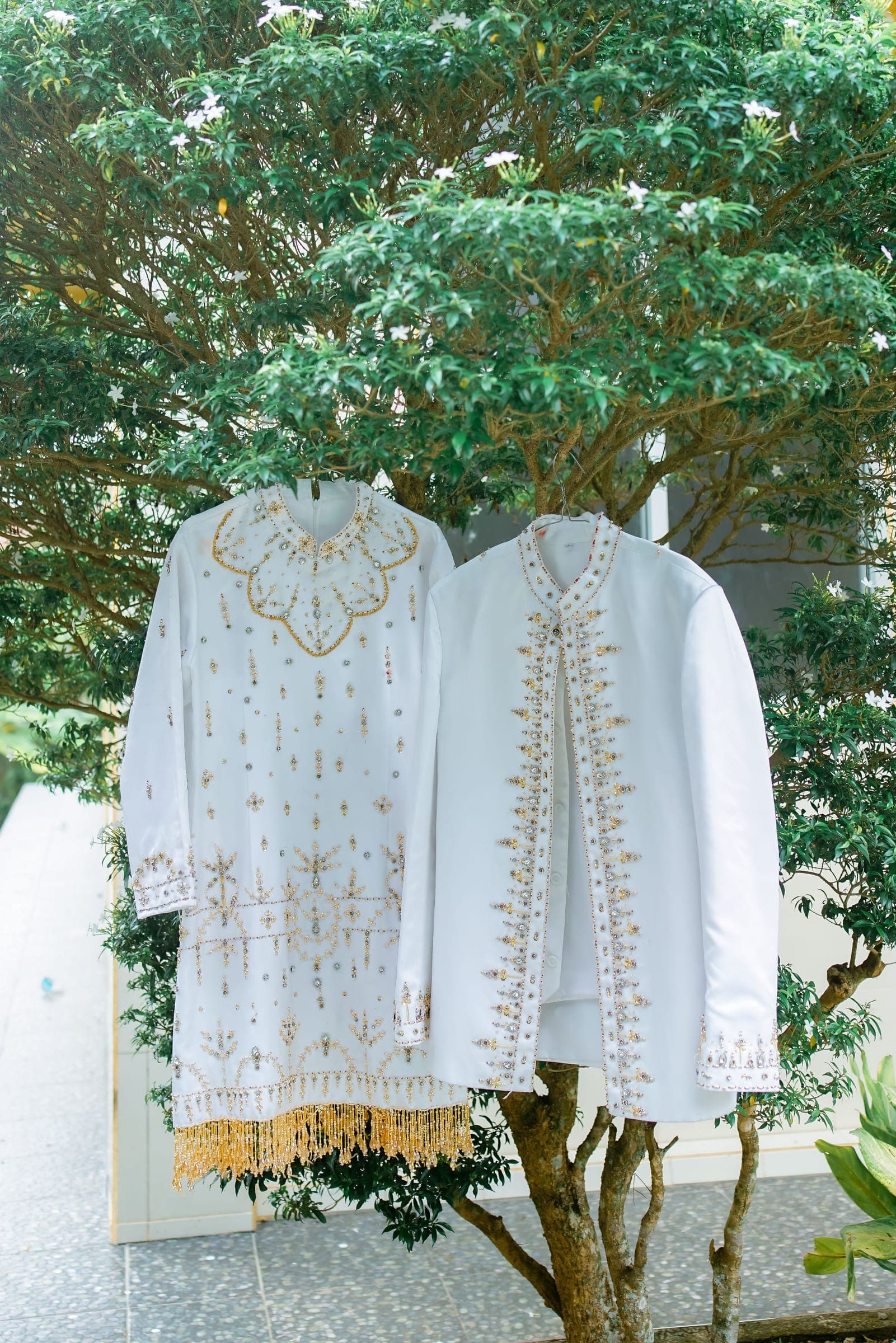
When you have a kameez or kurta stitched to measure, a little embroidery can be planned into it: a border at the neckline, a line at the cuffs, a few motifs on the hem or an edge on the dupatta. We add it only as part of an outfit we are stitching, so it is designed with the cut, placed where the seams allow and included in the same quote.
Many unstitched suits already arrive with an embroidered neck panel or border, and then the question is how to place it rather than what to add. Our unstitched suit stitching page covers that. For a plain fabric, the first choice is the technique: machine, hand or a mix of the two.
Machine embroidery
The design is digitised into a stitch file and sewn by a computerised machine. It is precise, even and dense, which suits repeating borders, geometric necklines and anything that should match exactly on both sleeves. Machine thread work on cotton and lawn generally copes well with a gentle wash, inside out.
Because the file does the repeating, it is usually the more economical way to run a border all the way along a hem or around a dupatta.
Hand embroidery
Worked with a needle in the hand or an aari hook on a stretched frame. Each stitch is placed by eye, which gives hand work its slight irregularity and raised texture. It takes far longer, so it generally costs more and needs a longer lead time, but nothing else has quite the same character.
It is the natural choice for a small, special detail: scattered butis around a neckline, a fine vine at the cuff, or a finish you want to look handmade.
Zardozi, dabka, gota and mirror work
Zardozi is metal-thread embroidery: coiled wires (dabka and kora), flat strips, sequins, pearls and stones couched onto the fabric by hand. Gota is a woven metallic ribbon sewn along an edge or folded into simple shapes, and mirror (shisha) work holds small mirrors in place with thread. Used lightly, on a neckline or a dupatta edge, any of them lifts an everyday kurta for Eid.
Because these materials sit on the surface, pieces that carry them are usually lined and are best dry cleaned. We keep them light: this is embellishment for Eid and gatherings, not bridal work.
Choosing for common placements
- Neckline on an everyday kameez: machine for a crisp, even edge; hand for a softer, textured one. Both look lovely.
- Cuffs and sleeve hems: machine, so the two sleeves match exactly.
- Hem or daaman border: machine for a long repeating border; hand for a few scattered motifs.
- Dupatta edge: machine for a border on all four sides; hand work, gota or lace for the short ends only.
- Eid and party pieces: light hand work or a little zardozi, sometimes over a machine base to keep the cost sensible.
- Work kurtas: usually none, or a fine machine line at the neckline that survives the weekly wash.
How to ask for it
On the stitching quote form, tell us how much embellishment you want and where it should go, with a photo of anything you like. If you are not sure, choose “advise me” and we suggest what suits the fabric and the occasion. Our neckline guide and dupatta finishing ideas help with placement.
The price depends on the size and density of the design, the technique and the fabric. It is included in your written quote for the outfit before any work begins.
Common questions
Can machine and hand embroidery be combined?
Yes, and it often gives the best value: a machine-stitched base with hand-applied metal thread, beads or sequins on top.
Is machine embroidery lower quality?
No. It is a different look. For even, repeating borders it is often the better choice; for texture and heritage techniques, hand work wins.
Can you embroider a garment I already own?
No. We add embellishment only as part of an outfit we are stitching for you, so it is planned with the cut and quoted in the same order.