
Styles and design · 30 September 2026 · 4 min read
Pairing printed and plain pieces in a three-piece suit
How to balance printed and plain kameez, trousers and dupatta, mix two prints without clashing, and use spare fabric for bands and piping so the suit looks planned.
 Inspiration
One star, two supporting pieces
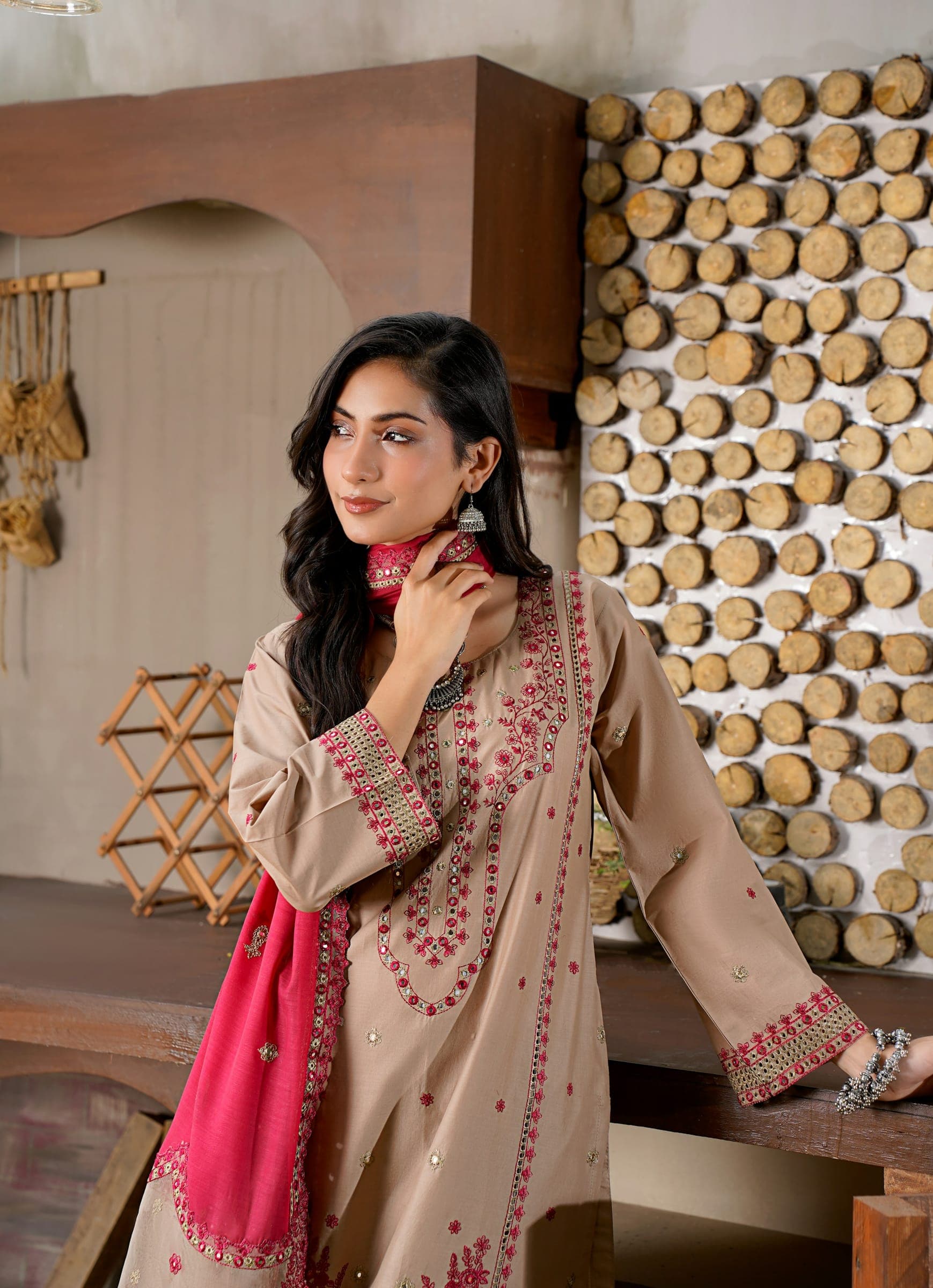
Most three-piece suits look best when one piece leads and the others support it. Brands design unstitched suits this way: a printed or embroidered kameez, plain or lightly printed trousers, and a dupatta that either echoes the print or offers a contrast. Once you see the pattern, it is easy to plan your own combinations, whether you are working with a suit pack or putting pieces together from different places.
The idea is simple: pattern needs somewhere quiet to rest. If every piece is busy, the eye has nowhere to settle and the outfit can look accidental, even when each piece is lovely on its own.
The classic combinations
Embroidered suits follow the same logic. An embroidered kameez is already the star, so plain or softly printed trousers and a lighter dupatta stop it feeling heavy; our guide to printed vs embroidered unstitched suits compares the two. For printed suits, these are the combinations that work most often:
- Printed kameez, plain trousers, printed dupatta: the most common unstitched suit. The plain trousers give the eye a break between two patterned pieces.
- Printed kameez, plain trousers, plain dupatta: calm and easy, and good for work. Take the trouser and dupatta colours from the print.
- Plain kameez, printed trousers, printed dupatta: a modern flip, where the kameez becomes the quiet background.
- Plain kameez, plain trousers, printed dupatta: the dupatta does all the work. A lovely way to wear a statement dupatta you already own.
- Matching print: kameez and trousers in the same print, co-ord style, with a plain dupatta. Bold, and easiest in a small or medium print. Our co-ord guide covers this look.
Mixing two prints
Two different prints can look deliberate rather than messy with a few simple checks.
- Share a colour: the two prints should have at least one colour in common.
- Vary the scale: a large floral with a small geometric works better than two large prints competing.
- Keep one busier: let one print be dense and the other more open or widely spaced.
- Give it a break: a plain band, piping or plain trousers between the prints help them sit together.
- Step back: lay the fabrics side by side and look from a few paces away. If they blur into one busy mass, add a plain piece between them.
Using spare fabric to tie it together
Leftover fabric is a quiet way to make a suit look designed. A band cut from the printed kameez or dupatta can edge the plain trouser hem, and the plain trouser fabric can become piping, a placket or a sleeve band on the printed kameez. Our piping and trims guide and yokes and panels guide have ideas.
Only plan on this if there is fabric to spare, because most suit packs are cut close. Many unstitched packs also include separate printed or embroidered borders for exactly this purpose; our guide to using neckline pieces and borders from a pack explains them. Block, digital and screen prints each have their own character, which affects how they mix; see our print types guide.
Planning your suit
Lay the pieces side by side in daylight, or photograph them together, before deciding. A photo in black and white is a useful trick: it shows whether the pieces have enough difference in lightness to look balanced. Think about where each will sit, too. The dupatta and kameez frame your face, so the piece you love most belongs there. For colour choices, see our guide to matching dupatta and trouser colours.
When you request a quote on the stitching quote form, say which piece is which, how you want them combined, and whether any spare fabric should become bands or piping. If you are combining pieces from different suits, the unstitched suit stitching page explains how Stitching Only works. It involves two shipping stages: you send your fabric to us in Pakistan, and we ship the finished outfit to you. Before you post anything, we confirm with you that the pieces are suitable, how much is needed and how to send them.
Common questions
Should trousers be plain with a printed kameez?
Usually, yes. Plain trousers in a colour taken from the print give the eye a rest and let the kameez stand out, though printed trousers can work well under a plain kameez.
Can I mix two different prints in one suit?
Yes, if the prints share at least one colour and differ in scale, such as a large floral with a small geometric. A plain band or piping between them helps them sit together.
Can leftover fabric be used for details?
Often, if there is enough to spare. Bands, piping and plackets use small amounts, but most suit packs are cut close, so send photos and we’ll confirm what can be used.
