
Styles and design · 8 October 2026 · 4 min read
Sleeve cuffs (kaf): band, buttoned and elastic compared
The main types of sleeve cuffs on a kameez or dress: plain band, buttoned shirt cuff, elastic and turned-back cuff, compared for look, comfort and ease of use.
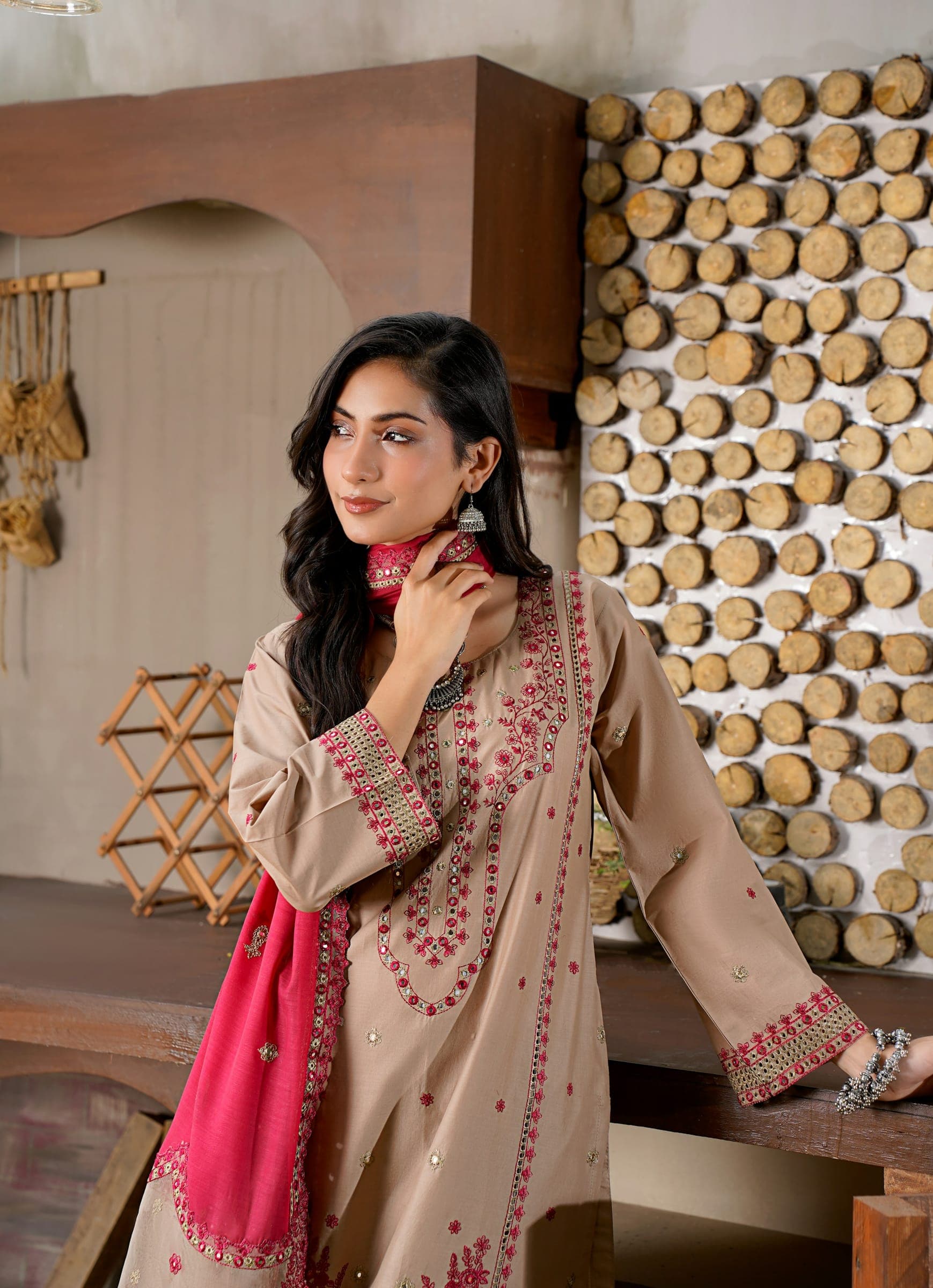 Inspiration
What a cuff (kaf) is
A cuff, called kaf in Urdu, is a separate finished band or fold at the wrist end of a sleeve. It closes the sleeve neatly, gives the end some structure and decides how the sleeve sits on your hand. A sleeve without a cuff simply ends in a hem; a “kaf wala bazu” is a sleeve finished with one of the cuffs below. Bazu, the everyday word for a sleeve design, is in our stitching glossary with other parts of a suit.
Cuffs matter most on full sleeves, where the wrist is on show and in constant use. On three-quarter and elbow sleeves a band at the end does a similar job, though it is not usually called a cuff.
Four cuffs side by side
Each type answers the same three questions differently: how it looks, how you get your hand through, and whether you can push the sleeve up your arm to wash your hands or cook.
- Plain band cuff. A straight strip of fabric, often doubled, sewn to the end of the sleeve with the sleeve eased or gathered into it. Clean and quiet. If it is closed all round, the band must be wide enough for your hand, so it sits looser at the wrist; a narrower band needs a small opening.
- Buttoned shirt cuff. A band that wraps around the wrist and fastens with one or two buttons, above a short slit in the sleeve called a placket. It can be undone to roll the sleeve up, and it sits close and crisp. It reads as a shirt detail, which suits tunics, shirt dresses and office kurtas.
- Elasticated cuff. Elastic run through a casing, or several rows of elastic thread, draws the sleeve in. It is the easiest to get on and push up, and it gives a soft puff above the wrist. Some people find elastic leaves a mark or feels warm by the end of the day.
- Turned-back cuff. The end of the sleeve is folded back on itself, sometimes showing a lining or a contrast fabric on the fold. It is decorative and adds a little weight to the sleeve end, and it can be stitched in place so it never unrolls.
Which cuff for which sleeve
Gathered and puffed sleeves look natural with a band or an elastic cuff, because the fullness needs somewhere to go. Straight, close sleeves suit a buttoned cuff or a simple hem, since a band on a narrow sleeve can look heavy. Bell sleeves have no cuff at all; the point is the open flare.
Fabric changes the picture too. Lawn and cambric hold a crisp band and a neat buttonhole. Chiffon and georgette are usually given a lined or interfaced cuff so the band does not collapse, and in very soft fabric a narrow elastic casing is often kinder than buttons. Plackets, buttons and loops are covered in our guide to kurta plackets and buttons. Abaya cuffs, with their own needs, have a separate article on abaya sleeve length and cuffs.
Asking for a cuff in your order
Our quote form lists sleeve lengths (from sleeveless to full length, plus bell) but not cuff styles, so treat a cuff as a detail to describe. Pick the sleeve length, then in the notes say which cuff you want, how wide the band should be, and whether it should open. A photo of a sleeve you like does more than any description.
Measure your wrist and, if the cuff is closed, around the widest part of your hand with the thumb tucked in. Send both through the quote form with your other measurements. If you are designing the whole outfit, Send Your Design lets you attach the photo and the details together, and the written quote confirms the cuff before anything is cut.
Common questions
Which cuff is easiest for everyday wear?
An elastic cuff is quickest to push up, and a buttoned cuff can be opened and rolled. A closed band is the least practical for washing hands, because it has to be pulled over the hand each time.
Can a cuff be added in a contrast fabric?
Yes, contrast cuffs are a common detail, often matched to piping or a neckline facing. Say which fabric or colour you want and send a photo; whether it works with your fabric is confirmed in the quote.
Does a cuff use more fabric?
A little. The band is cut separately, and a doubled or lined cuff takes more. It rarely matters on a full suit length, but if your fabric is tight, mention the cuff so the quantity can be checked.
