Styles and design · 5 October 2026 · 4 min read
What does self print mean on a suit?
Self print meaning: a pattern in the same colour as the cloth. How self print, self jacquard and self embroidery differ, how they photograph and what they suit.
 Inspiration
Self means the same colour
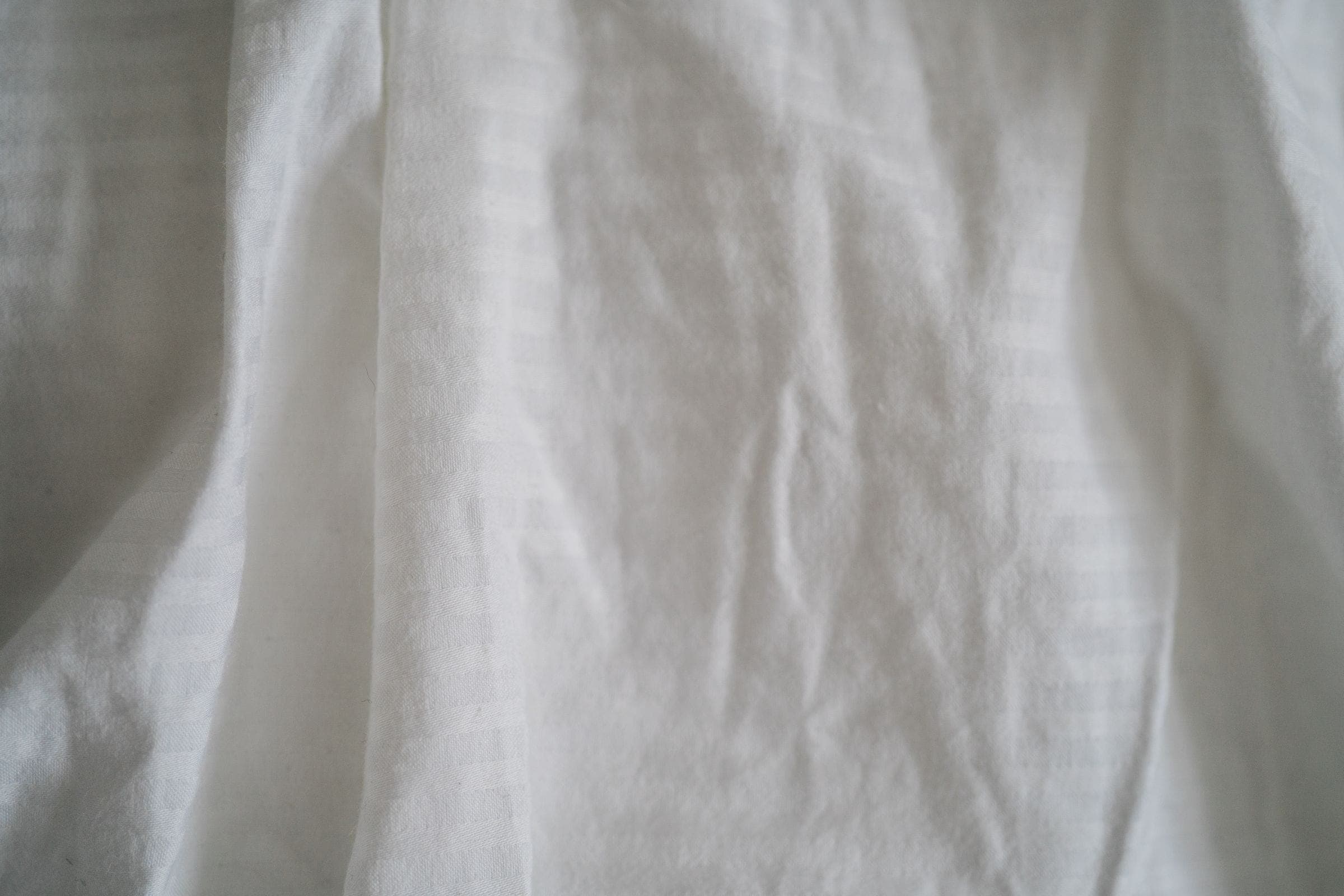
A self print is a pattern printed in the same colour as the fabric, or in a shade so close to it that the design shows as a soft, tone-on-tone texture rather than a contrast. A cream lawn with cream flowers printed on it is a self print. So is a black cotton with a slightly shinier black paisley.
The word self turns up all over clothing listings, and it always means the same thing: matching the main fabric. Self fabric is the same cloth as the garment, self piping is piping cut from that cloth, self-colour buttons match it, and a self design suit is one whose pattern sits in its own colour rather than in a second one.
Self print, self jacquard and self embroidery
Shops use self for three quite different ways of making the pattern. They look alike in a photo but feel and wear differently, so it is worth knowing which one you are buying.
- Self print: the pattern is printed on the surface, often in a slightly deeper or glossier version of the base colour. It feels flat to the touch, and the back of the fabric usually shows little or none of it.
- Self jacquard: the pattern is woven in, using the same colour yarn in a different weave, so it shows through changes in sheen. Turn it over and you will often see the design in reverse. Our jacquard guide explains the weaving.
- Self embroidery: thread in the same colour as the fabric is stitched on top, so the pattern stands slightly raised. You can feel it with a fingertip and see the stitches on the back.
- Self stripe or self check: a small woven texture, such as a dobby, in the base colour. Common in summer cottons; see our guide to dobby and slub cottons.
How self-patterned fabric looks in photos
Self patterns depend on light skimming across the surface, so a flat, front-on photo can make them vanish. A suit that looks entirely plain in a listing may show a clear pattern in person, and a self print photographed in a raking light can look bolder online than it does across a room.
When you judge a self print on a screen, look for a photo taken at an angle or in side light, and zoom in on a fold, where the sheen changes. When you photograph your own self-patterned fabric for a quote, stand beside a window so the light comes from one side, and take one close-up as well as one of the whole piece.
What self prints suit
A self pattern adds depth without adding another colour, which makes it useful in a few situations. It is a natural fit for office wear and for anyone who finds busy prints tiring to wear. It suits monochrome outfits, where texture keeps one colour from looking flat; our guide to plain suits with presence has more ideas along these lines. It also lets a detailed cut show, because the pattern does not fight seams, pleats or a yoke.
Pair a self-print kameez with plain trousers in the same colour for a long, calm line, then decide how much contrast you want in the dupatta. A plain dupatta in the same shade keeps it quiet; a contrast dupatta, or one with a printed border, lifts it for an evening.
Asking for self details in an order
If you like the self look, say so in your notes: self piping on the neckline, self-colour buttons, or embroidery in the same colour as the fabric. Same-colour embroidery is something to ask for in your quote, and we confirm what is possible on your fabric and design; the custom embroidery page explains the levels.
If you already own a self-print suit, Stitching Only is the route: send us daylight photos first and we confirm that the fabric is suitable and how much is needed before you post anything. When you are ready, ask for a Stitching Only quote.
Common questions
Is a self print suit the same as a plain suit?
Not quite. From a distance it reads as plain, but up close or in side light a same-colour pattern appears. It sits between a plain suit and a printed one.
Does a self print fade faster than a woven pattern?
A printed pattern sits on the surface, so with many washes it can soften more than a woven jacquard pattern, which is part of the cloth. Washing inside out and following the care label helps it last.
What does self colour mean on a listing for trousers?
It means the trousers are the same colour as the main fabric of the suit, usually the kameez. Self colour lining or buttons means the lining or buttons match it too.