Fabrics and care · 30 September 2026 · 4 min read
Jacquard suits explained: woven patterns and how to cut them
What jacquard fabric is, how its woven pattern differs from a print, how to tell the right side, and why motif placement matters when a jacquard kameez is cut.
 Inspiration
What jacquard means
Jacquard is not a fibre but a way of weaving. The name comes from Joseph Marie Jacquard, whose loom mechanism could lift individual warp threads, so that complex patterns could be woven straight into the cloth. Modern jacquard looms are computer controlled, but the principle is the same: the pattern is built from the threads themselves rather than printed on top.
That means jacquard can be cotton, silk, viscose, polyester or a blend. In Pakistani and Indian collections you will see jacquard lawn, cotton jacquard, silk jacquard and self jacquard, where the pattern is the same colour as the ground and shows only as a change in texture and sheen. Jacquard dupattas and jacquard trouser pieces are also common in suits where the kameez itself is printed or embroidered.
How jacquard differs from a print
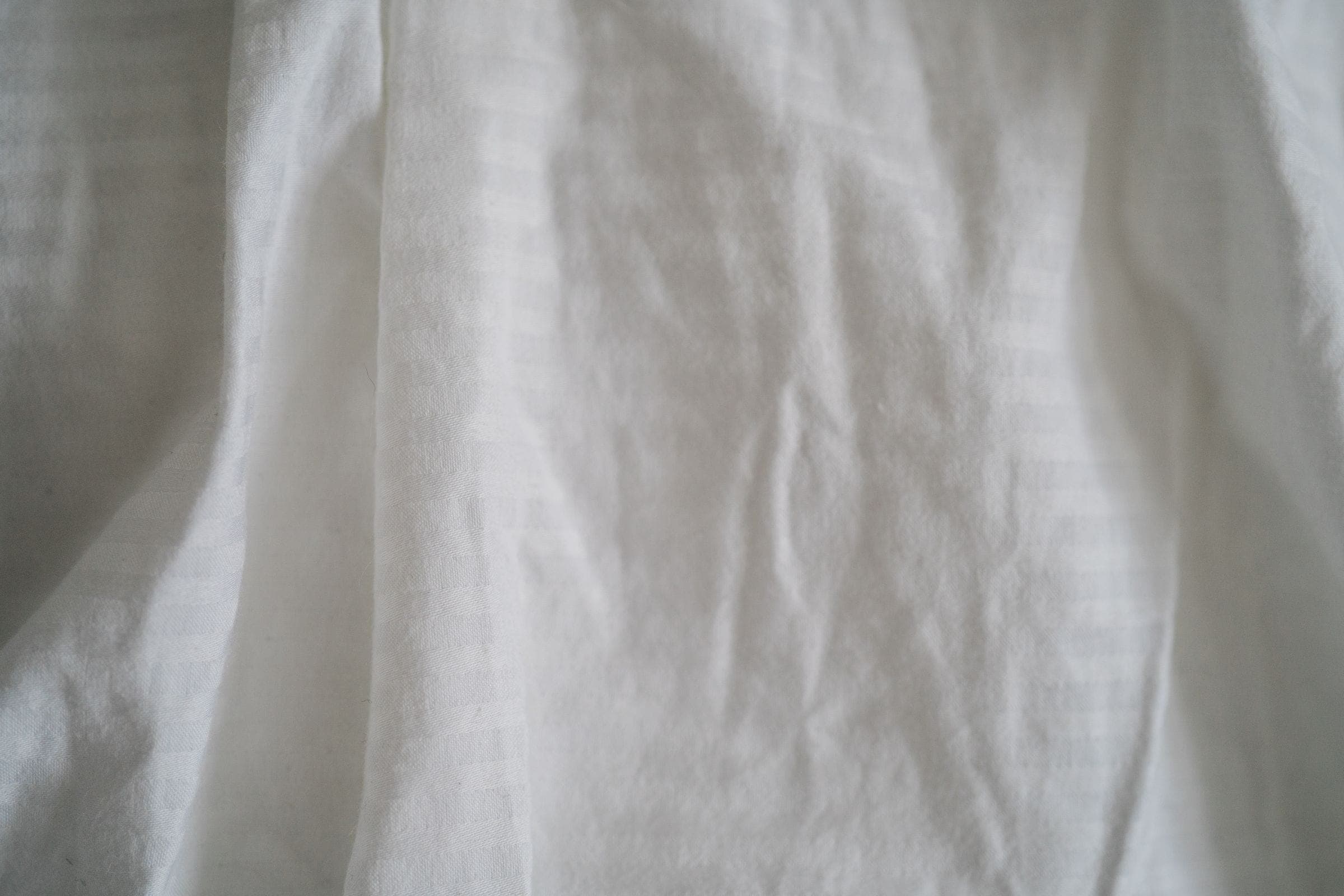
- The pattern shows on both sides: usually as a reverse, or negative, image on the back. A print is usually paler or plain on the reverse.
- Texture: you can often feel the pattern, as raised areas or a change in sheen.
- Floats: in many designs, threads pass over several others to form the pattern. These floats can catch on rings and bag clasps, so treat them gently.
- Weight and body: jacquard is often a little heavier and less drapey than a plain fabric of the same fibre.
- Colour: because the pattern is woven from dyed yarns, it cannot rub off like a surface print, though the yarns can still fade with washing and sunlight.
Which is the right side?
Most jacquards have an obvious face, with a smoother, more defined pattern and a busier back. Some are reversible, and a few designs look better on the reverse, which can make a lovely contrast for cuffs, plackets, a yoke or a trouser hem. If a suit arrives folded with the reverse showing, it is easy to be caught out, so compare both sides in daylight before you decide.
Tell us on the quote form which side you want as the face. If you like both, say so, and we can talk about using the reverse for small details.
Cutting a jacquard kameez
Because the pattern is part of the fabric, where each piece is cut from matters. A tailor planning a jacquard kameez looks at a few things.
- Direction: many jacquards have a one-way pattern, such as flowers that all point up, so every piece must be cut the same way up. This can use more fabric than a design that works in any direction.
- Placement: large motifs look best centred on the front and back and mirrored on the sleeves, rather than cut off at the neckline or sitting awkwardly over the bust.
- Matching: on bold repeats, the pattern is lined up across the centre front and side seams where the fabric allows.
- Fraying: jacquard with long floats can fray and shed at cut edges, so seams are best neatly finished.
- Simple lines: the pattern is the star, so straight and A-line cuts with few seams show it off best. Complicated panelling and deep gathers break it up. Our A-line vs straight guide helps you choose.
Buying and ordering
If you are buying jacquard by the metre, allow a little extra for one-way patterns and large repeats; our fabric quantity guide gives the base figures. In an unstitched suit, the brand has usually allowed for placement, but it is still worth sending photos of each full length so any tight spots are found before cutting.
When you ask for a Stitching Only quote, tell us the fabric is jacquard, which side is the face and whether you want motifs centred. We confirm that the fabric is suitable, how much is needed and how to send it to us in Pakistan before you post anything. Care depends on the fibre, so read the label: many cotton jacquards wash like other cottons, while silk and metallic jacquards are often dry clean only. The unstitched suit stitching page explains the full process.
Common questions
Is jacquard a type of fabric or a type of weave?
Jacquard is a type of weave, not a fibre. The pattern is woven into the cloth, so jacquard can be made from cotton, silk, viscose, polyester or a blend.
How can I tell jacquard from a printed fabric?
Turn it over. A jacquard shows its pattern on the back too, usually as a reverse image, and you can often feel the texture, while a print is usually paler or plain on the reverse and feels flat.
Does jacquard need more fabric?
Sometimes. A one-way pattern or a large motif that needs centring can take more fabric than a plain design, so send photos of the full length and we confirm the amount before cutting.