
Styles and design · 8 October 2026 · 4 min read
What is a peshwas? How it differs from an anarkali
A peshwas is a long, full-skirted frock, usually ankle or floor length, worn over a churidar. How it differs from an anarkali or a maxi, and what to ask for.
 Inspiration
The long, full frock
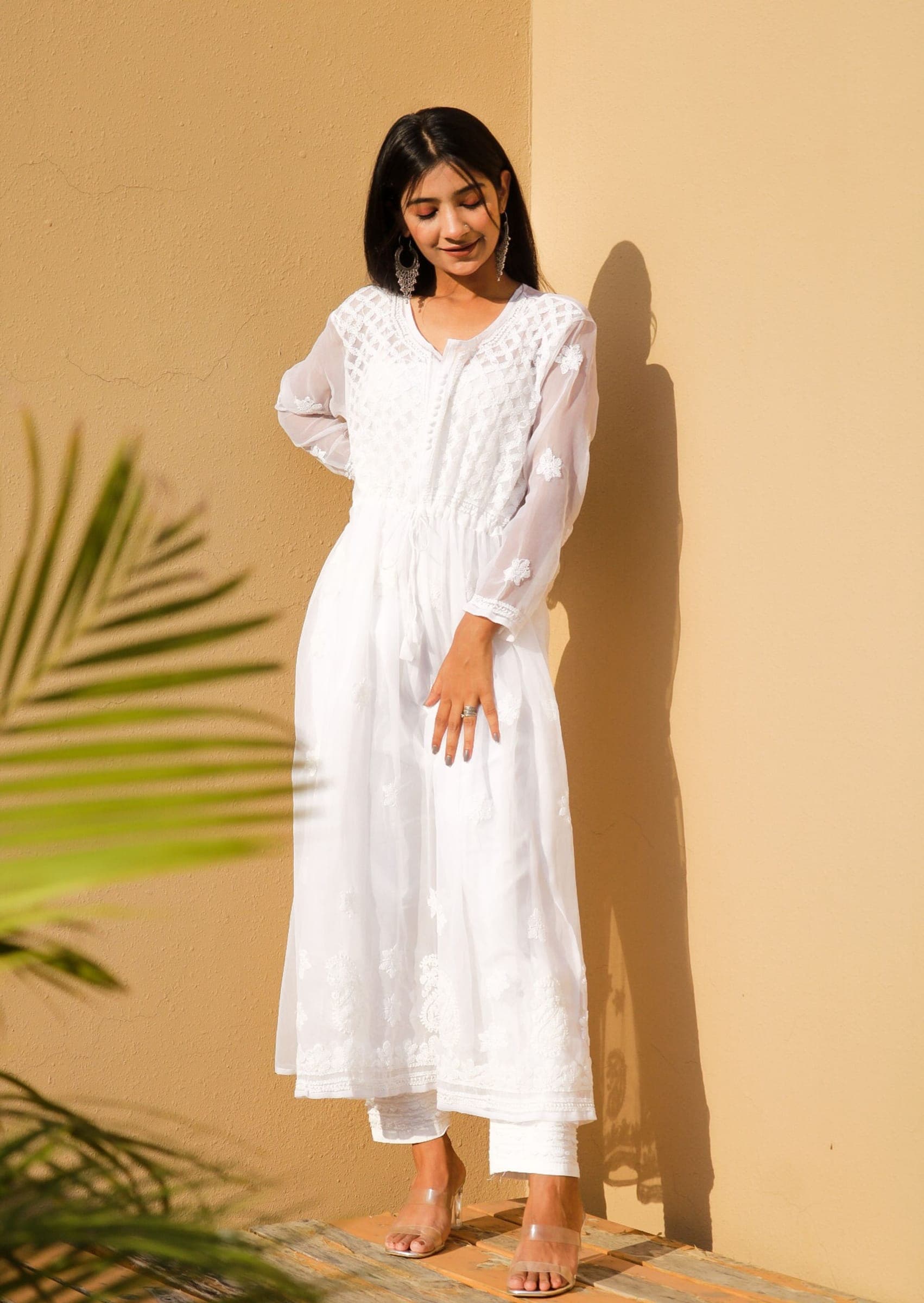
A peshwas, also spelt pishwas, is a long frock with a fitted bodice and a very full skirt, usually ankle or floor length, worn over a churidar or slim trousers with a dupatta. Its whole character comes from length and volume: when you turn, the skirt opens out around you.
It is closely related to the anarkali, and many people use the two words for the same garment. The useful distinction is that anarkali names a cut, while peshwas usually means the longest and fullest version of it.
Peshwas, anarkali and maxi compared
Three names cover a lot of the same ground. This is how they are generally understood, though sellers mix them freely.
- Anarkali: a fitted bodice joined to a flared skirt at a seam under the bust or at the waist. It can be knee, calf or floor length.
- Peshwas: an anarkali taken to its fullest: floor or ankle length, with a wide hem built from many panels or deep gathers.
- Kalidar: flare from long panels with no waist seam. A long kalidar can look like a peshwas; our kalidar frock guide explains the panels.
- Maxi: a Western word for any floor-length dress or kameez, flared or not. A maxi can be quite straight; a peshwas never is.
- Gown: usually a Western formal dress, often with a fitted waist and a train, rarely worn with trousers.
When it is worn
A peshwas is formal wear. It suits Eid, dinners and wedding events where you are a guest, such as a mehndi, nikkah or walima, and it photographs well because of the movement in the skirt. Our guest outfit ideas for wedding events put it in context alongside other choices, and Eid outfits gives more ideas for the festival.
It is not an everyday garment. The fullness takes space when you sit, it needs care on stairs, and in a heavier fabric it has real weight. If you want something similar for daily wear, a calf-length kalidar or a shorter anarkali gives the shape with far less fabric.
Fabric, weight and lining
Because a peshwas uses so much fabric, the choice of fabric changes the outfit more than on almost any other style. Chiffon, georgette and organza give volume without much weight and float as you move. Cotton silk and raw silk hold a fuller, more sculpted shape. Velvet is lovely in winter but heavy, so the flare is usually kept more moderate.
Sheer fabrics are lined, and the lining is usually cut slimmer than the outer skirt so it does not double the bulk. The lining guide explains the choices. The hem of a full skirt is long, so any border or edging along it is a large part of the work and is worth agreeing in detail.
Ordering a peshwas
Measure your bust and the distance from your shoulder to where the waist seam should sit, and give the full length in the shoes you will wear, since a floor-length hem that is too long is a trip hazard. Say how full you want the skirt, or send a photo. A full peshwas needs far more than a standard unstitched kameez piece, so if you are supplying fabric, send photos of everything you have. With Fabric + Stitching we agree a suitable fabric with you instead. Choose an embroidery level on the quote form, and the written quote confirms the design, fabric and work before cutting.
Common questions
What trousers go with a peshwas?
A churidar is the classic choice, because its gathers at the ankle peek out under the hem. Slim cigarette pants or straight trousers also work. Wide trousers are hidden by the skirt and add bulk.
Is a peshwas the same as a lehnga?
No. A lehnga is a separate full skirt worn with a short top. A peshwas is one long garment, with the bodice and the skirt joined together.
Can a peshwas be made from a three-piece suit?
Almost never a full one, because the kameez piece is too short and narrow. A modest flare is sometimes possible by adding panels, so send photos and we will tell you what the fabric allows.
