Fabrics and care · 8 October 2026 · 4 min read
What is chanderi fabric? Weave, sheen and uses
What is chanderi fabric? A light, slightly sheer weave from central India in silk, cotton or a mix, often with fine zari motifs. How it compares and what it suits.
 Inspiration
Chanderi in a few lines
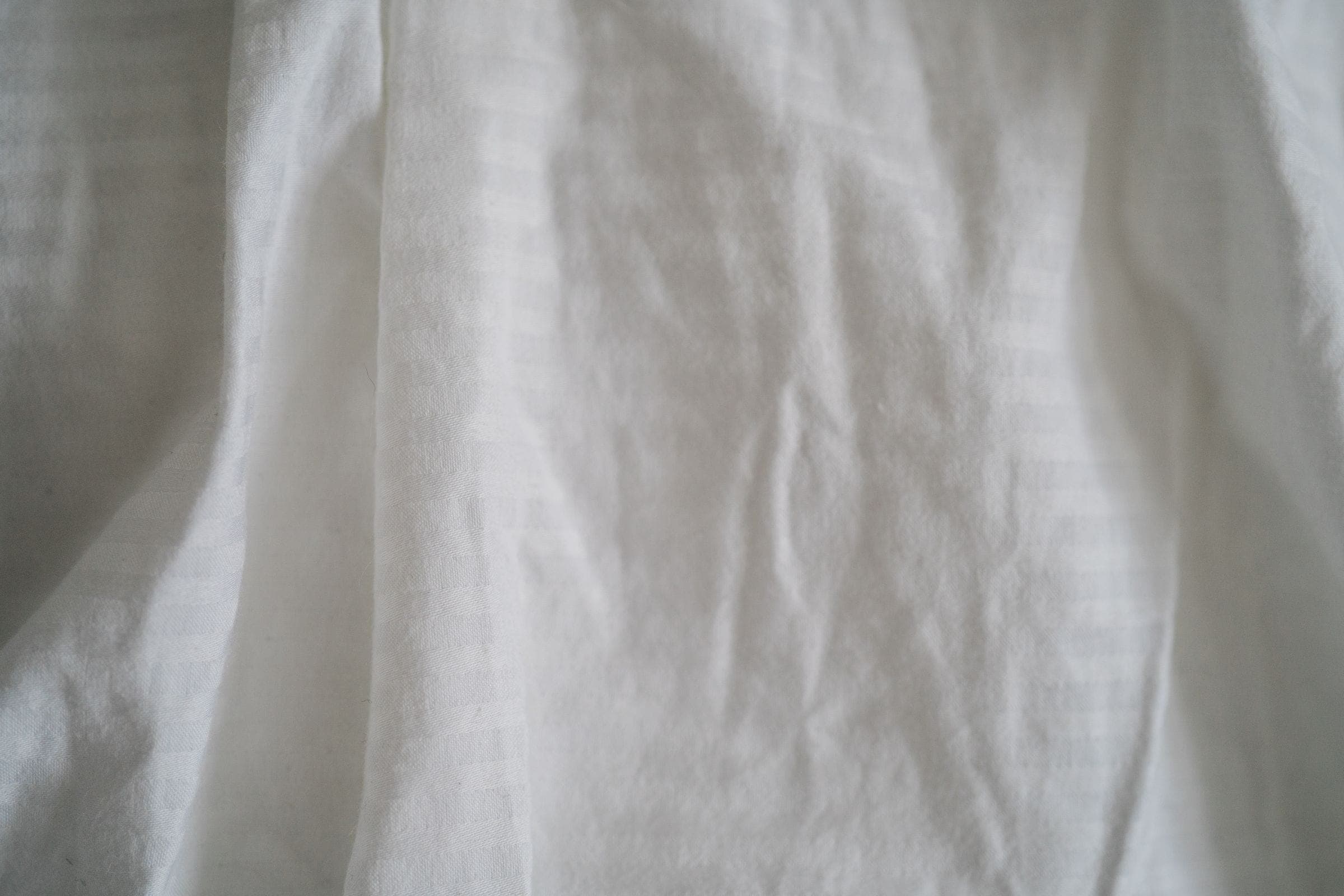
Chanderi is a lightweight, finely woven fabric with a soft sheen and a slightly see-through quality, named after the town of Chanderi in Madhya Pradesh, central India, where it has been handwoven for centuries. It is traditionally made in silk, in cotton, or most often in a mix of the two, and it is known for small woven motifs (buttis) and borders picked out in zari, a metallic thread.
Its character comes from very fine yarns woven fairly openly, so the cloth is airy and translucent without being as stiff as organza. It feels crisp when new and softens with wear. Handwoven chanderi from the region is registered as a geographical indication in India, but the name is used far more loosely in the wider market.
Silk, cotton and silk-cotton chanderi
You will meet three main versions, and it is worth asking which one you are looking at, because the fibre changes the sheen, the feel and the care.
- Silk chanderi: the lightest and most lustrous, with an almost glassy glow; also the most delicate.
- Cotton chanderi: matte to softly glowing, breathable and easy in heat, though still fine enough to let light through.
- Silk-cotton chanderi: the most common kind, where silk gives the sheen and cotton gives body. Many people mean this when they simply say chanderi.
A name sellers use loosely
In shops and online listings, “chanderi” is often attached to any light, slightly shiny, semi-sheer fabric, including blends with polyester or viscose and machine-made copies whose motifs are printed rather than woven. That is not necessarily poor cloth, but it is not the same thing. If the fibre matters to you, ask what the fabric is made of, and look at the back: woven motifs leave floats of thread on the reverse, while printed ones do not.
The shiny cottons you will find on the same shelf, such as cotton silk and raw silk, are explained in our cotton silk and raw silk guide.
How it compares with organza and cotton silk
Organza is stiffer and more transparent, made from tightly twisted filament yarns, so it stands away from the body and is often chosen for sleeves, panels and dupattas; organza in everyday outfits covers it in detail. Chanderi is softer and falls closer to the body. Cotton silk is usually denser and less see-through than chanderi with a similar gentle sheen, so it can often be worn with a lighter lining.
Net is different again: an open mesh rather than a woven cloth, with far more transparency and no sheen of its own.
What chanderi suits, and what to ask for
Its classic uses are dupattas, kurtas and kameez for daytime events, Eid and summer gatherings, where a little shine is welcome but a heavy fabric is not. Because it is semi-sheer, a kameez almost always needs a lining; does my kameez need lining? helps you choose one, and a thin cotton keeps the outfit breathable. Chanderi frays readily and can show needle marks, so simple, well-finished seams suit it better than lots of fussy shaping.
If you already have chanderi, our stitching service for your own fabric means you send it to us in Pakistan once we have confirmed it is suitable and that there is enough of it. Start a stitching-only quote with a daylight photo of the fabric and any label, and we confirm what is possible on it in the written quote.
Common questions
Is chanderi see-through?
Somewhat. It is fine and openly woven, so light passes through, especially in pale colours. Most kameez and kurtas in chanderi are lined, while dupattas are usually worn unlined.
Is chanderi good for hot weather?
Cotton and silk-cotton chanderi are light and airy, so they suit warm days well. A lining adds a layer, so choose a thin cotton lining if heat is your main concern.
How should chanderi be washed?
Follow the label first. Silk chanderi and any piece with metallic motifs are often dry cleaned, and plain cotton chanderi is usually hand washed gently in cool water. Test on a hidden area first and never wring it.