
Fabrics and care · 8 October 2026 · 4 min read
What is mercerised cotton? Sheen, strength and dye
What is mercerised cotton? A caustic soda finish giving cotton yarn or cloth more sheen, strength and richer dye, how to spot it on lawn and what it leaves alone.
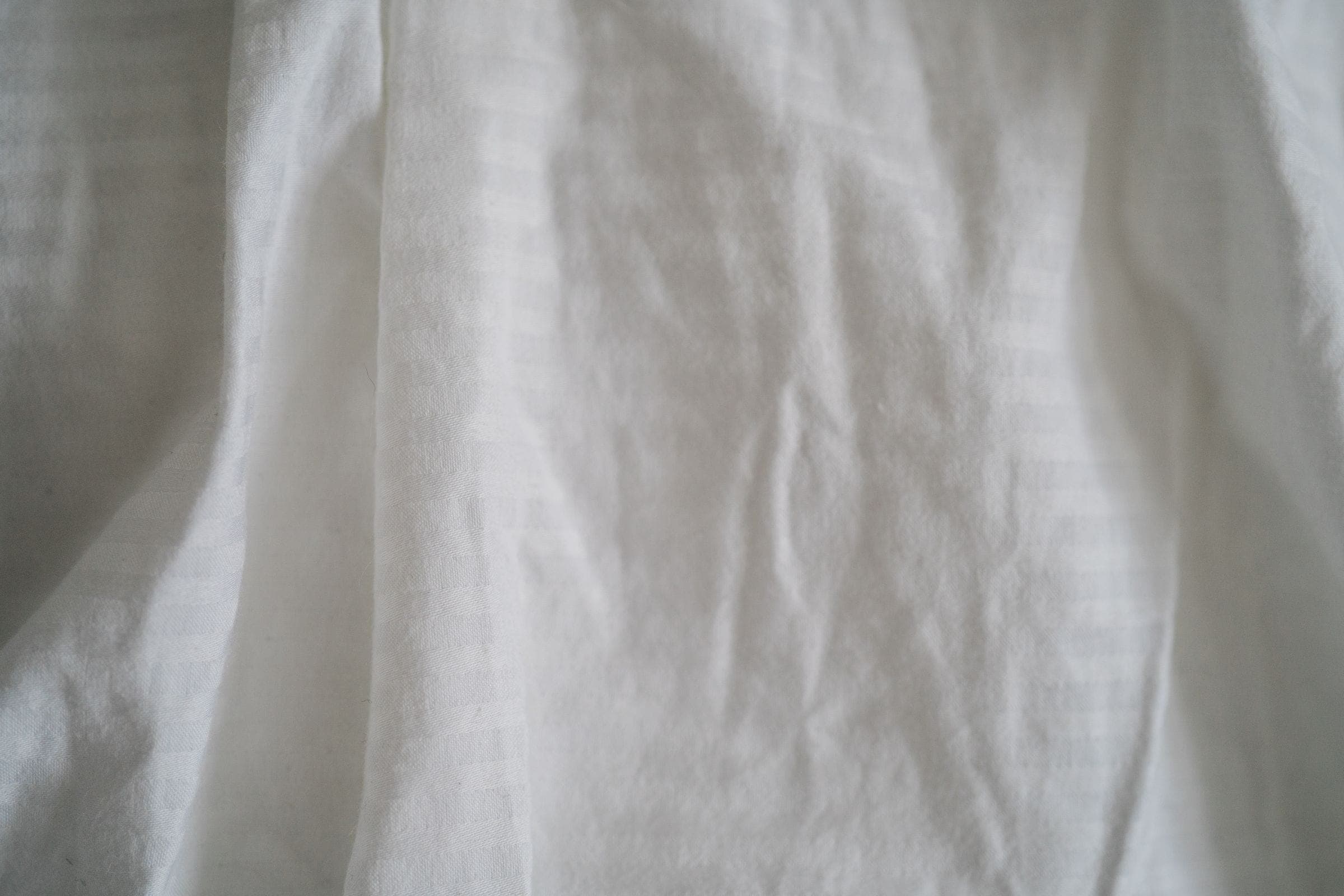 Inspiration
The definition
Mercerised cotton is cotton yarn or fabric that has been treated with a strong alkali, usually caustic soda (sodium hydroxide), while held under tension, then neutralised and washed. The treatment swells each fibre so it becomes rounder and smoother, which gives the cotton a soft lustre, makes it somewhat stronger and lets it take up dye more deeply.
The process is named after John Mercer, an English chemist who described the effect of caustic soda on cotton in the middle of the nineteenth century. The lustre that people now associate with it came later, when manufacturers found that keeping the cotton stretched during treatment stopped it shrinking and made it shine.
What mercerising changes
The effects are real but modest. A mercerised cotton still looks and feels like cotton, only a little more refined.
- Lustre: a gentle, silky glow rather than the high shine of satin.
- Strength: the fibres become a little stronger and more resistant to wear.
- Colour: dyes are absorbed more fully, so colours look deeper and prints look crisper.
- Feel: the surface is smoother and slightly cooler to the touch.
What it does not change
Mercerising is a finish, not a different fibre. The cloth is still cotton, its weave is the same, and its weight is broadly unchanged. It does not make a sheer lawn opaque, it does not turn a poor cotton into a good one, and it is not the same as a colourfastness treatment or a pre-shrinking finish. A mercerised lawn can still bleed dye or shrink a little, so the usual checks still apply; our article on the colour-fastness test before stitching explains one of them.
Mercerised lawn, cambric and thread
On Pakistani unstitched suits, “mercerised lawn” or “mercerised cambric” on the label means the cloth has had this finish, which is part of why some lawns have a soft glow and vivid print colours. It describes a treatment, not a fabric type: our lawn guide and cambric guide describe the cloths themselves.
Sewing and embroidery threads are often mercerised too, which is why some cotton thread looks almost silky. It runs smoothly through the needle and holds its colour well, which is why it is popular for hand embroidery.
How to spot it
Without a label you can only make an educated guess, because other finishes also add shine. Calendering, where cloth is pressed between hot rollers, and softeners can both give a gloss that fades after a few washes, while mercerised lustre lasts much longer. Our guide on judging fabric quality in an unstitched suit covers the wider checks. These signs point towards mercerising:
- A soft, even sheen in daylight that looks the same all over
- Colours that look rich and clear rather than flat
- A smooth, cool surface without any waxy or slippery coating
- A sheen that survives the first wash
What it means for your order
Mercerised cotton is cut and stitched like any other cotton, so it needs nothing special from you beyond following the care label. If you would rather not judge labels at all, Fabric + Stitching means we supply the agreed fabric and describe it in the written quote. Ask for a Fabric + Stitching quote and say what feel and sheen you are hoping for.
Common questions
Is mercerised cotton better than ordinary cotton?
Not for every purpose. It is smoother, a little stronger and holds colour well, which suits kurtas, shirts and thread. Unmercerised cotton is softer and more matte, which some people prefer for relaxed everyday clothes.
Does mercerised cotton shrink?
It can, as any cotton can. Mercerising is not a pre-shrinking finish, so the usual advice on pre-washing fabric before it is cut still applies.
Does the sheen wash out?
Mercerised lustre comes from the changed shape of the fibre, so it lasts far longer than shine added by pressing or softeners. It softens a little over the life of the garment.