
Occasions and ordering · 5 October 2026 · 4 min read
What to wear to a milad gathering
What to wear to a milad: the usual custom is a plain or lightly worked suit in white or a soft colour, a dupatta that stays on the head and room to sit.
 Inspiration
The usual custom: pale, plain and covered
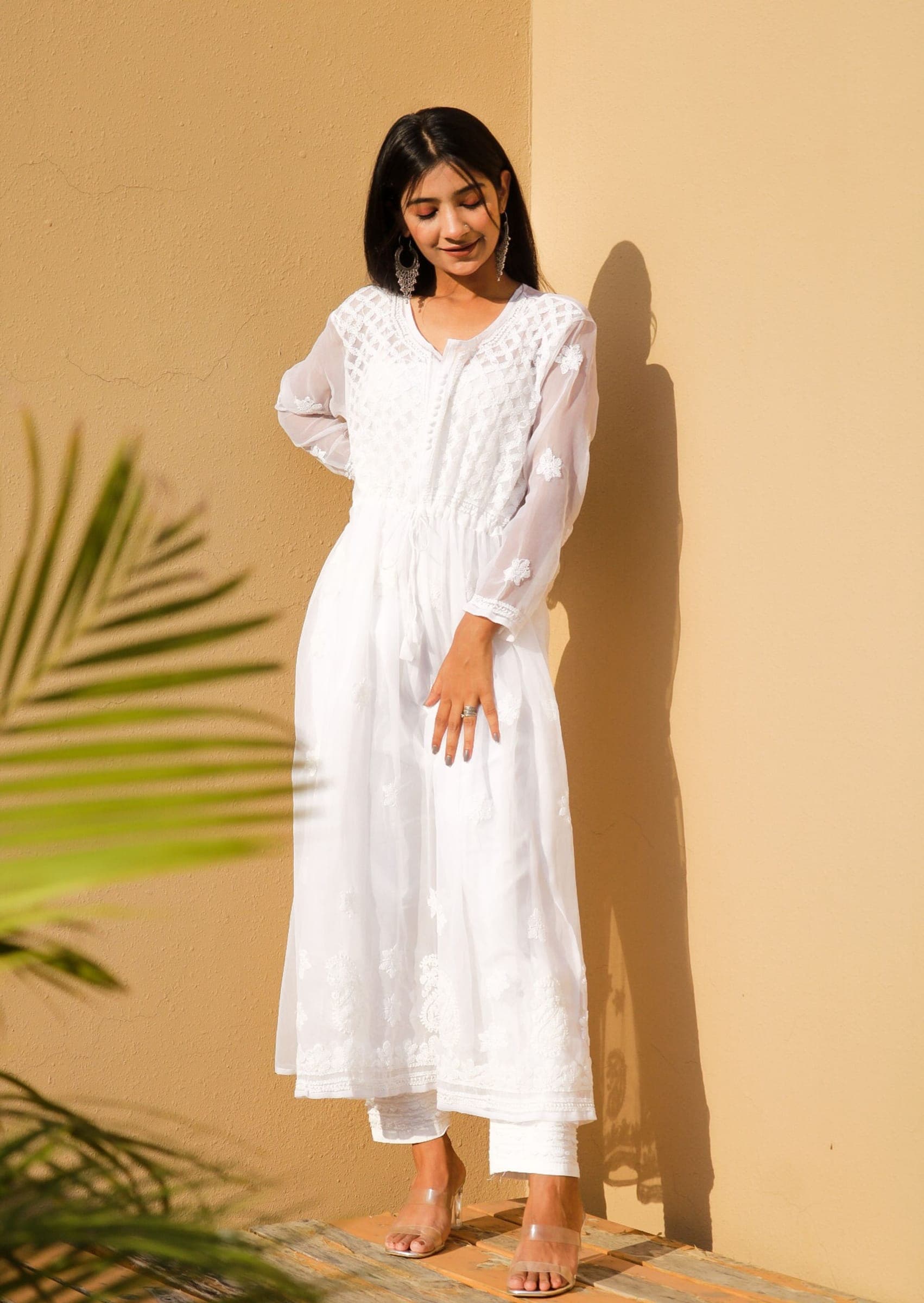
To a milad, wear a modest suit that is plain or lightly embroidered, in white or a soft colour, with a dupatta big enough to stay on your head and trousers you can sit on the floor in. That is the usual custom at women’s milad gatherings in Pakistani homes. It is a custom and not a rule, and families differ.
A milad, also called a mawlid, is a gathering where naats are recited in praise of the Prophet. The communities that observe it hold it in homes and halls, most of all in the month of Rabi ul-Awwal, when it is often called Eid Milad un Nabi, and sometimes to mark a family occasion. Guests usually sit on sheets spread over the floor, heads covered, for an hour or two, and food is served afterwards.
Colour and decoration
White and cream are the classic choices, followed by soft pastels: mint, powder blue, pale pink, lilac. Green is popular, on its own or as a dupatta over white. Some hosts name a colour for the gathering, so read the invitation or ask.
Keep decoration quiet. A plain suit is entirely appropriate, and so is white thread work on a white ground or a narrow lace edge. What looks out of place is party shine: heavy sparkle, metallic fabric, anything that glitters when you move. If you are having a suit made, the delicate embroidery level, at the neckline or sleeves, is the right ceiling; our guide to delicate, detailed or statement embroidery shows what each level looks like.
Cut for the floor and a covered head
The practical needs are the same as at any long seated gathering, and our guide to comfortable outfits for long gatherings goes through them in detail. In brief:
- Dupatta: full size, in cotton or lawn, which grips the hair. Chiffon slides off every time you look down at the page.
- Sleeves: full or three-quarter.
- Kameez: knee to calf length with low side slits, so it lies neatly over your lap.
- Trousers: a shalwar or roomy straight trousers. Slim trousers pull at the knee when you sit cross-legged.
- Lining: white and pastel lawn is often see-through, so check whether your kameez needs lining.
- Feet: shoes come off at the door, so wear socks you are happy to be seen in.
If you are hosting
The host dresses in the same spirit as her guests, perhaps a shade dressier, but her evening is different. She is greeting at the door, carrying trays, laying out food and bending over a dastarkhwan, so the outfit has to work as well as look right.
- Pin the dupatta at the shoulder and at the head, so both hands stay free.
- Choose sleeves that end at the wrist or above it, with no flare to trail through dishes.
- Pick a washable cotton; pale clothes and serving food are an uneasy pair.
- If you are setting a colour for guests, say so clearly in the invitation and keep it to something most women already own, such as white.
What to ask for in a milad suit
A plain white or pastel suit is one of the most useful things to own, because the same outfit serves for milads, khatams and condolence visits. Our weekend and gatherings page has more ideas for this kind of quiet occasion wear.
If you are ordering one, state the four points below when you request a quote. Making takes 5 to 7 working days from approval and full payment and shipping time is extra, so order well ahead of the gathering.
- Fabric: cotton, cambric or lined lawn for homes; cotton silk if the gathering is in a hall in the evening. With Fabric + Stitching we supply the agreed cloth.
- Embroidery level: none or delicate.
- Length: knee to calf, with trousers cut for bare feet.
- Dupatta: full width, in a matte fabric.
Common questions
Is white compulsory at a milad?
No. White and pale colours are the common custom, not a requirement, and some families dress in green or in any modest colour. If the host has named a colour, follow that.
Can I wear an abaya to a milad?
Yes. Many women arrive in an abaya and keep it on, or take it off once inside if the gathering is for women only. Either is normal.
Can I wear black to a milad?
Custom varies. Black is everyday wear for many women and will not offend in most homes, but milads in Rabi ul-Awwal are joyful gatherings and pale colours are more usual. A light dupatta over a dark suit is an easy middle way.
