
Embroidery and fancy work · 4 October 2026 · 4 min read
Delicate, detailed or statement embroidery: which level?
What delicate, detailed and statement embroidery mean on our quote form, how each looks on a kameez or kurta, and how to pick a level for work, Eid or a party.
 Inspiration
Three levels, in plain words
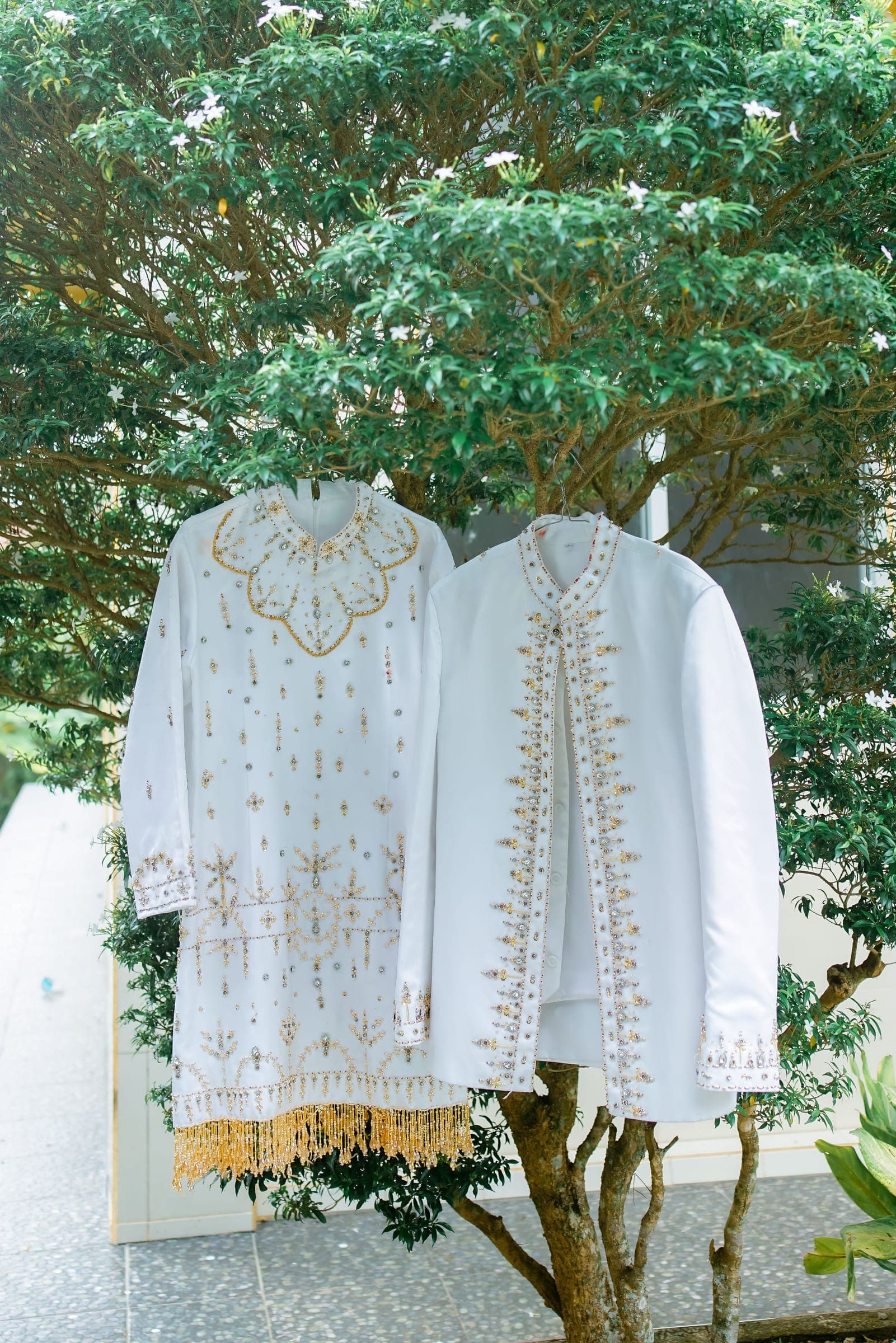
Our quote form asks you to pick an embroidery level rather than a technique, because the level is what changes how an outfit looks and wears. Delicate means work at the neckline or the sleeves. Detailed means the neckline, the sleeves and the hem together. Statement means bolder work for Eid and parties. There is also none, for a clean finish, and advise me, if you would like a suggestion.
Whichever level you choose, it is an indication of intent, not a fixed pattern. We look at your fabric, garment and photos, then confirm in your written quote exactly what the work will be and where it sits.
Delicate: a single focal point
Delicate embroidery puts the attention on one area, usually the neckline, sometimes the cuffs. It suits everyday kurtas, office wear and anything you will wash often. A fine border around a round neck or a small motif either side of a placket looks finished without feeling dressed up.
It is also the kindest level for fine fabrics. Lawn, voile and soft cotton carry light work comfortably, while dense work on a thin base can pucker or pull. If you are unsure, delicate is the level you are least likely to regret.
Detailed: neckline, sleeves and hem
Detailed embroidery repeats a theme at three points, which frames the whole garment. A neckline border picked up again at the sleeve hems and the daman gives a kameez a balanced, considered look for gatherings, dinners and smart family occasions.
Because the hem is involved, length matters. Tell us your preferred kameez length clearly (our kameez length guide helps) so the hem work is placed for your height rather than adjusted afterwards.
Statement: bolder, for Eid and parties
Statement work is richer and more visible: a deeper neckline panel, wider borders, more coverage on the front or the dupatta. It is pitched at Eid, dinner parties and celebrations as a guest. We keep it at that level; heavy wedding-day couture is not something we make.
Statement pieces usually need more thought about structure. Richer work adds weight, so a lining or a firmer base fabric may be suggested, and the garment generally needs gentler care. See our embroidery and lining guide for why.
Matching the level to your life
A quick way to decide is to think about how often you will wear the piece and where:
- Weekly wear, work or campus: none or delicate. Comfortable under a coat and easy to wash. Our work and campus page has outfit ideas.
- Family gatherings and dawats: delicate or detailed, depending on how formal the gathering is.
- Eid day and parties: detailed or statement. The Eid occasion page shows how an outfit comes together.
- Hot climates: lighter levels breathe better; see the climate guide.
When to choose advise me
If you are torn between two levels, or you are sending a printed unstitched suit and cannot picture how extra work would sit on it, choose advise me. Tell us the occasion, how often you expect to wear the outfit, your climate and whether you prefer quiet or eye-catching details. We then suggest a level and placement that suits the fabric, and explain why.
A suggestion is only a starting point. You can move the work up or down a level, ask for it in a different place, or drop it altogether before you approve the written quote. Nothing is fixed until you sign off the design.
Choosing it on the quote form
Pick your level on the stitching quote form and add a note on colours and placement. If you are ordering from Saudi Arabia, the Saudi fancy work page explains how the service works from there, including quote currency. The level, the exact placement and the total are then agreed in writing before cutting, along with the rest of the design. Our custom embroidery page sums up the whole service.
Common questions
What is the difference between detailed and statement embroidery?
Detailed repeats the work at the neckline, sleeves and hem, which frames the outfit. Statement is bolder and richer, with more coverage, and is meant for Eid and parties. Both are confirmed in your written quote for your fabric and design.
Can I mix levels, for example statement on the dupatta and delicate on the kameez?
Yes, describe it in your notes. Many people keep the kameez quieter and let the dupatta carry the richer work, or the other way round. We confirm what is possible before you approve the quote.
Is statement embroidery suitable for a wedding?
It suits a guest outfit for a wedding event, a dinner or a mehndi. It is not designed as wedding-day couture, which we do not make.
