Occasions and ordering · 5 October 2026 · 4 min read
What to wear to a Quran khwani or khatam
What to wear to a Quran khwani depends on why it is held: plain white or muted colours for a memorial, soft colours and light embroidery for a blessing.
 Inspiration
It depends on why the recitation is being held
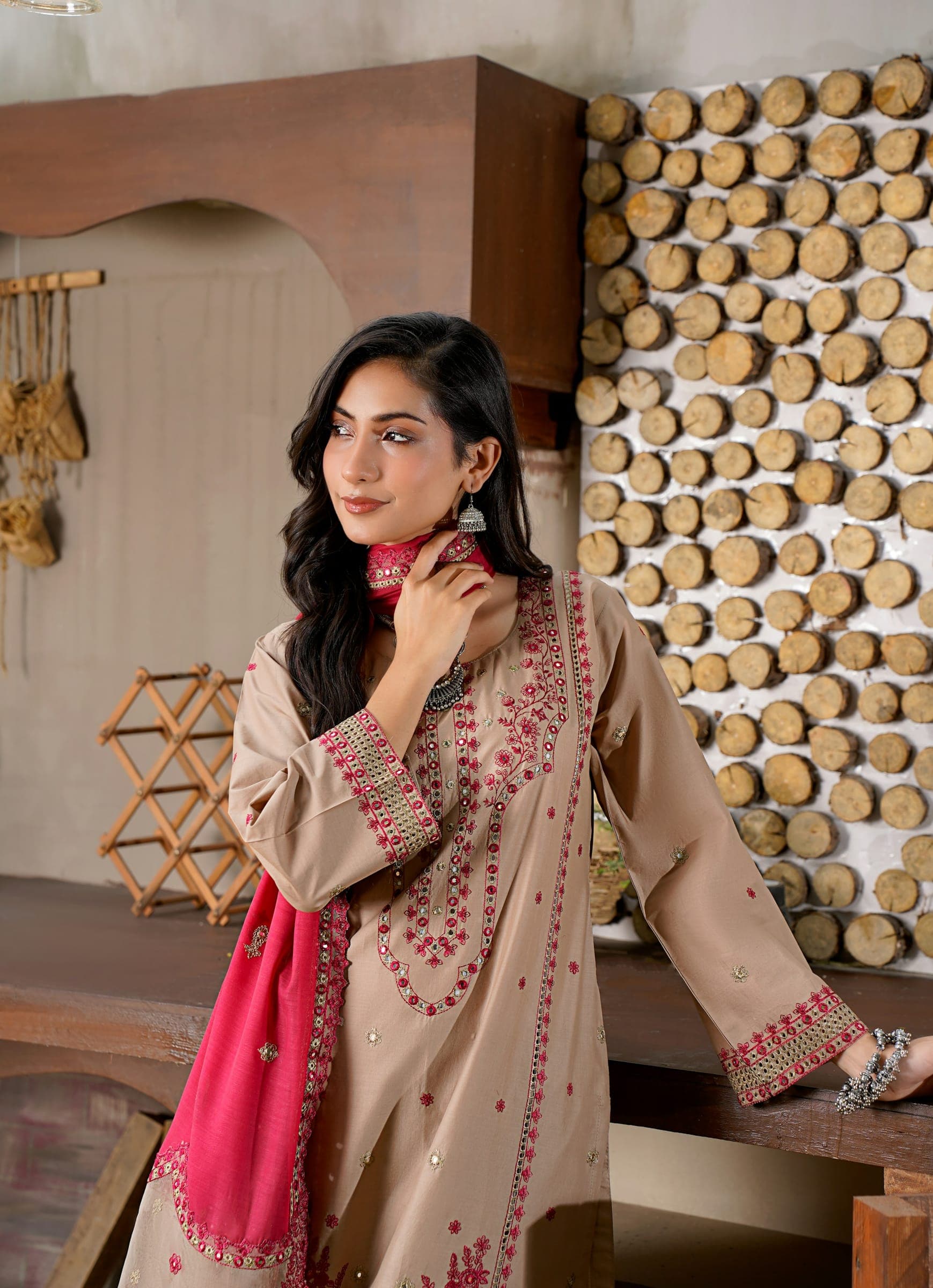
What to wear to a Quran khwani depends on the reason for it. For a memorial, wear a plain suit in white or a muted colour with no shine. For a blessing, such as a new home or a child completing the Quran, a suit in a soft colour with light embroidery is usual. For both, bring a proper dupatta to cover your head and wear clothes you can sit on the floor in.
These are the customs of Pakistani families as they are commonly kept, not rules, and households vary. When in doubt, dress plainer.
Khwani, khatam and the reasons for them
At a Quran khwani, guests each read a part of the Quran so that the whole is completed together in one sitting; the completion itself, and the prayer that follows, is the khatam. Families hold one for several reasons, and the invitation normally says which.
- In memory of someone: in the days after a death, and at later remembrance gatherings in the families that hold them.
- As a blessing or thanksgiving: for a new home, a new business, a recovery, a safe return or before a wedding.
- An ameen: a celebration for a child who has finished reading the Quran for the first time.
For a memorial
White is the traditional colour of mourning across much of South Asia, and it remains the most common choice. Off-white, grey, beige, pale blue and other subdued shades are equally acceptable, and in some communities black is usual. Choose plain cotton or lawn with a plain dupatta.
Leave out everything festive: bright colours, bold prints, shiny fabric, embroidery that catches the light, stacked bangles, heavy make-up. A suit with no decoration at all is correct here, and nobody will think it underdressed. If the gathering was called at short notice, a clean, pressed everyday suit in a quiet colour is better than anything new.
For a blessing or an ameen
The mood is happy, and clothes can show it gently. Pastels, white with a coloured dupatta, soft prints and a little embroidery at the neckline all suit a khatam for a new home. Think of what you would wear to see relatives on an ordinary Eid afternoon, then take it down a step.
An ameen is the dressiest of the three, because it celebrates a child, and the family may be in new clothes. Guests can wear a light festive suit. The line to stay under is party wear: no heavy sparkle, and nothing that rustles or jingles while others are reading.
What stays the same, whatever the reason
You will be sitting on the floor with a para, one of the thirty parts of the Quran, in your hands and your head covered, possibly for a couple of hours. Our guide to comfortable outfits for long gatherings goes into the cut; the essentials are short.
- A full-size dupatta in cotton or lawn that stays on the head when you look down. See dupatta sizes.
- Full or three-quarter sleeves, and a neckline that stays covered when you lean forward.
- Opaque fabric, or a lining under pale lawn.
- A shalwar or roomy trousers, and a kameez that reaches the knee or below.
- Clean socks, since shoes are left at the door.
Keeping one quiet suit ready
Khwanis, and memorial ones above all, are often arranged within days, which is too soon to have anything made. The practical answer is to keep one plain white or pale suit in the wardrobe at all times.
If you would like one made to measure, request a quote through Fabric + Stitching and state the fabric (cambric, or lawn with a lining), the embroidery level (none or delicate) and the kameez length (knee to calf), plus a full-width cotton dupatta. Making takes 5 to 7 working days from approval and full payment, with shipping time on top, so order it before you need it. Our everyday page shows more plain suits of this kind.
Common questions
Can I wear black to a Quran khwani?
Custom varies by family and community. Black is accepted at many memorial gatherings and is everyday wear for many women, while white and pale shades are the more traditional choice. For a blessing, lighter colours suit the mood better.
Should I wear an abaya or a suit to a khatam?
Either. Many women wear an abaya over their clothes and keep it on; others come in a shalwar kameez with a large dupatta. What matters is that you are covered comfortably and can sit on the floor.
What is the difference between a Quran khwani and a khatam?
A Quran khwani is the gathering where guests read portions of the Quran together. Khatam means completion: the finishing of the whole reading and the prayer that follows. People often use the two words for the same event.