Unstitched suits · 30 September 2026 · 4 min read
What’s inside an embroidered lawn pack, piece by piece
Embroidered fronts, printed backs, sleeves, neckline patches, daaman borders, trouser lace and chiffon dupattas: what each piece in an embroidered lawn pack is for.
 Inspiration
A kit, not a length of fabric
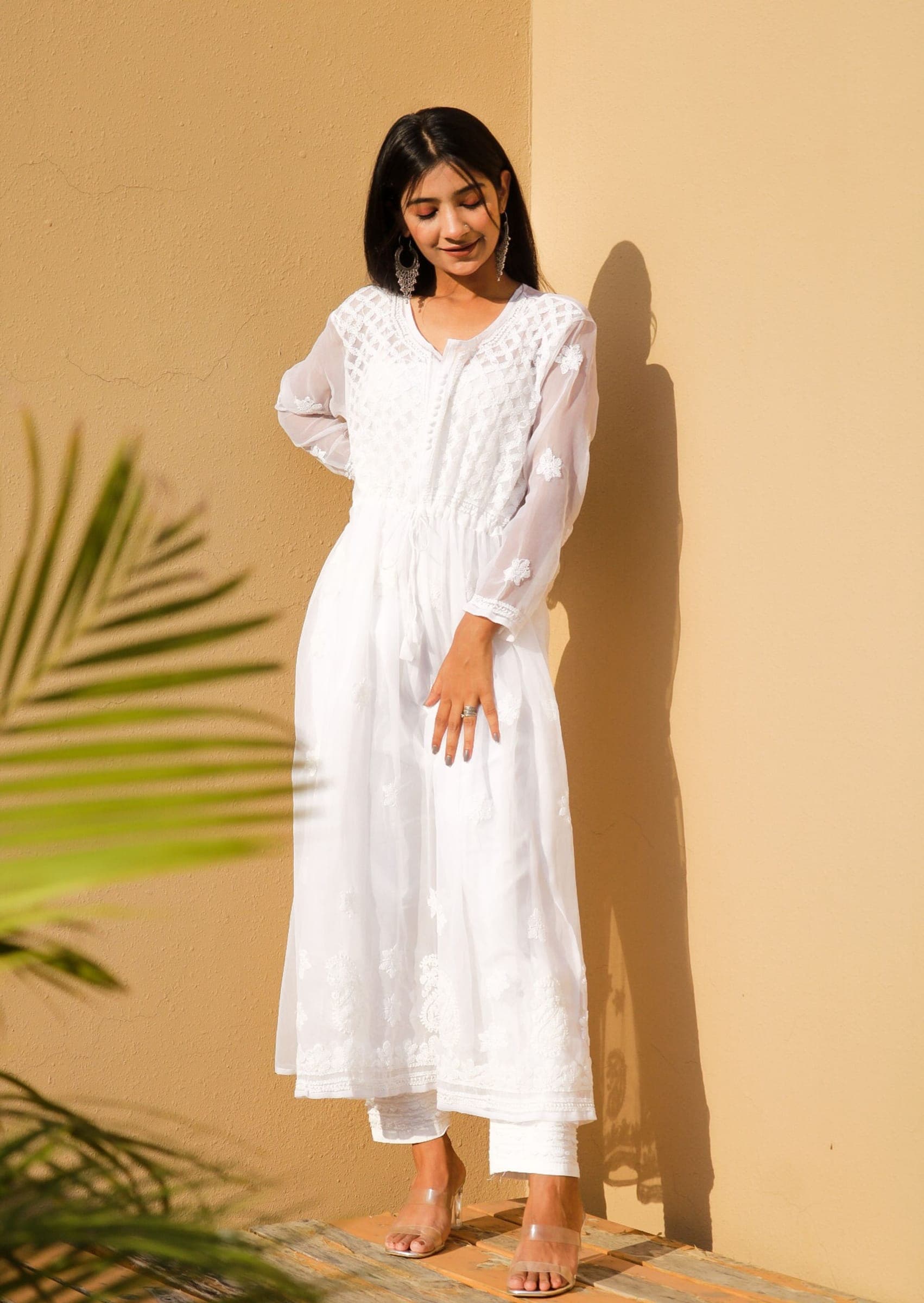
A printed lawn suit often arrives as a few long lengths of fabric. An embroidered lawn suit is different: it is more like a kit, with separate pieces that have each been printed, dyed or embroidered for one particular place on the finished outfit. The more embellished the design, the more pieces there tend to be, and a luxury lawn pack can run to ten or more.
That makes the first job simple but important: open the pack on a clean surface, lay everything out and match each piece to the label. Our guide to reading an unstitched suit label explains the wording.
The pieces you are likely to find
Every brand packs its suits a little differently, but most embroidered lawn packs draw on this list.
- Embroidered front: the main panel, with the embroidery placed for the chest, the centre front or the whole body.
- Back: usually printed or dyed rather than embroidered, cut as its own length to match the front.
- Sleeves: printed, dyed or embroidered, sometimes with a border already worked in at the hem.
- Neckline patch: also called a gala. The neckline embroidery, worked on lawn or organza, to be applied to the front.
- Daaman or hem border: an embroidered strip for the bottom of the kameez, sometimes long enough for the front only.
- Sleeve borders or motifs: narrow strips or small patches for the sleeve hems.
- Trouser piece: usually dyed lawn or cambric, sometimes with an embroidered border, lace or a printed band for the hem.
- Dupatta: chiffon, organza, net, silk or lawn, printed, embroidered or both, often with a worked edge.
How the pieces fit together
The pieces are designed around one version of the outfit, usually the one in the catalogue photo. The neckline patch sets the shape of the neck, the border length suits a particular hem width, and the sleeve embroidery assumes a certain sleeve length. You do not have to follow that version exactly, but it helps to know what the brand intended before you change it. Our guide to using neckline pieces and borders covers the choices.
Look at the sleeves as a pair. The sleeve piece is often a single length with the embroidery placed for both sleeves, meant to sit the same way on each arm, so do not cut into it for anything else until the sleeves are planned. Check the dyed pieces against each other in daylight too: a plain back or trouser piece is dyed to go with the front, and a slight difference in shade is easier to plan around before cutting than after.
What to check when it arrives
A few minutes with the pack laid out saves problems later. Before you put it away or send it for stitching, check:
- Every piece on the label is there, including small patches, which are easy to lose in the packaging.
- The embroidery is complete and straight, with no gaps, loose threads or motifs running off the grain.
- The reverse of the embroidery: dense work can feel scratchy, which affects whether you want a lining. See does my kameez need lining.
- The lengths look right, especially the front, back and borders.
- The quality of the base cloth. Our guide to judging fabric quality explains what to look for.
Getting it stitched
Photograph every piece flat in daylight, with close-ups of the neckline patch and borders, and upload them with the label on the stitching quote form. Tell us which pieces you want used and where, or choose “advise me” and we suggest a layout that suits the embroidery and your measurements. The unstitched suit stitching page explains how pre-worked necklines and borders are placed.
Common questions
What is a daaman in an embroidered lawn suit?
A daaman is an embroidered border for the hem of the kameez. It usually comes as a separate strip, sewn along the bottom of the front or all the way round, depending on its length.
Why is the back of my embroidered lawn suit plain?
Most embroidered lawn suits keep the embroidery for the front, sleeves and borders, where it is seen most, and pair them with a printed or dyed back. It keeps the kameez lighter and more comfortable in warm weather.
Do embroidered lawn suits need lining?
Not always. Pale or thin lawn usually looks better lined, and dense embroidery can feel scratchy against the skin, which a soft lining also solves. Mid and dark lawns with light embroidery are often fine unlined.