Fabrics and care · 8 October 2026 · 4 min read
Why does linen crease so much?
Why does linen crease so much? The stiff flax fibre cannot spring back from a fold. Which weights, blends and cuts crease less, and how to decide if it suits you.
 Inspiration
It is the fibre
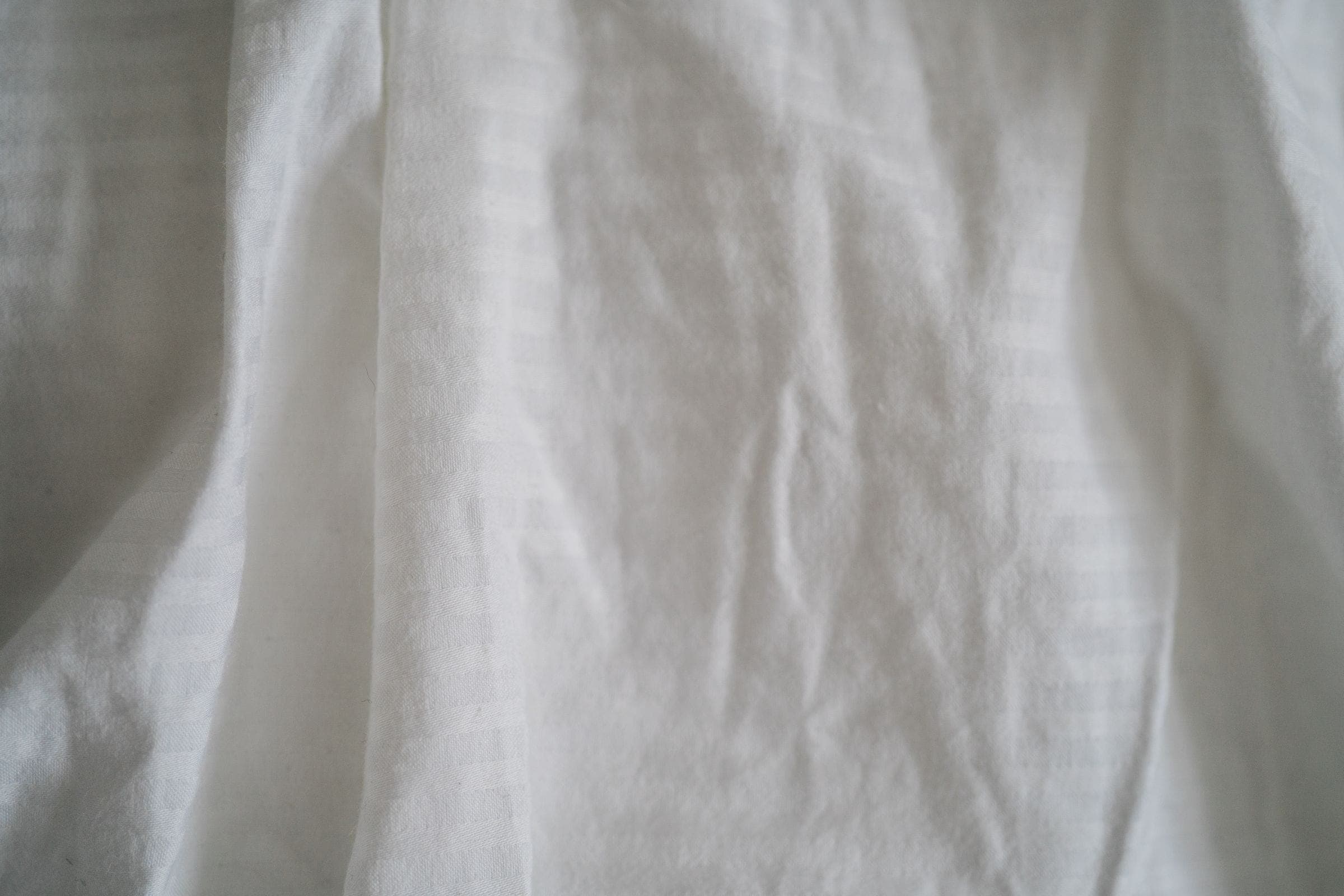
Linen creases so much because flax, the fibre it is made from, is stiff and has almost no stretch or spring. When the cloth is bent, the fibres take the new shape and stay there instead of bouncing back. Body warmth and moisture make it happen faster, which is why a linen kurta is smooth at breakfast and rumpled at the lap, elbows and waist by lunch.
Nothing is wrong with the fabric when this happens. It is how real linen behaves, and the only real choices are to reduce it, hide it or enjoy it.
What is going on inside the cloth
Flax fibres are long, straight and tightly ordered inside, which is what makes linen strong, cool and quick to dry. The same orderliness makes them rigid. Cotton fibres are finer and have a natural twist that gives them a little recovery. Wool fibres are crimped like tiny springs and recover a lot. Flax has neither.
Water plays a part too. A little moisture, from the air or from your skin, loosens the links that hold the fibre’s shape and lets them set again in the folded position as the cloth dries. That is why linen creases most where it is warm, damp and pressed: under a seat belt, behind the knees, inside the elbow. It is also why a damp press or steam takes creases out so easily, a subject our ironing guide covers.
Linen that creases less
No pure linen is crease-free, but some crease far less than others. Bear in mind that a suit labelled linen is not always flax. As our linen page notes, the name is used loosely, and some winter linens that hardly crease at all are blends.
- Heavier weights: thick yarns bend into soft, rounded folds, and the weight of the cloth pulls creases out as it hangs. Fine, light linen creases sharply.
- Washed or softened linen: linen that has been washed many times, or softened at the mill, rumples all over in a gentle way instead of holding hard lines.
- Linen and cotton blends: a little smoother, with a softer feel.
- Linen and viscose blends: more fluid, with softer creases that drop out more readily.
- Linen and polyester blends: crease the least, but lose some of linen’s coolness.
- Easy-care finishes: some linens are treated to resist creasing. The effect is real but partial.
Cuts and colours that hide it
Creases form where fabric is pulled tight or squashed, so the cut matters as much as the cloth.
- Ease: a relaxed kameez with room at the bust, waist and hip creases less than a close cut. A gently A-line kameez hangs clear of the lap when you sit.
- Sleeves: wide or three-quarter sleeves avoid the tight concertina that forms at the elbow of a narrow full sleeve.
- Trousers: wide legs crease less behind the knee than slim ones.
- Colour and pattern: prints, stripes, mid-tones and slubby textures disguise creases. Plain pale and plain dark shades show every shadow.
- Lining: a light lining keeps some body moisture away from the linen and helps it slide instead of bunching.
Deciding whether the look is for you
A creased linen kurta reads as relaxed, not untidy, and many people choose linen for exactly that. It suits weekends, holidays and warm casual days. It is harder to live with if you need to look pressed at the end of a long meeting, after a drive or in photographs. If that is you, a blend, a heavier linen or a crisp cotton may suit you better; our linen vs cambric comparison sets two of those side by side.
Tell us which way you lean when you ask for a Fabric + Stitching quote. Say whether you want real linen and accept the creases, or the look of linen with less ironing, and we propose a fabric and agree it with you before cutting. The Fabric + Stitching page explains how that works.
Common questions
Does linen crease less after washing?
The creases get softer, not fewer. Linen softens with every wash, so it rumples gently all over instead of holding sharp lines, and many people find that easier to wear.
Does a linen blend crease less?
Yes. Cotton and viscose blends crease somewhat less and more softly, and polyester blends crease least. The trade-off is a little less of the cool, dry feel of pure linen.
Is there linen that does not crease at all?
Not pure linen. A fabric sold as linen that stays perfectly smooth is a blend, a treated linen or a linen-look fabric made from another fibre. Check the composition on the label.