
Fit, measuring and alterations · 8 October 2026 · 3 min read
How to stop an angrakha front falling open
Angrakha neckline gaping or falling open? It comes down to overlap width, where the tie sits and an inner fastening. How to get a wrap front that stays closed.
 Inspiration
Overlap, tie and an inner hold
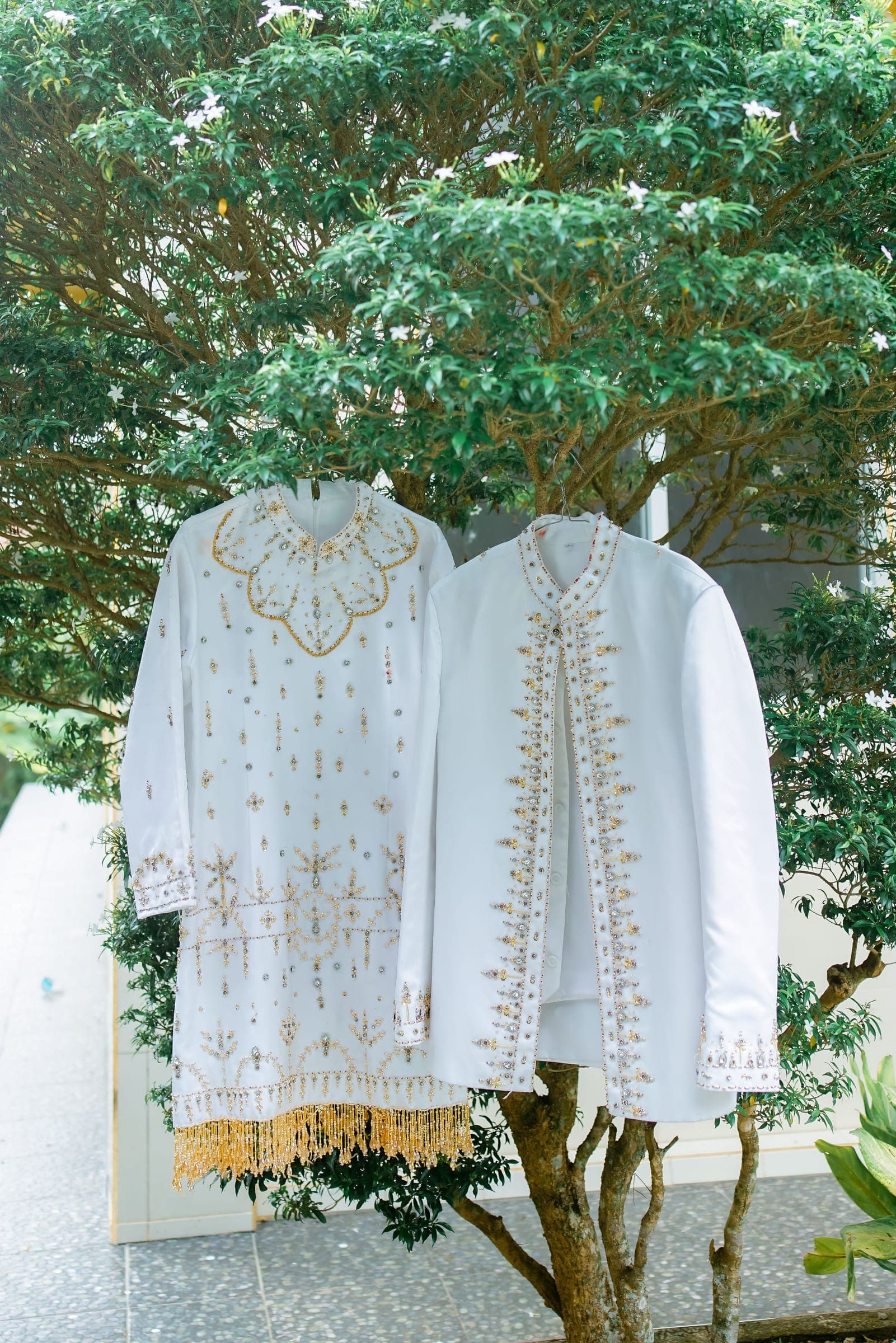
An angrakha front stays closed when three things are right: the two front panels overlap enough for your bust, the outer tie sits at the point where the wrap needs holding, and the inner panel is fastened as well, not left loose. Most gaping comes from an overlap drafted for a smaller bust, or from a single outer tie trying to do all the work.
The same applies to any wrap-front kameez or dress. The angrakha style page shows the cut itself, and our article on what to pair with an angrakha covers styling.
How the closure works
In a classic angrakha, the front is made of two panels that cross over the chest. The outer panel curves across and fastens at the side, usually with a tie or a loop. The inner panel lies underneath and fastens on the other side, often inside the garment. Between them they create the V or curved neckline. If the inner panel is only loosely held, the outer one has nothing firm to lie against, and the edge of the neckline slips open.
Why the bust matters so much
The crossing panels have to travel over the fullest part of the bust. If the overlap was drafted for a smaller bust, the panels only just meet there, and any movement, such as bending forward or reaching for something, pulls them apart. A fuller bust needs a wider overlap and often a slightly higher crossing point so that the neckline lies flat rather than standing away.
Fabric plays a part too. Soft, slippery fabrics such as chiffon and silk slide apart more easily than cotton, which grips its own surface. On a slippery fabric, an inner fastening matters even more.
Where the tie should sit
A tie placed too low, at the waist, leaves the upper part of the wrap free to open. A tie placed too high can drag the neckline sideways. For most people the outer tie works best at the side, a little below the bust, where it holds the panel against the body without pulling the neckline. A second, smaller tie or fastening higher up is a common way to keep a deep crossover in place. Other ways to keep a wrap closed, any of which you can ask about, are:
- An inner tie on the opposite side, holding the under-panel.
- A small hook, press stud or snap where the outer edge meets the body, just below the neckline.
- A shallower crossing, so the V ends higher and has less edge to gape.
- A mock angrakha, where the crossover is stitched closed and the garment opens elsewhere, which cannot fall open at all.
What to send when you order an angrakha
Send your full bust and upper chest measurements, and tell us how deep you want the crossover to go. A photo of a wrap neckline you like is useful, as is a note on whether previous wraps have opened on you. If you prefer more coverage, our guide to modest necklines and lengths has ideas, and the V-neck page shows how depth changes the look. Ask about inner fastenings when you send your design through the design quote form, and we confirm what works on your fabric.
Common questions
Can I wear a camisole under an angrakha instead?
Many people do, and it removes any worry about the neckline opening. It is a good option for very soft fabrics, though a well-fastened wrap should not need it.
Is a mock angrakha less authentic?
It looks the same from the outside, and it is a practical choice for formal wear or slippery fabrics. Whether you want a true wrap or a mock one is a matter of preference, so say which you prefer.
