
Fit, measuring and alterations · 8 October 2026 · 3 min read
Kameez clinging to the tummy: room without a tent
Why a kameez or top clings to the stomach, where extra room should go (the front, from the bust down) and which fabrics skim rather than cling. What to ask for.
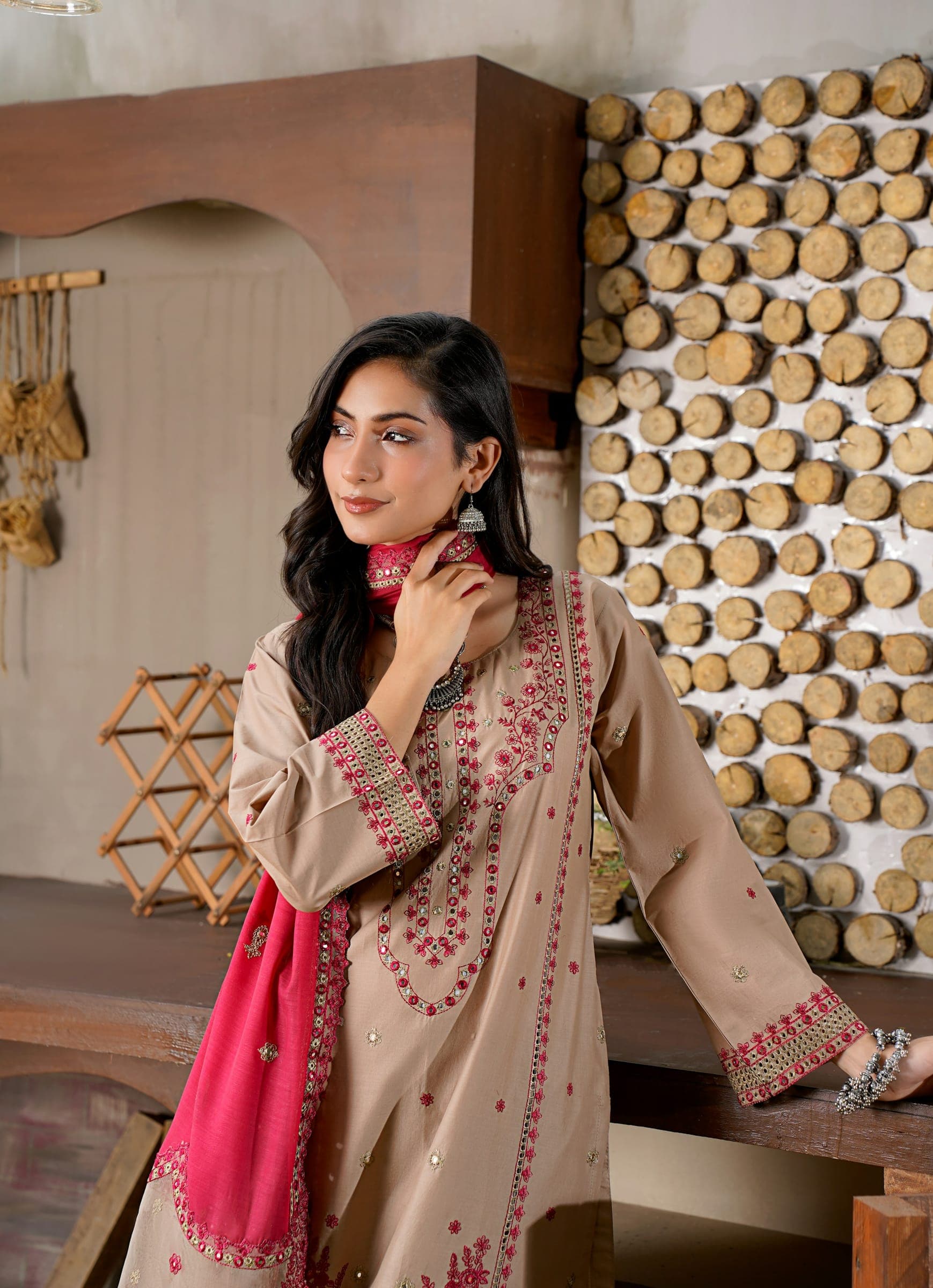 Inspiration
Why it clings
A kameez clings to the tummy when the front is cut no wider through the middle than the back, so the fabric is pulled taut across the fullest point and settles into every curve. The fix is not a bigger kameez all round. It is extra room in the front panel only, released from the bust downwards, in a fabric with enough body to skim past rather than drape onto you.
Most ready-made kameez are cut with the front and back almost the same width and the side seams drawn in at the waist. That works for a body whose waist is the narrowest point. If your middle is as full as your bust or hips, or fuller, the shaping that is meant to flatter pulls in exactly the wrong place.
Where the room should go
Adding the same amount everywhere is what produces the tent: the back hangs in folds, the shoulders look wide and the whole kameez reads a size too big. A better approach puts the room where the body needs it.
A fuller front also uses up length. Fabric travelling over a curve has further to go, so a kameez with extra width at the front but the same front length as the back will rise at the front hem and dip at the back. Asking for a little extra front length keeps the hem level, and our guide to ease explains how much room different cuts usually carry.
- Front only. Width added to the front panel, with the back cut to your back.
- From the bust down. The front falls straight or flares slightly from below the bust, with no inward shaping at the waist.
- Side seams that run straight to the hip instead of curving in and out.
- A cut that suits the job, such as a gently flared A-line kameez, which moves away from the body below the bust.
Fabrics that skim and fabrics that cling
Weight and surface matter as much as the cut. Firm, slightly crisp cloths hold their own shape and stand away from the body. Soft, slippery or very light ones fall onto it. Our cambric guide describes one of the firmer everyday cottons.
- Usually skim: cambric, khaddar, linen, slub cottons and other firm weaves.
- Usually cling or settle: viscose and rayon, jersey, georgette and very fine lawn, especially unlined.
- Lining: a cotton lining tends to cling less than a slippery synthetic one, and it can stop a sheer outer fabric settling on the body.
- Prints: a busy all-over print hides the line of the body more than a plain, shiny surface does.
What to measure and say
Measure your bust, waist and hips as our size guide describes, and add one more: the fullest part of your tummy, with the tape level and relaxed, plus how far below your natural waist that fullest point sits. Then write what you want in plain words, for example “room at the front from the bust down, no waist shaping, level hem”. A side-view photo in a fitted top helps too.
Put these in the notes when you request a quote, and they are agreed in writing before cutting. Our custom stitching page explains the two ways to order, and the guide to choosing a kameez silhouette has more on which shapes to consider.
Common questions
Will a looser kameez make me look bigger?
Not if the room is in the right place. A kameez that fits the shoulders and back, with width only at the front below the bust, looks neat. It is width added everywhere that makes the whole outfit look oversized.
Should I avoid any waist shaping?
If your waist is not narrower than your bust and hips, yes, inward shaping at the waist usually draws attention to the middle. A straight side seam, or a gentle flare from the bust, tends to sit better.
Does a longer kameez help?
Often. A hem that ends well below the fullest point of the tummy, around the hip or lower, gives a longer, unbroken line, while a hem that stops right at the fullest point draws the eye there.
