
Styles and design · 30 September 2026 · 4 min read
Modest dressing: sleeves, necklines and lengths that work together
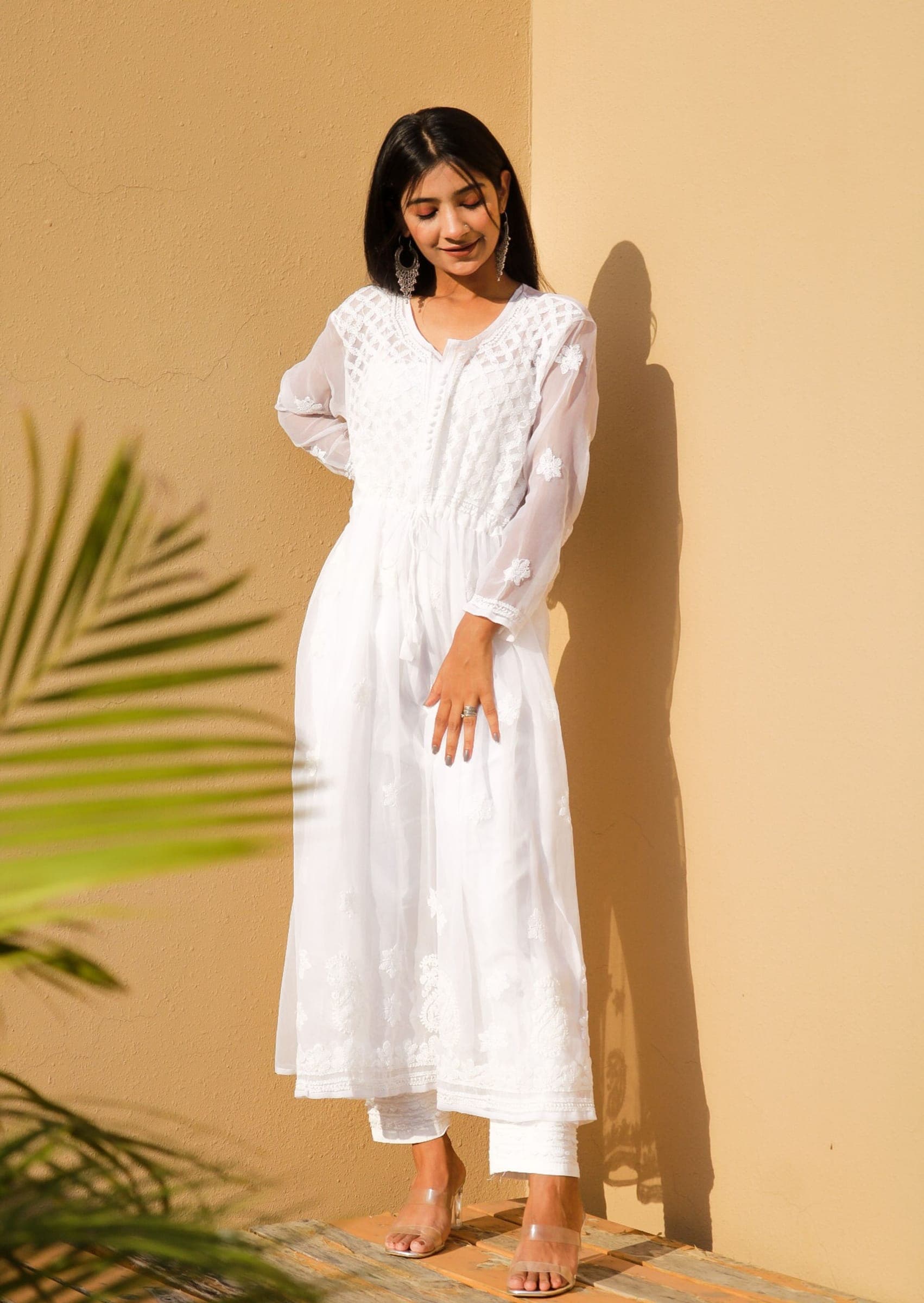
Plan a modest kameez as a whole: necklines that sit well with a hijab, practical sleeves, kameez and slit lengths, fit and lining, so every detail works together.
 Inspiration
Thinking about the whole outfit
Modesty means different things to different people, and only you can decide what feels right. Whatever your own line is, the easiest way to reach it is to plan the kameez as a whole, rather than choosing the neckline, sleeves and length separately. A high neck with very high slits, or long sleeves in a fabric that clings, can undo the choices you made elsewhere.
Each detail has its own guide, linked below. This one is about how they fit together, so the finished outfit is comfortable, practical and feels like you. It helps to try a few everyday movements in a kameez you already own: sitting on the floor, bending to pick something up, raising your arms. Wherever it gapes, rides up or pulls is where the new one needs attention.
Neckline and hijab
If you wear a hijab, the neckline mostly sits underneath it, so neatness matters more than shape. A high round neck, a low band collar or a small keyhole lies flat and does not show at the edges. A shallow V, or a round neck with a short placket, suits those who prefer a little more ease at the throat. Our neckline guide and collar styles guide have the options.
The back neck matters too: a lower back neckline can show when you lean forward, so say if you want it kept high. And if the fabric is sheer, a neat facing or lining at the neckline stops the seam allowance showing through.
Sleeves that stay practical
Full sleeves give the most coverage, but they need to work with daily life. If you make wudu, a sleeve that pushes up easily, with a cuff that unbuttons or a slightly looser wrist, saves a lot of struggle. Three-quarter sleeves worn with a long-sleeved inner are another option. Wide bell sleeves look lovely but can ride up when you reach, and sheer chiffon sleeves may need lining if you want the arms covered. See our sleeve guide. If you love a sleeveless or short-sleeved design, a matching jacket, shrug or fitted inner top keeps the look while covering the arms.
Length, slits and fit
Length and slits are the pair most often forgotten. A long kameez covers well when you stand, but high slits can open to the hip when you sit or climb stairs, so decide both together, with the trousers in mind.
- Kameez length: knee length or longer covers the most and still suits a range of heights; see our length guide.
- Slits: keep them lower, or choose an A-line or flared cut that needs little or no slit. Our slits and hemlines guide explains the choices.
- Fit: a little more ease through the bust, waist and hips stops the kameez clinging. Our guide to ease shows how much.
- Cut: A-line, kalidar and kaftan-style shapes fall away from the body naturally.
- Trousers: straight trousers or a shalwar under a long kameez; see our trouser guide.
- Layering: a long open jacket or shrug over a simpler kameez adds coverage without changing the outfit underneath.
Fabric, lining and ordering
Coverage depends on the fabric as much as the cut. Pale or fine lawn, voile and chiffon can be see-through in daylight, so a lining or a separate inner makes them wearable; our lining guide explains the options. Soft fabrics that cling, such as some viscose and crepe, need more ease than crisp cotton or cambric. A generous dupatta adds coverage too; see dupatta sizes and styles.
On the stitching quote form, say that you want a modest fit and list your preferences: neckline height, back neck, sleeve length, kameez length, slit height and lining. For ideas, see our guides to Friday prayers and Ramadan outfits. The custom stitching page explains the rest.
Common questions
Which kameez neckline works best with a hijab?
A high round neck, low band collar or small keyhole usually works best, because it lies flat under the hijab and does not show at the edges. A shallow V suits those who want a little more room at the throat.
How can I make a kameez less clingy?
Ask for more ease through the bust, waist and hips, and choose a crisper fabric such as cotton or cambric. An A-line or kaftan-style cut also falls away from the body.
What sleeves are practical for wudu?
Sleeves that push up easily, such as a full sleeve with an unbuttoning cuff or a slightly looser wrist, are the most practical for wudu. Three-quarter sleeves are another easy option.
