Styles and design · 8 October 2026 · 4 min read
Attached dupatta: how is it fixed to a kameez?
An attached dupatta kameez has the dupatta sewn at one shoulder, at both, or fixed with press studs so it comes off. The washing and draping trade-offs of each.
 Inspiration
Three ways to attach it
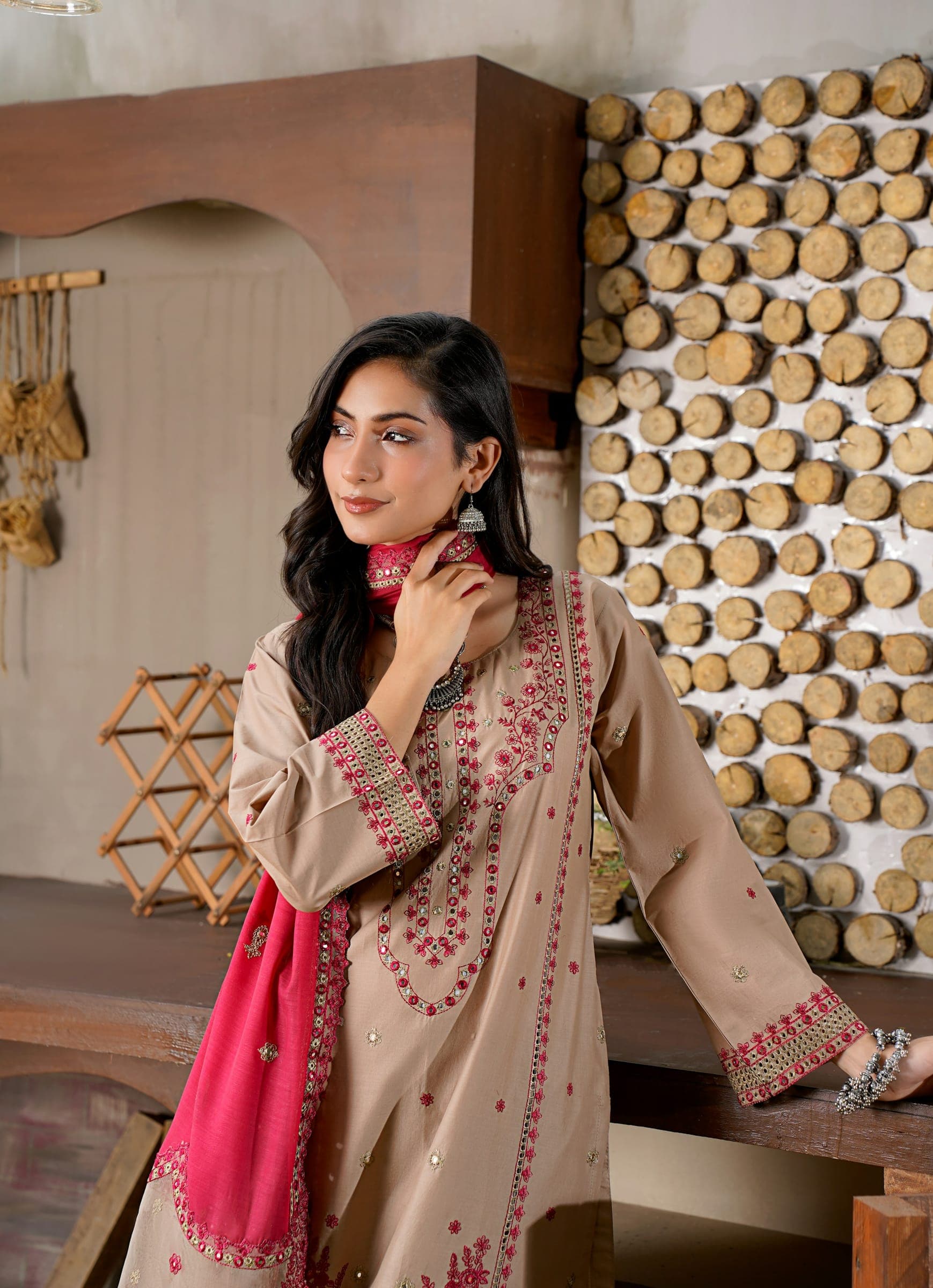
An attached dupatta is fixed to the kameez so it stays where it was placed. There are three common methods: stitched at one shoulder and draped across the body, stitched at both shoulders so it falls as a cape, or fixed with press studs or small hooks so it can be taken off. The first two give a neat look that never slips; the third keeps the dupatta separate for washing and draping.
The options side by side
- Sewn at one shoulder: the dupatta is caught into the shoulder seam and falls across the front, over the other shoulder or diagonally to the hip. It looks like a draped dupatta that has been pinned perfectly.
- Sewn at both shoulders, cape style: the dupatta hangs down the back from both shoulder seams, sometimes with short lengths falling over the front. This is the cape dupatta often seen on party wear.
- Removable on press studs: halves of tich buttons are sewn to the dupatta and inside the kameez shoulder, so it clips in place and comes off.
- Tucked at the waist: a drape caught into a side seam or waist seam as well as the shoulder, which holds a long dupatta in a set fold.
Washing trade-offs
A sewn-on dupatta has to be washed with the kameez, which is fine when both are the same fabric. It becomes awkward when they differ. A chiffon dupatta sewn to a cotton kameez may need gentler washing than the kameez, may shrink by a different amount, and a strong dupatta colour can bleed onto a pale body. Ironing is fiddly too, as the dupatta hangs off the board. Our page on washing and caring for lawn and chiffon covers the fabrics.
A removable dupatta avoids every one of those problems, which is why many people choose press studs even when they plan to wear it attached.
Draping trade-offs
A fixed dupatta cannot be rearranged. You cannot draw it over your head for prayer, wrap it round your shoulders when the air conditioning is cold or take it off for a meal. Weight matters as well: a heavy, embroidered dupatta hanging from one shoulder seam drags the neckline towards that side, so light fabrics such as chiffon and georgette are the usual choice. Our chiffon guide explains why they drape so well.
Attached dupattas are often a little shorter or narrower than a standard one, so they do not trail. The dupatta sizes guide gives typical dimensions to compare against.
How to ask for one
Send a photo of the look and say how it should be fixed: which shoulder, sewn or on press studs, and how far it should fall. If you are sending an unstitched suit, the dupatta from the pack can be used, provided it is light enough to hang well. A new design like this can be sent through Send Your Design, and the attachment is confirmed in the written quote before cutting. You can start a design quote with your photo attached.
Common questions
Can an attached dupatta also cover the head?
A dupatta sewn at the shoulders cannot be drawn up over the head easily. If you need that, ask for press studs so it can be released.
Is an attached dupatta comfortable for a long event?
Usually, because there is nothing to hold or re-pin. A light fabric matters, as a heavy one pulls on the shoulder over a few hours.
Can a dupatta be attached to a kameez I already own?
We do not alter existing clothes. An attached dupatta can be part of a new outfit stitched to your measurements, in your own fabric or ours.