Occasions and ordering · 8 October 2026 · 3 min read
Casual, semi-formal or formal: what the labels mean
Semi formal vs formal Pakistani dress: what casual, semi-formal, formal and “fancy” mean in fabric, embellishment and occasion, so you can say how dressy to go.
 Inspiration
The labels in a sentence each
In Pakistani clothing, casual means everyday wear in a light, usually printed fabric with little or no embellishment; semi-formal means a dressier fabric or some embroidery, suited to dinners and family gatherings; and formal means rich fabric and heavy work for weddings and big evening events. The lines are loose and every shop draws them slightly differently, so when you order, describe the fabric, the embellishment and the occasion as well as the label.
Three things decide where an outfit sits: what it is made of, how much decoration it carries, and where it is meant to be worn.
Casual
Casual outfits are made to be worn often and washed easily. Think printed lawn or cambric in summer, khaddar or a light wool blend in winter, plain or simply printed, with perhaps a little thread work at the neckline. The cut tends to be easy: a straight kameez, comfortable trousers, a cotton dupatta or none at all.
Shops sometimes call this daily wear or everyday wear. It is what you wear to work, to the shops or round the house when guests drop in.
Semi-formal
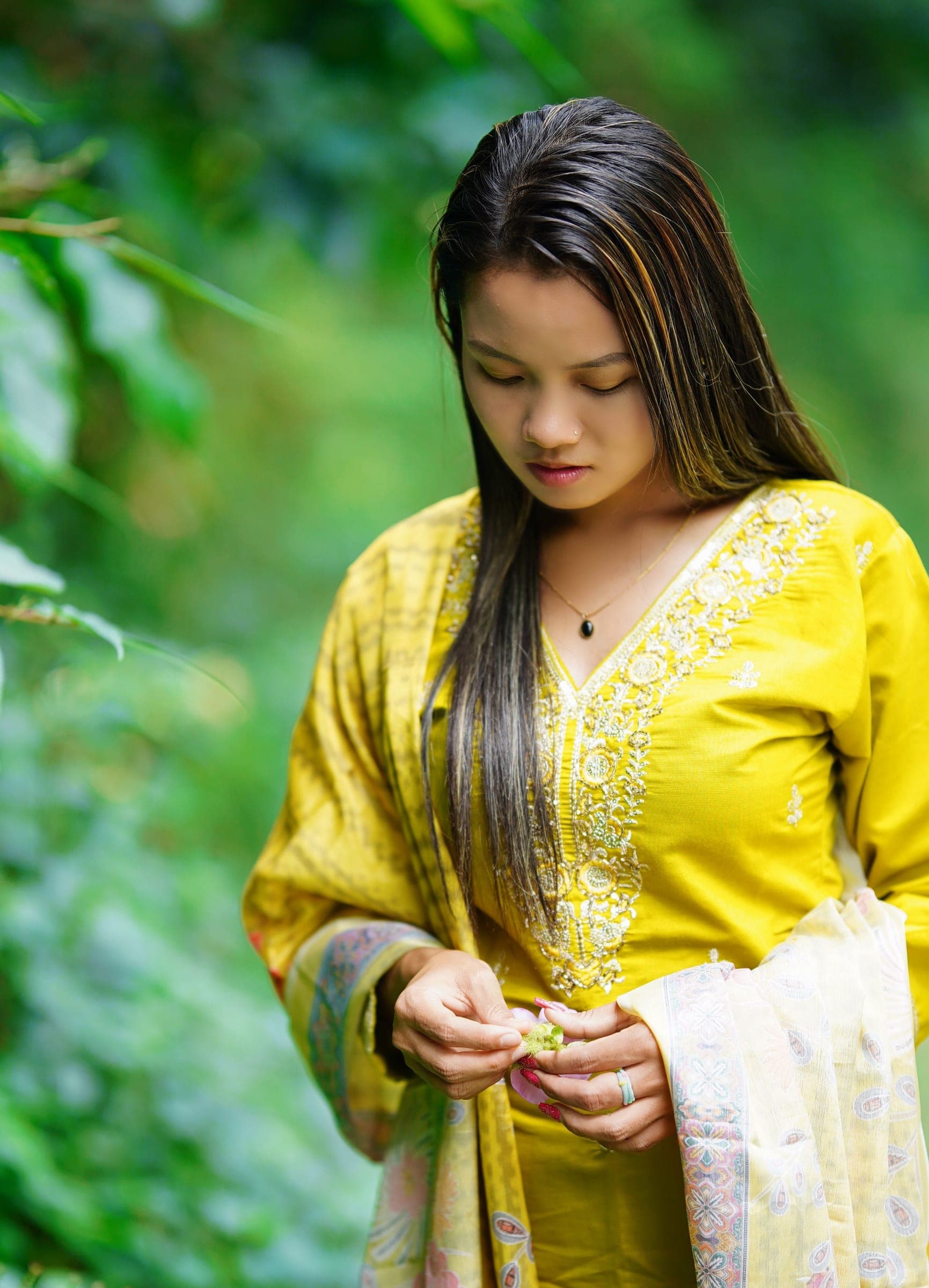
Semi-formal is the widest band and the one people find hardest to pin down. It usually means one step up in fabric or decoration: an embroidered lawn front with a chiffon dupatta, a linen or karandi suit with work at the neck and sleeves, or a plain silk kurta with a good finish. It suits a dawat, an Eid lunch, an office celebration or a smaller event in a wedding week. Our guide to dawat and dinner-party outfits gives examples.
Formal
Formal outfits are made for the big events: a wedding as a guest, a walima, a party in the evening. The fabrics are richer, such as chiffon, organza, net, silk or, in winter, velvet, and the decoration is heavier, often covering the neckline, sleeves and hem with lace or borders as well. They are cared for gently and worn a handful of times a year.
Other words you will meet
Shop labels mix these up with other terms. Here is how they are commonly used, though no single meaning is fixed.
- Fancy suit or fancy dress: in Pakistani English, a dressy, embellished outfit for a party or wedding. In British English, fancy dress means a costume, so add a word of explanation when ordering.
- Party wear: much the same as formal or the dressier end of semi-formal.
- Pret: short for ready to wear; describes how it is sold, not how dressy it is.
- Luxury or festive: collection names for dressier lines, often semi-formal to formal.
- Daily wear: another name for casual.
Telling a tailor how dressy you want it
A label alone leaves too much room. Name the occasion, the fabric weight and the amount of work, and point to a photo. When you order made to measure from us, the embroidery levels on the quote form give you a shared language: delicate covers the neckline or sleeves, detailed the neckline, sleeves and hem, and statement is bolder work for Eid and parties. Our custom embroidery page explains them, and what is possible on your fabric and design is confirmed in the written quote. Browse weekend and gathering ideas for a sense of the middle band, then ask for a quote.
Common questions
Is semi-formal acceptable at a wedding?
For the smaller events of a wedding week, such as a dholki or a family lunch, it often is. For the main events, guests usually dress more formally. If in doubt, ask the hosts what most people will wear.
Can a casual fabric be made to look formal?
Up to a point. Embroidery, a fuller cut and a chiffon dupatta can lift a cotton kameez a long way, but it will still read as cotton. For the most formal events, the fabric does much of the work.
Does formal always mean uncomfortable?
No. A lined, well-cut formal outfit in a breathable base can be comfortable for hours. Tell your tailor how long you will wear it and in what weather, and choose fabric and lining with that in mind.