
Embroidery and fancy work · 4 October 2026 · 3 min read
Chikankari embroidery: shadow work and fine stitches
Chikankari embroidery explained: its Lucknow roots, the main stitches from shadow work to jaali, how to spot machine copies, the fabrics it needs and how to wash it.
 Inspiration
What chikankari is
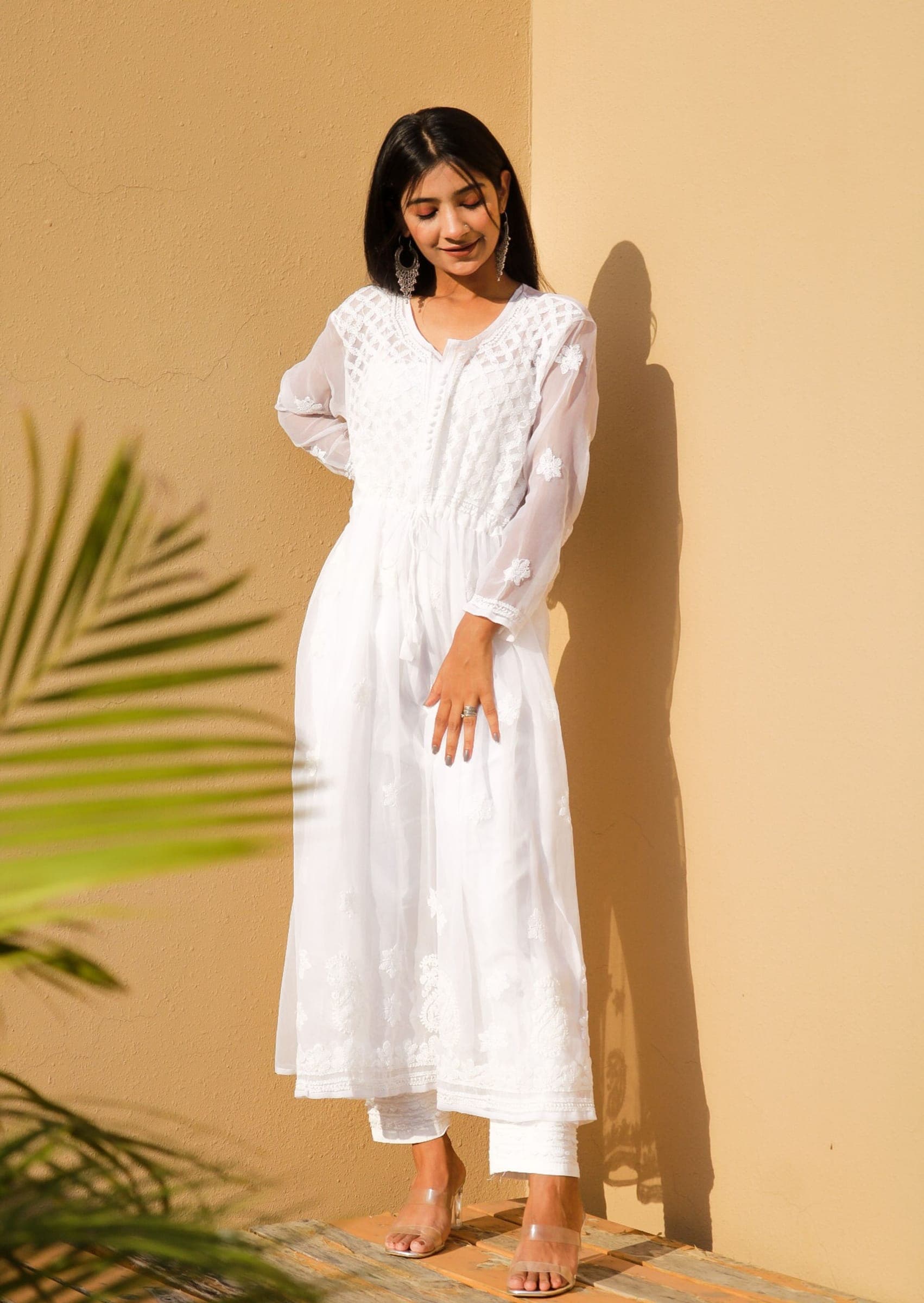
Chikankari is fine hand embroidery associated with Lucknow in northern India, traditionally worked in white cotton thread on sheer white cotton muslin. Its charm is in restraint: tiny knots, soft shadows and delicate openwork rather than bright colour. Its roots go back to the Mughal period, and today chikankari kurtas are worn all over South Asia and its diaspora, in pastels and deep colours as well as classic white.
On a summer day a chikankari kurta looks cool and quietly dressed up, which is why it has become a staple for Eid mornings, family lunches and hot-weather workdays alike.
The stitches that make chikankari
A single piece may combine many stitches. These are the ones worth knowing by name.
- Bakhia (shadow work): a herringbone stitch worked on the back of sheer fabric, so its threads show through the front as a soft, shaded shape with a fine outline.
- Tepchi: a simple running stitch used for outlines and stems.
- Phanda: tiny, tight knots that look like millet seeds, often clustered in flower centres.
- Murri: slightly longer, rice-shaped knots used for petals.
- Jaali: threads of the fabric are eased apart and held with stitches to make a small mesh, without cutting the cloth.
- Hool: a small eyelet made by piercing the fabric and stitching around the hole.
How chikankari is made, and how to spot a copy
Traditionally the design is block printed onto the cloth in a washable dye, embroidered by hand, then washed to remove every trace of the printed lines and lightly starched. The process is slow, which is why fine hand chikankari is valued so highly.
Much of the chikankari-style embroidery on mass-market lawn is made by multi-head embroidery machines. It can look lovely, but you can tell the difference: machine motifs repeat identically, the shadow effect is missing because the stitches sit on the front, and the back shows bobbin thread and cut jumps rather than neat hand stitches. Neither is wrong, but they should not be priced or described as the same thing. If a listing says hand chikankari, ask for a close photo of the reverse before you buy.
Fabrics, lining and styling
Shadow work needs sheer fabric to show, so chikankari belongs on mulmul, voile, fine lawn, georgette, chiffon and organza. That sheerness means most chikankari kurtas need a slip, camisole or lining underneath; our guide to kameez lining helps you choose a colour that keeps the shadows visible. A straight cut with full or three-quarter sleeves shows the work well, and palazzo trousers or straight trousers keep the look airy. In dry, intense heat, as in the Dubai summer, a loose chikankari kurta with a light lining is one of the most comfortable things you can wear.
Washing chikankari
Wash gently by hand in cool water with a mild detergent, and do not scrub the embroidered areas. Jaali and hool are the most delicate parts, so avoid wringing. White chikankari benefits from a short soak rather than strong bleach. Dry in the shade, then iron from the back on a towel while the fabric is still slightly damp, which keeps the knots raised.
How to ask for the chikankari look
If you love chikankari, send a photo of the piece you have in mind and tell us whether you want the work on the whole front, the yoke or scattered across the body. Whether that look can be achieved on your fabric and design, and how, is confirmed in your written quote rather than promised up front. Our custom embroidery page explains the routes, and you can request a quote once you are ready.
Common questions
Is chikankari Pakistani or Indian?
Chikankari originates in Lucknow in northern India. It is worn widely in Pakistan and across the South Asian diaspora, and chikankari-style embroidery appears in many Pakistani lawn collections.
How can I tell hand chikankari from machine embroidery?
Look at the back and at the repeats. Hand chikankari shows small, neat stitches and slight variation between motifs, and shadow work appears through the fabric. Machine work repeats exactly and shows bobbin thread on the back.
Does a chikankari kurta need lining?
Usually, because the fabric is sheer enough to show the shadow work. A slip or light lining in a soft matching colour keeps it modest while letting the embroidery show.
