
Unstitched suits · 4 October 2026 · 4 min read
Embroidering plain fabric before it is stitched
Want embroidery on a plain length before it becomes a kameez? Why placement is planned around the future cut, which fabrics suit it, and the two ways to order it.
 Inspiration
A plain length with plans
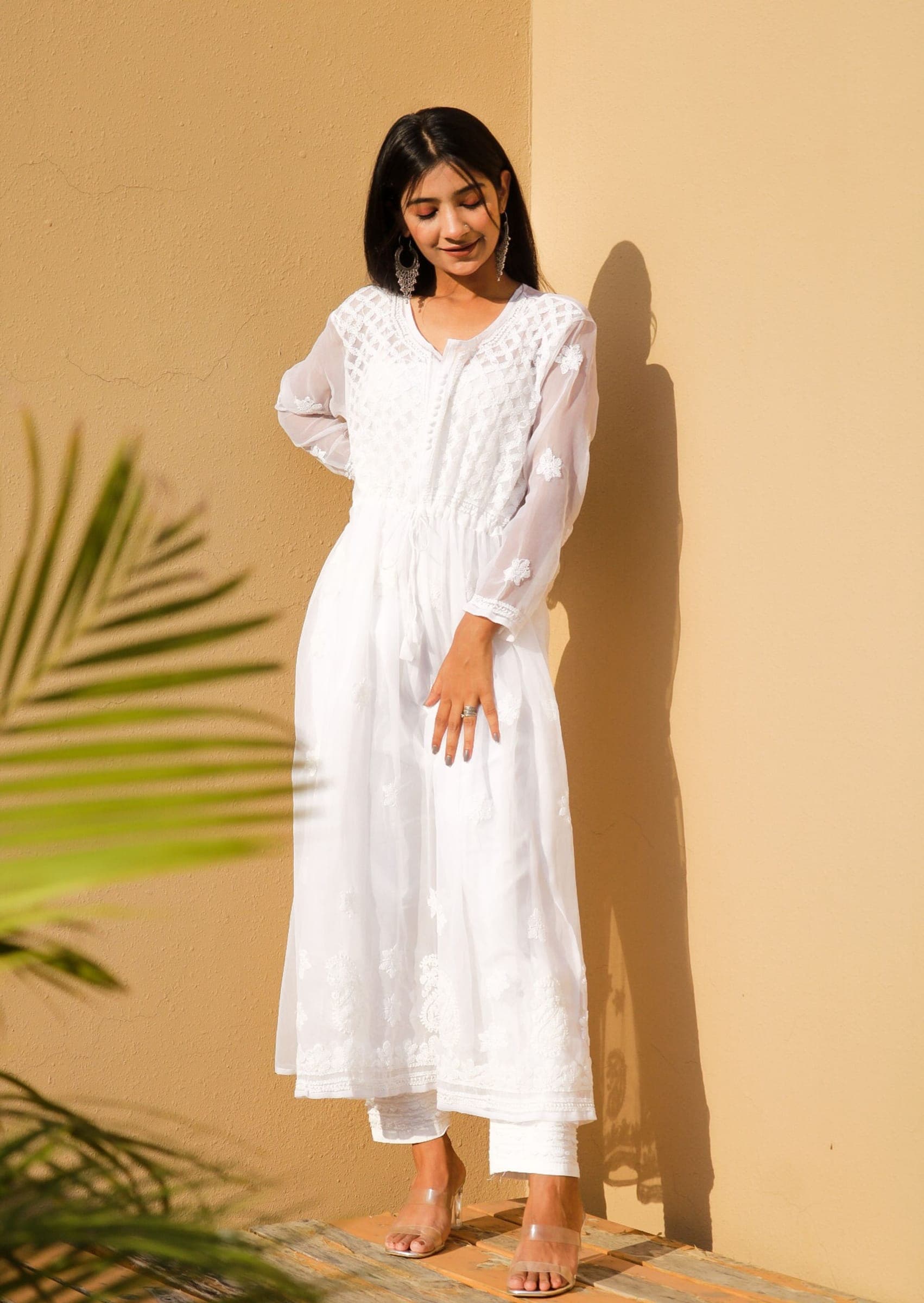
If you have a plain fabric and want it embroidered before it is made into a kameez, kurta or dupatta, the thing that matters most is planning the embroidery around the garment it will become. Work placed on a flat length has to land at the neckline, the cuffs or the hem once the pieces are cut, so the design, your measurements and the embroidery are best decided together. Send photos first, and what is possible on your fabric and design is confirmed in your written quote.
There are two ways to order it. If we are stitching the outfit too, the embroidery is planned as part of it, which is usually simplest. If you only want the embroidery, we offer that on your own fabric as well, once we have confirmed it is suitable. Our custom embroidery page describes both.
Why placement comes first
Embroidery on uncut fabric works like a printed placement panel in a lawn suit: it only looks right if it ends up where it was meant to. A neckline design needs your neckline depth, the shape you want and your shoulder width. Sleeve work needs your sleeve length and how wide you want the cuff. A hem border needs the kameez length and how flared the hem will be, because an A-line kameez has a much wider hem than a straight one.
That is why ordering the embroidery and the stitching together is so often the easier path: the cut and the work are planned on the same design. If the fabric will be stitched somewhere else later, you need to give us the finished garment’s measurements, and the stitching then has to follow the embroidery closely.
Fabrics that take embroidery well
Not every plain fabric takes embroidery equally well. These are the things we look at in your photos.
- Weight and weave: stable, medium-weight fabrics such as cambric, khaddar or linen usually hold stitches well. Very fine or loosely woven fabric may pucker under dense work.
- Stretch: fabrics that stretch a lot can distort as they are worked.
- Condition: thin areas, faded spots or old stains can show more once the area around them is embroidered.
- Enough length: embroidery on the hem or sleeves only works if the pieces underneath are long enough for your measurements; our guide to checking you have enough fabric explains how to measure.
Briefing the design
A reference photo is worth more than any description. Show us embroidery you like and say what you like about it: the thread colour, the density, the motif or where it sits. Our guide to machine or hand embroidery explains the general difference between the two, which may help you describe what you are after.
We do not promise a named technique before we have seen the fabric. Instead, tell us the look you want, and the written quote states what can be done on your fabric and design.
Ordering it with the stitching
With Stitching Only, you send your plain fabric and we cut, stitch and embroider it as one outfit. The embroidery level is chosen with the rest of the design: delicate work at the neckline or sleeves, detailed work at the neckline, sleeves and hem, or statement work for Eid and parties. Production takes 5 to 7 working days from the day your fabric arrives and the quote is paid.
Start on the Stitching Only quote form. The unstitched suit stitching page explains the route, and country pages such as fancy work in the UK and in the UAE describe embroidery on outfits we stitch.
Ordering the embroidery only
If you want the embroidered length back unstitched, the order follows the same two shipping stages as Stitching Only.
- Photos and placement: upload photos of the fabric, the embroidery you like and the finished garment measurements on the quote form.
- Confirmation and quote: we confirm the fabric is suitable, what is possible, the placement and how to send it, in a written quote.
- Payment: you approve and pay in full by bank transfer, Wise or a card payment link.
- Both ways: you post the fabric to us in Pakistan, we embroider it, and we ship it back with delivery and any import duties, taxes and customs or courier fees included. The timing is set out in your quote.
- Lace and borders: these are added only to outfits we stitch; on fabric sent for embroidery alone, we offer embroidery.
Common questions
Is it better to embroider fabric before or after stitching?
For most designs, planning both together works best, because the embroidery has to sit exactly where the cut puts the neckline, cuffs and hem. Ordering the embroidery with the stitching lets both be agreed on one design.
Can you embroider fabric that someone else will stitch?
Yes, if the fabric is suitable. Send the finished garment measurements and the design so the placement can be planned, and the stitching then needs to follow it closely.
Which embroidery technique will you use?
We confirm in your written quote what is possible on your fabric and design, based on the reference photo you send. We do not promise a named technique before we have seen the fabric.
