
Embroidery and fancy work · 4 October 2026 · 4 min read
Where to place embroidery on a kameez or kurta
A practical guide to embroidery placement on a kameez or kurta: neckline, sleeves, hem, back and dupatta borders, and how each choice changes the look and wear.
 Inspiration
Placement changes everything
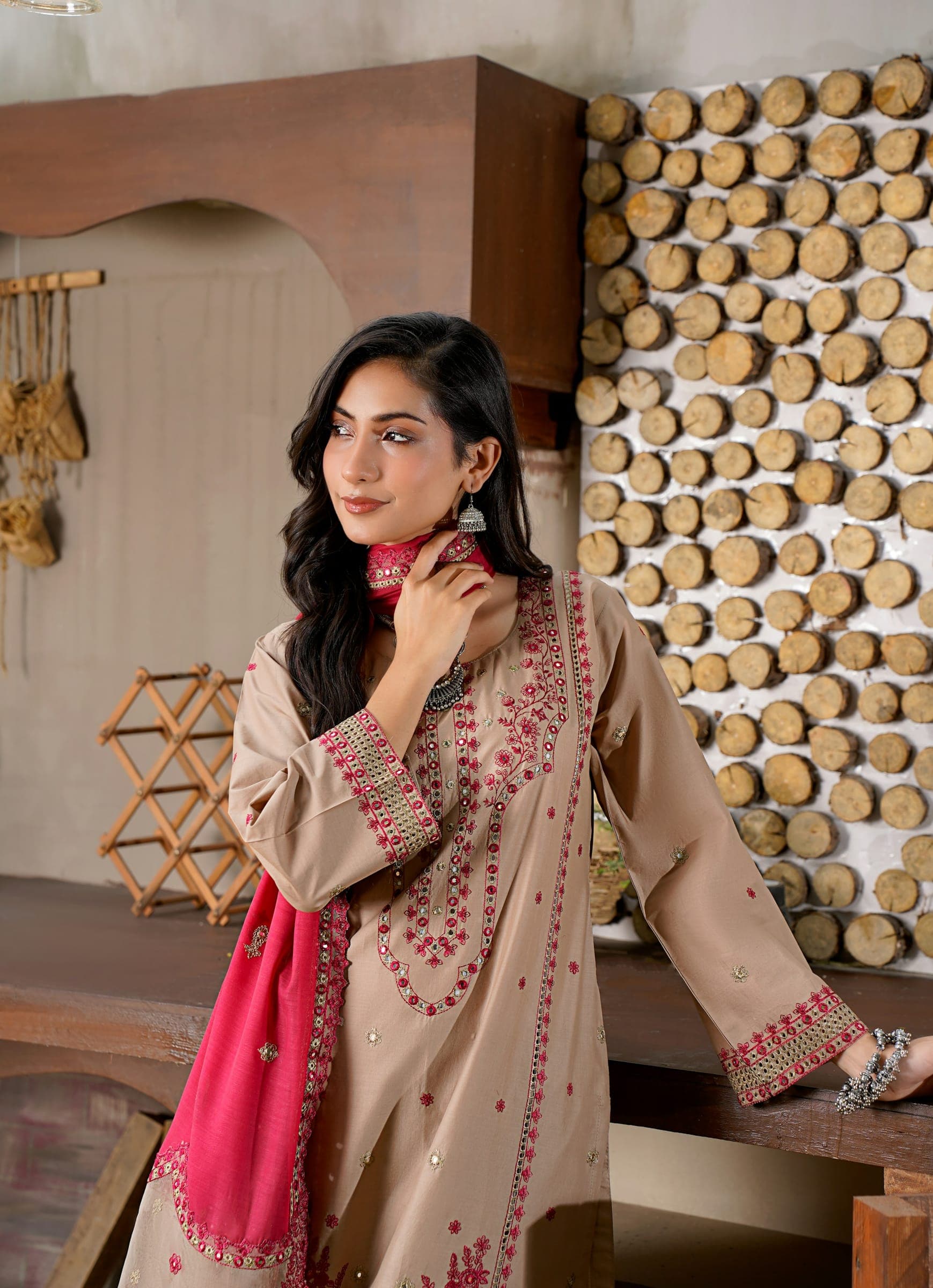
The same amount of embroidery can look restrained or dramatic depending on where it sits. Embroidery placement on a kameez decides where the eye goes first, how the garment moves and how it copes with daily wear. Before you think about motifs or colours, decide which areas should carry the work: the neckline, the sleeves, the hem, the back or the dupatta.
When we stitch your outfit, placement is agreed in writing as part of the design, and the work is positioned for your measurements. Here is what each area does.
The neckline
The neckline is the classic place for embroidery because it frames the face and is seen in every photo. A narrow border following the edge suits a V-neck or boat neck; a wider yoke-shaped panel suits a round or square neck. On a band collar, a fine line along the collar and placket is enough.
Think about what you wear with it. A busy neckline competes with a statement necklace, and a high, dense panel can feel warm in summer.
Proportion matters too. On a petite frame, a deep panel that reaches the bust can overwhelm the upper body, while a narrower border keeps things in scale. If you are tall or have broad shoulders, a wider panel balances the frame nicely. Because the outfit is cut to your measurements, the depth of the work can be set for your body rather than for a standard size.
Sleeves and cuffs
Sleeve embroidery is visible when your hands move, so a little goes a long way. A band just above the cuff is the most common choice, and it suits three-quarter sleeves especially well because the edge sits at the forearm.
On full sleeves, check the width at the wrist: dense work on a narrow cuff can stiffen it. If you wear a watch or bracelets daily, a band slightly higher up avoids rubbing.
The hem or daman
Hem work grounds the outfit and draws the eye down, which lengthens the silhouette. It is the most practical placement for adding richness without crowding the face. A border along a straight hem, or following the curve of a gol daman, both work well.
The hem also takes the most wear: car seats, stairs and bag straps all rub it. On an everyday piece, keep hem work flatter and lighter; save the richer borders for occasion wear.
The back and the dupatta
Back embroidery is often forgotten, but a small motif below the back neck or a line following a back opening is lovely when your hair is up. Keep it low and flat if you lean against chairs for long evenings.
The dupatta is where many outfits carry most of their decoration. A border along both long edges, work on the two short ends, or a scattered pattern across the body are the usual options. Balance it against the kameez: if the dupatta is rich, a quieter neckline keeps the outfit calm. Our dupatta finishing ideas cover edges in more detail.
Telling us your placement
When you fill in the quote form, a short list in your notes is clearer than a long description:
- Which areas carry work, for example neckline and sleeves only.
- Roughly how deep each band should be, in centimetres or inches.
- Whether front and back are both worked, or front only.
- A reference photo, marked up if possible. Our reference photo guide shows how.
Agreed before cutting
Send your placement notes through the stitching quote form, choosing the delicate, detailed or statement level that matches the areas you picked. If you are in Canada, our Canada fancy work page explains ordering from there, and the custom embroidery service covers the work itself. What is possible on your fabric is confirmed in the written quote before any cutting begins.
Common questions
Where should embroidery go on an everyday kurta?
The neckline or the cuffs are the most practical places. They add interest without taking the rubbing that a hem gets, and they cope well with regular washing when the work is kept light.
Can embroidery go on the back of a kameez?
You can ask for it, and a small motif below the back neck or along a back opening often looks lovely. Tell us in your notes and we confirm what is possible on your fabric and design.
Does hem embroidery make a kameez look shorter?
Usually the opposite. A border at the hem draws the eye down and tends to lengthen the silhouette, especially with a matching or tonal trouser.
