Styles and design · 8 October 2026 · 4 min read
How to cover your arms in a sleeveless dress
How to cover your arms in a sleeveless dress: fine long-sleeved tops underneath, jackets and open shirts on top, and when to order sleeves from the start.
 Inspiration
Two ways: a layer underneath or a layer on top
To cover your arms in a sleeveless dress, either wear a fine long-sleeved top underneath it or put a sleeved layer over it, such as a cropped jacket, an open shirt or a long cardigan. A layer underneath keeps the dress looking like itself; a layer on top changes the outfit more but comes off easily when a room warms up.
Which one works depends on the dress: its neckline, how deep the armholes are cut, how close it sits to the body and what it is made of. A dress that is cut close through the bodice leaves no room for anything underneath, so a top layer is the only answer there. A looser shift or slip dress will take either.
Wearing a top under the dress
An underlayer works when it disappears into the outfit. These are the details that decide whether it does.
- Thinner than the dress. A fine cotton jersey, a viscose or a light knit lies flat. A thick top bunches under the armholes and pushes the dress out of shape.
- A neckline that agrees. Match the top’s neckline to the dress, or go clearly higher. A crew neck under a round neck looks tidy; a polo or turtleneck under a V-neck reads as a deliberate winter layer.
- Close sleeves. Slim sleeves sit flat. Puffed or loose sleeves look crowded coming out of an armhole that was cut for bare arms.
- Colour. A top in the dress’s main colour makes the sleeves look almost built in. A contrast, such as white under navy, gives a more casual pinafore look that some people like and others avoid.
- Armhole depth. Deep armholes show the side of the top. If the dress is cut low at the side, the underlayer has to match the dress or the gap becomes the first thing people notice.
Layers that go over it
A top layer asks nothing of the dress, which is why it is the usual answer for close-cut and dressy dresses. For hot days, our guide to layering for modesty in summer heat goes through the fabrics that keep a covering layer cool.
- A cropped jacket or bolero. Ending at or just above the waist, it covers the shoulders and arms and leaves the skirt and shape of the dress on show. Good over fuller skirts and party dresses.
- An open shirt. A cotton or linen shirt worn unbuttoned over a summer dress is relaxed and airy. Roll the sleeves to the forearm in heat.
- A kimono-style jacket. Straight, wide sleeves slip over almost any dress and cover the arms without much warmth.
- A long cardigan or duster coat. For travel and cool evenings. Keep it clearly shorter than the dress or close to its length; ending a hand’s width above the hem tends to look unplanned.
- A shrug or wrap. The lightest choice for an evening, though it slides about and needs adjusting over a long gathering.
Making the layers look intended
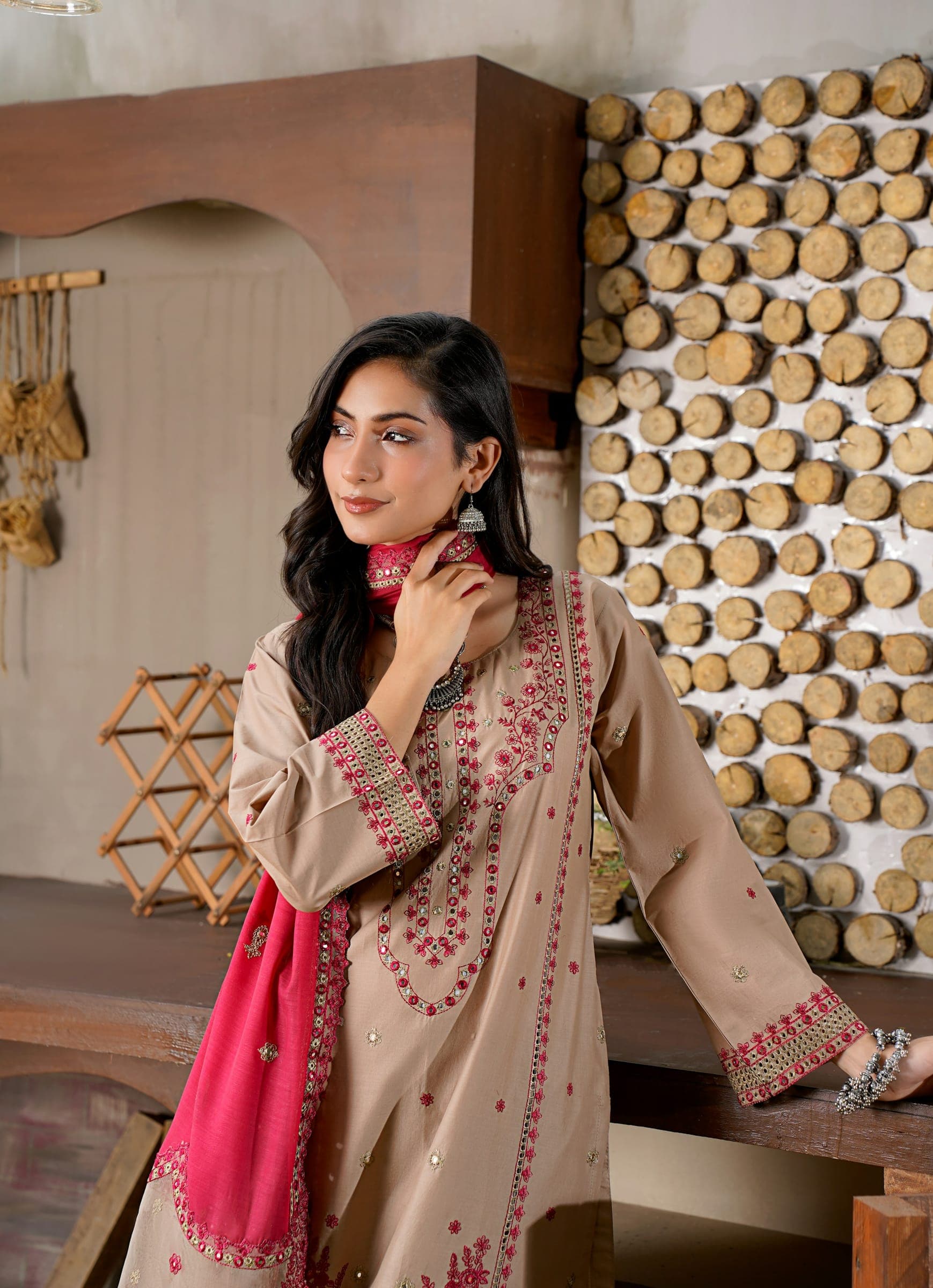
Layered dresses look awkward for three usual reasons: too many textures, hems that compete, or a layer and dress that belong to different occasions. Keep to two fabrics at most, let one hem clearly lead, and match the formality. A tailored cropped jacket over a cotton day dress works; a denim jacket over a chiffon party dress rarely does. If you also wear a scarf or dupatta, let it carry the colour that ties the dress and the layer together.
When to order sleeves from the start
If you never wear a particular dress without something over it, it probably needed sleeves all along. Sleeves designed into a dress sit better than any layer: the armhole is cut for them, there is no extra bulk, and there is nothing to keep adjusting. You can choose full sleeves, three-quarter, elbow or bell sleeves, and in a light fabric they need not feel warm. Our article on making a design more modest covers sleeves, lining and length before anything is cut.
A separate layer still makes sense when you like the dress bare-armed on some days, or want it for both summer and winter. A jacket or shirt made to your measurements can then be worn over other outfits too.
Through custom stitching you can order a dress with sleeves, or a jacket or shirt on its own to go over a dress you already have. Send a photo of the dress with your quote request, and we confirm the fabric, colour and details in writing before cutting. We do not alter existing clothes, so we cannot add sleeves to a dress you already own.
Common questions
Can I wear a long-sleeved T-shirt under a sleeveless dress?
Yes, if it is thin and close to the arm. A fine cotton or jersey T-shirt in the dress’s colour looks neat. A thick or baggy one bunches at the armholes and makes the dress hang badly.
What can I wear over a sleeveless dress to a wedding or party?
A cropped jacket, a bolero or a light kimono-style jacket in a fabric close to the dress, such as chiffon, organza or a soft satin. Avoid casual layers like denim over a dressy fabric, and keep the jacket short enough to show the dress’s shape.
Do separate pull-on arm sleeves work?
They can cover a short gap, for example below a short sleeve, but on a sleeveless dress the top edge usually shows at the armhole. A full top underneath or a jacket on top gives a cleaner result.