
Styles and design · 8 October 2026 · 4 min read
How big is the print? Judging print size from a photo
How to tell print size online: rough bands for small, medium and large prints in inches and centimetres, clues hidden in a listing photo, and what to ask the seller.
 Inspiration
Find something of known size in the photo
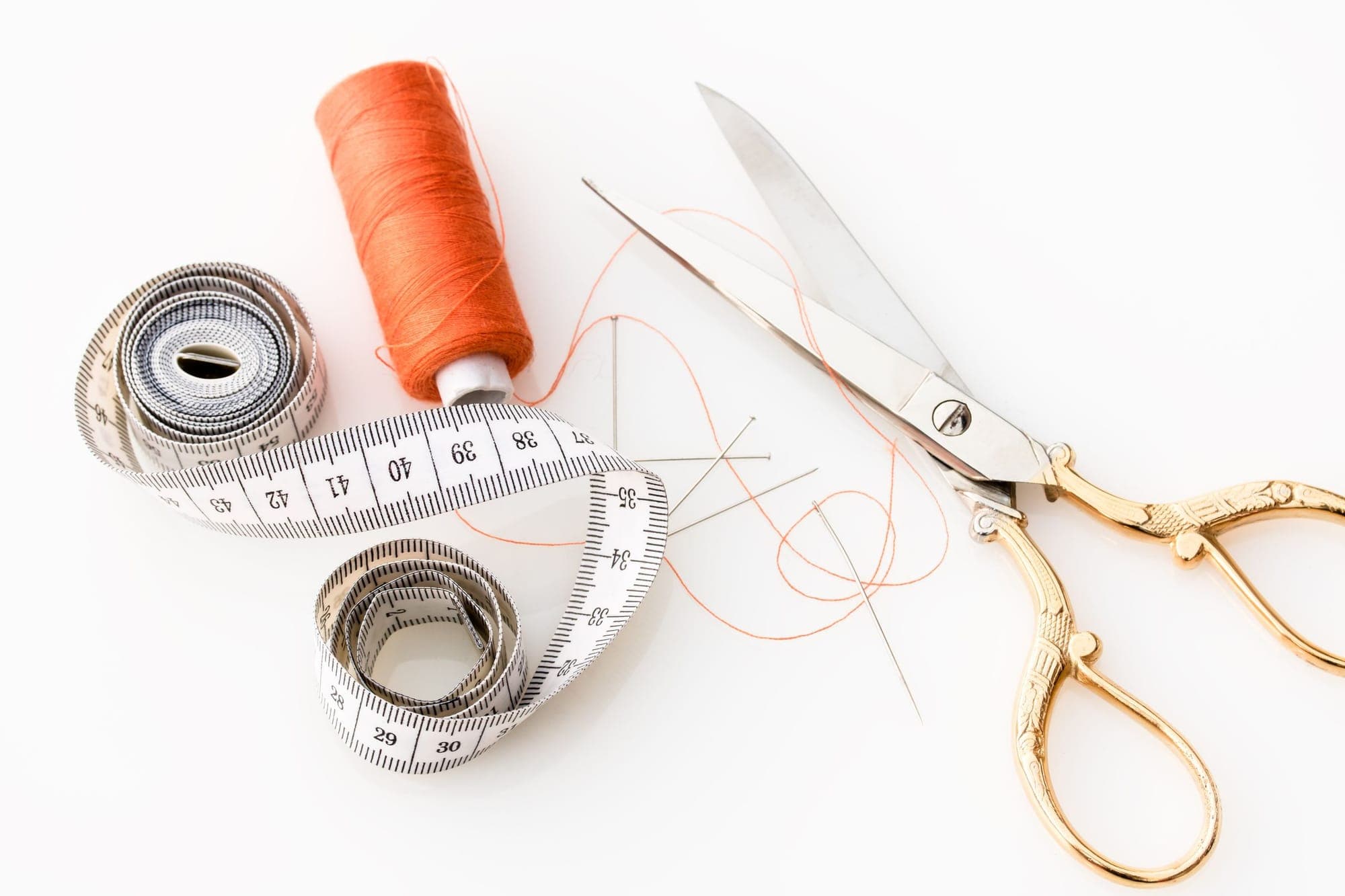
The surest way to judge print size online is to find something in the photo whose size you already know, such as a hand, a button, a coin or the full width of the fabric, and compare one motif with it. If there is nothing to compare, ask the seller for a photo with a tape measure on the fabric.
Listing photos are usually cropped close, which makes almost every print look large and bold. The same flower that fills your screen may be no bigger than a thumbnail on the cloth.
Rough bands for small, medium and large
There is no official scale, and sellers use the words loosely, but these rough bands are a useful way to talk about the size of one motif:
- Small: motifs up to about 2.5 cm (1 inch) across. Ditsy florals, small dots and fine geometrics. From a distance they read almost as a texture.
- Medium: roughly 2.5 to 7.5 cm (1 to 3 inches). Most everyday lawn prints sit here.
- Large: more than about 7.5 cm (3 inches). Bold florals, big paisleys and medallions, which can be 15 cm (6 inches) or more.
- Placement prints: a single large design, often on a front panel or a dupatta, that does not repeat across the fabric.
Reading scale from a listing photo
Look for anything that gives the eye a ruler. An adult hand is roughly 17 to 20 cm (about 7 to 8 inches) from wrist to fingertip, so count how many motifs fit across one. A shirt button is usually around 1 to 1.5 cm. If the photo shows a whole kameez on a model, compare the motif with her shoulder width or the length of the sleeve.
The selvedge helps too. Unstitched suit fabrics commonly come about 112 cm (44 inches) wide, though some are wider; our fabric widths guide explains the usual sizes. If a photo shows the full width with both selvedges, count the repeats across it and divide. Six repeats across 112 cm means each one is under 19 cm, motif and spacing together.
Watch for the print type as well. Digital prints can be any scale, while hand block prints are limited by the size of the block; our guide to block, digital and screen prints explains the differences.
What to ask the seller
A short message saves a disappointing parcel. Useful questions include:
- How wide is one motif, in centimetres or inches?
- Could you send a photo of the fabric with a tape measure or a ruler laid across it?
- Is it a repeating print or a placement print, and where does the main design fall on each piece?
- Is the dupatta printed at the same scale as the shirt fabric?
Why scale matters for stitching
Print size affects how a garment can be cut. A large motif may need to be centred, matched across seams or placed away from the bust, and that can take more fabric. Our article on whether large prints suit petite women looks at proportion, and choosing colours and prints for a custom design covers the wider choice.
If you already have the fabric, photograph it with a tape measure using our fabric photo guide and send it with a Stitching Only quote request. We confirm that the fabric is suitable, how much is needed and how the print can be placed before you send anything; the Stitching Only page explains the steps.
Common questions
What is a ditsy print?
A ditsy print is a very small, scattered pattern, usually tiny flowers, with motifs often under about 2.5 centimetres across. It reads almost like a texture from a distance.
Do large prints need more fabric?
Often they do, because the main motifs may need to be centred or matched across seams, which leaves more offcuts. How much depends on the repeat and the design.
What is a print repeat?
The repeat is the distance before the pattern starts again, both across and down the fabric. A large repeat means bigger designs and more planning when cutting.
