Unstitched suits · 30 September 2026 · 4 min read
How to photograph your fabric for a stitching quote
Simple steps for photographing an unstitched suit or fabric so a tailor can quote accurately: light, layout, labels, close-ups, scale and showing how sheer it is.
 Inspiration
Why the photos matter
When you order stitching by post, your photos do the job of laying the fabric on a cutting table. From them we can see how much fabric there is, where the print and embroidery sit, whether it needs lining, and which thread colours will match. Clear photos mean fewer questions, a more accurate written quote, and no surprises once the parcel arrives.
You do not need a good camera. A phone and a window are enough, if you follow a few simple rules.
Light and background
- Daylight by a window, out of direct sun, which bleaches colour and throws hard shadows.
- Flash off: it flattens texture and changes colour.
- A plain background: a white or neutral sheet on the floor or a bed works well. Avoid patterned rugs and wood grain.
- Filters and beauty modes off, and wipe the lens first.
- Hold the phone parallel to the fabric, directly above it, so lengths are not distorted.
- A sheet of white paper in one shot gives a reference for true colour.
The shots to take
Take more than you think you need. For an unstitched suit, this set covers almost everything.
- Everything together: all the pieces laid out, so we can see the whole suit at once.
- Each piece flat and whole, with a tape measure laid along its length.
- The width: a tape measure across the fabric from edge to edge.
- The label or listing: the piece list and lengths. See how to read an unstitched suit label.
- Close-ups: the neckline patch, borders, embroidery and a section of the print.
- The reverse of the embroidery, which shows how dense and scratchy it is.
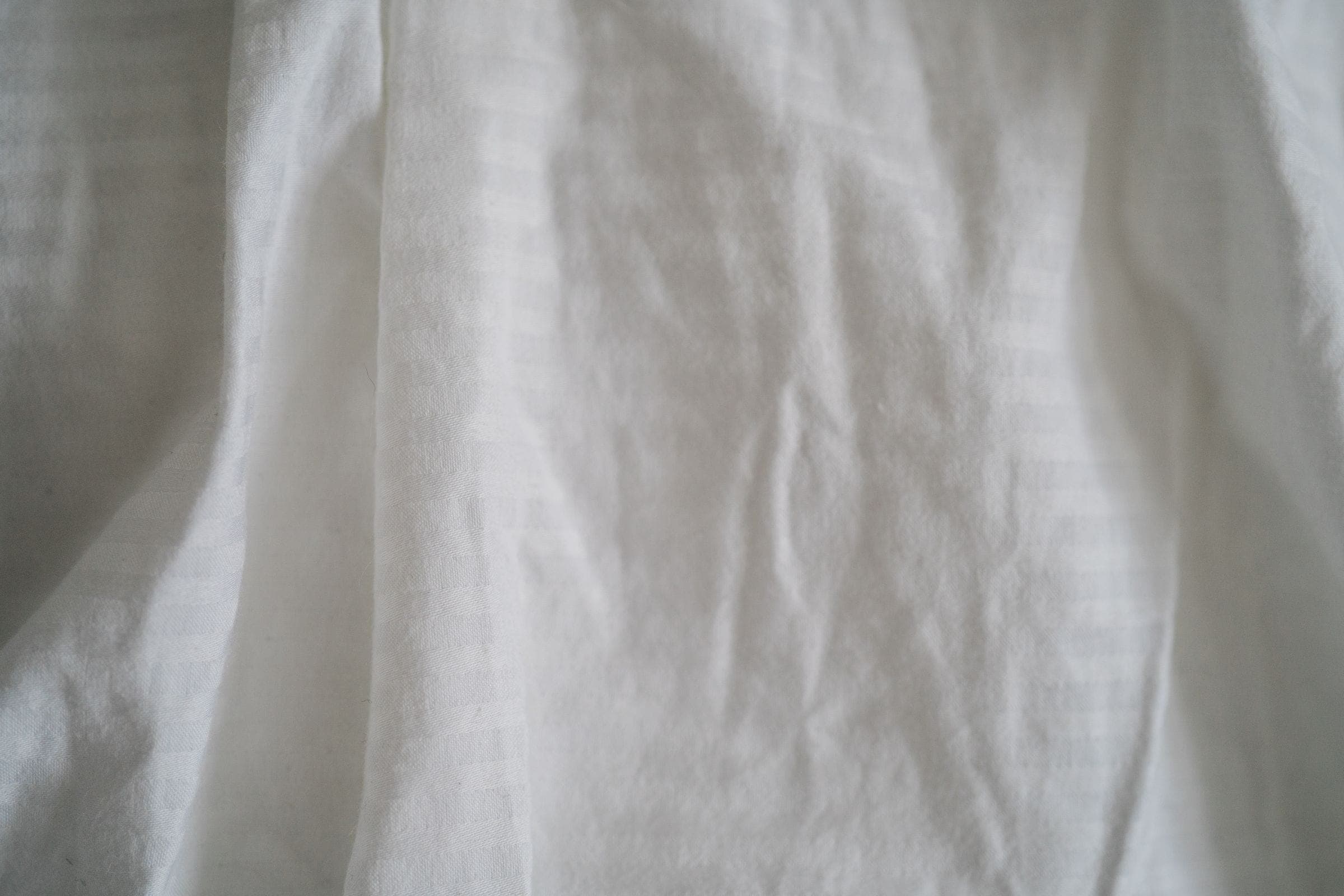
- Held to a window: a single layer with your hand behind it, to show how sheer it is.
- Your inspiration: a catalogue image or screenshot of the design you want. Our guide to briefing a tailor with screenshots helps.
- A kameez that fits, laid flat, if you want it used as a template. See using a kameez that fits as a template.
Getting colour and detail right
Phones adjust colour automatically, and screens differ, so describe the colour in words as well: “teal, closer to green than blue”, or “the pink is dusty, not bright”. If the photo does not look like the fabric in your hand, say so. For embroidery, get close enough to see the stitches, and for prints, include one shot that shows the scale of the pattern against the tape measure.
Evening photos under household bulbs turn whites yellow and blues grey. If you can only take photos at night, say so, and add a daylight shot of one piece the next morning for comparison.
Take the photos before you do anything else to the fabric. If you plan to pre-wash it, photograph it before and after, so any shrinkage or change in colour is on record. Do not cut, pleat or pin anything for the photos: we need to see each piece as it came. If you have several suits, photograph them one at a time and keep each suit’s photos together, so nothing gets mixed up.
Sending them
Upload the photos with your Stitching Only quote request, which takes fabric photos, screenshots and sketches, or send them on WhatsApp. Add a line saying which piece is which, and mention anything the photos cannot show, such as whether the fabric has been washed. The unstitched suit stitching page explains what happens next.
Common questions
Why does a tailor need photos of my fabric before quoting?
Photos show how much fabric there is, where the print and embroidery sit, and whether it needs lining, all of which affect the design and the price. They let questions be answered before you post anything.
How do I show how sheer my fabric is in a photo?
Hold a single layer up to a window in daylight with your hand behind it, and take the photo from the room side. If your fingers show clearly, the fabric will probably need lining.
Can I send screenshots from the brand’s website?
Yes, and they help, especially the listing with the piece lengths and the catalogue photo of the stitched design. Send photos of the actual fabric as well, because colours on a website can differ from the real thing.