Fit, measuring and alterations · 8 October 2026 · 3 min read
How to measure neck width for a kameez neckline
How to measure neck width for a kameez neckline: the side-to-side figure, typical widths for round, square and boat necks, and keeping bra straps covered.
 Inspiration
What neck width means
Neck width is the distance straight across the front neckline from one edge to the other, measured along the line of the shoulders. A typical round neck on a kameez is about 6 to 7 inches (15 to 18 cm) across; a boat neck can run to 10 or 12 inches (25 to 30 cm). The easiest way to choose yours is to measure across the neckline of a kameez you like, laid flat, or to mark the edges on your own shoulders and measure between them.
Front neck depth is on our size guide; width is not, because most tailors work from a standard. That is fine for a plain round neck, but on a wide or square shape the width decides how the neckline sits.
Width and depth work as a pair
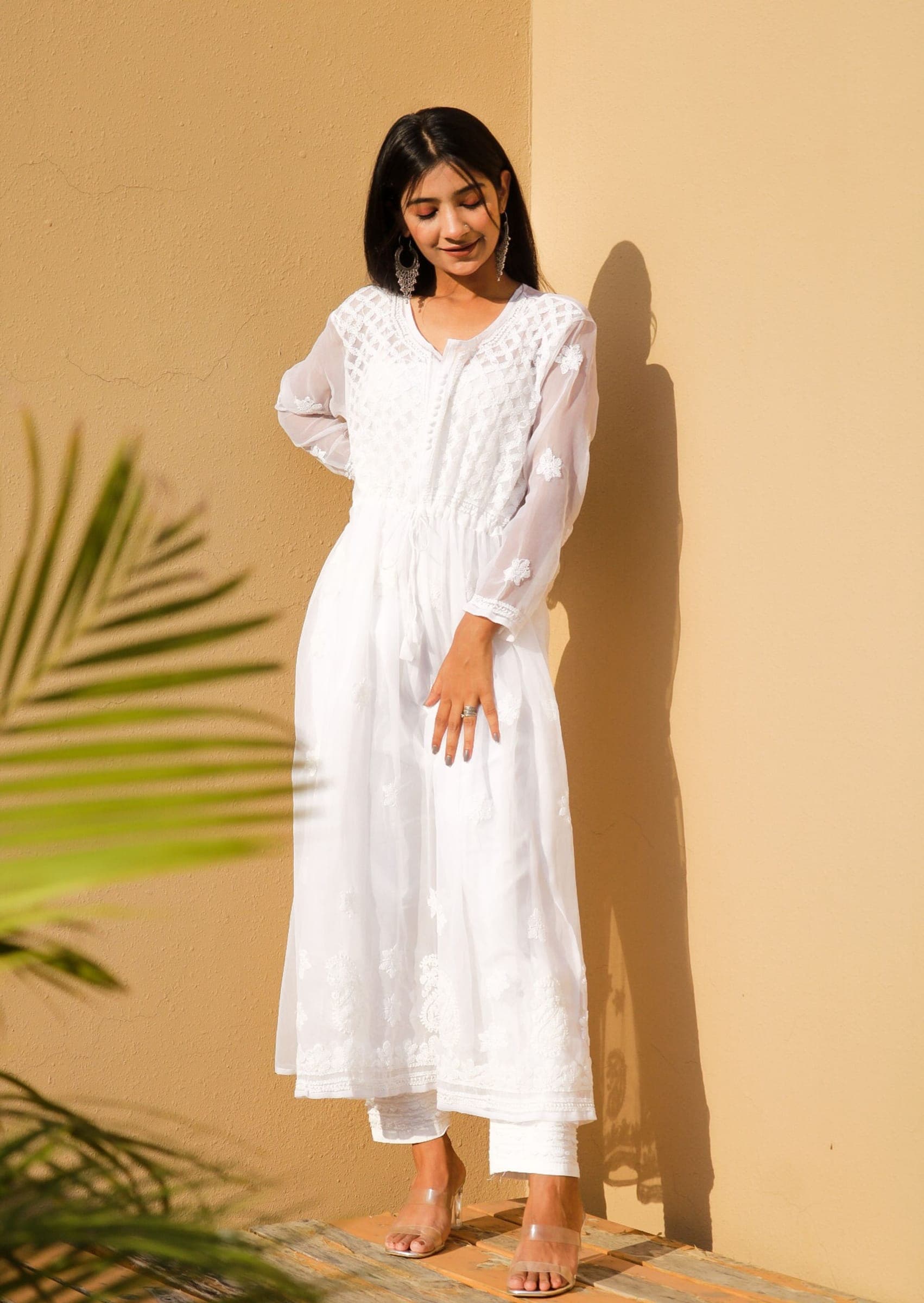
The same depth looks very different at different widths. A deep, narrow neck draws the eye down and looks long. A wide, shallow one opens across the collarbones. The neckline styles each have their own usual proportions, and changing one figure without the other is the quickest way to end up with a neckline you did not picture.
Width is also shared with the back. Front and back meet at the shoulder seam, so a wider front neckline means a wider back neckline at that seam, even if the back depth stays the same.
Measuring it on yourself
Do this in front of a mirror, wearing the bra you plan to wear with the kameez.
- Find the neck point on each side, where the slope of the shoulder meets the neck.
- Decide where you want the neckline edge to sit on each shoulder and mark it with a small piece of tape.
- Measure straight across between the two marks, holding the tape flat rather than letting it dip into the hollow of your throat.
- Measure from each neck point out to its mark, so the tailor knows how far the neckline moves out onto the shoulder.
- Measure from the neck point to the inner edge of your bra strap on each side.
Keeping straps covered
To keep straps hidden, the neckline edge needs to stop short of the inner edge of the strap, with a margin of about an inch (2.5 cm), because a neckline shifts as you move your arms. If the width you want would reach the straps, the choices are a slightly narrower neck, a bra with straps set wider, or small strap holders sewn inside the shoulder seam. Ask about the last one in your quote.
Leave a band of shoulder beyond the neckline too, roughly 2 inches (5 cm) at the very least, so the kameez has something to hang from.
Boat and square necks that lie flat
A boat neck is wide and shallow, and it rests on the shoulders. Too wide for your frame and it slides off one side; a little narrower and it stays put. A back neck cut slightly higher than the front, and tape stitched into the edge, help it hold its line.
A square neck depends on its corners. If they sit wider than the flat part of the chest, they stand away from the body; set slightly inside it, they lie flat. Give the width across and the depth, and say whether you want the corners sharp or softened.
Add both figures to the notes on your quote request, for example neck width 7 in across, front depth 6 in. With custom stitching they are confirmed in writing before cutting, and our article on pairing necklines and sleeves helps you choose the rest.
Common questions
Is neck width measured round the neck?
No. Neck width is a straight measurement across the front neckline, from edge to edge. The distance round the base of the neck is the neck circumference, which matters for collars.
What is a normal neck width for a kurti?
A plain round neck is usually about 6 to 7 inches across. Wider shapes such as square and boat necks often run from 8 to 12 inches, depending on the width of the shoulders.
Will a wider front neckline change the back of the kameez?
Yes, at the shoulder seam. The front and back necklines meet there, so widening one widens the other at that point. The back depth can stay as it was.