
Styles and design · 8 October 2026 · 4 min read
How to mix and match the suits you already own
How to mix and match shalwar kameez you already own: re-pair kameez, trousers and dupattas by colour family, print scale and fabric weight, then fill the gaps.
 Inspiration
Every suit is three separate pieces
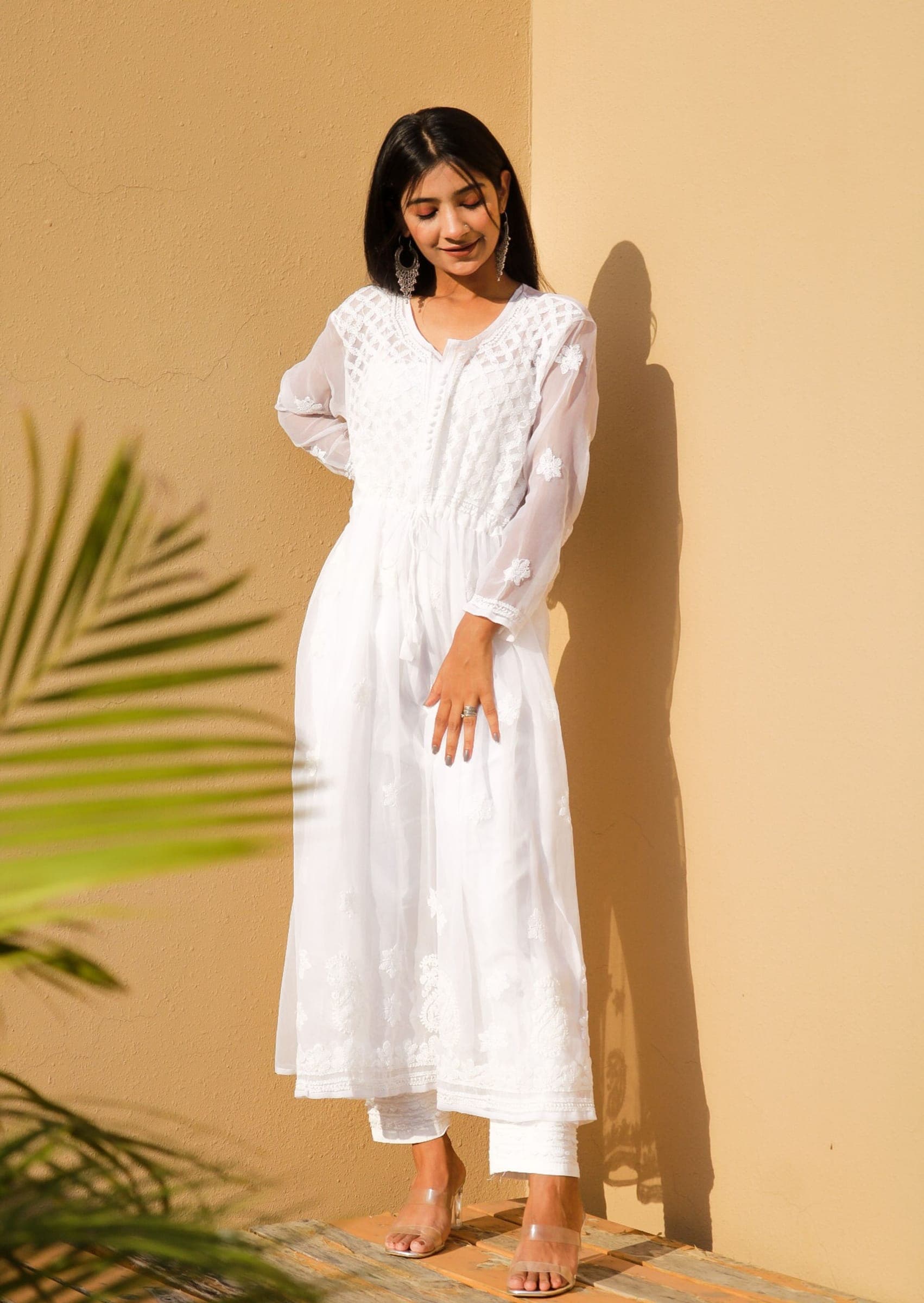
Yes, you can mix and match shalwar kameez: a kameez from one suit, trousers from another and a dupatta from a third often make an outfit that looks planned. The pieces that combine are the ones that share a colour family, differ in print scale and sit at the same fabric weight. Sort by those three things and most wardrobes yield several new outfits without buying anything.
The habit to break is treating a suit as a fixed unit. Most three-piece suits are designed with one strong piece and two supporting ones, and the supporting pieces are often the most useful in other company.
Lay it all out first
Take every suit apart on the bed: kameez in one row, trousers in another, dupattas in a third. It is much easier to see that a mustard dupatta from one suit picks up the mustard flowers on a kameez from another when they are side by side. Put aside anything you know does not fit, and anything you only wear for big occasions, so the exercise stays practical.
The three filters
Run each possible pairing through these in order.
- Colour family. Group pieces by the colours in them, not just the main colour. A white kameez with blue embroidery belongs in both the white and the blue families, so it can go with navy trousers or a white pair. Neutral trousers in white, black or beige join almost every family.
- Print scale. One large print with plain pieces is the safest pattern. Two prints can share an outfit if they repeat a colour and differ clearly in size, for example a large floral kameez with a small check trouser. Two prints of the same scale fight. Our article on pairing printed and plain pieces goes further.
- Fabric weight. A summer lawn kameez with heavy winter trousers looks off even when the colours match, and the trousers pull the lighter fabric out of shape. Keep lawn with lawn or cambric, and khaddar or karandi with their own kind. Chiffon and other light dupattas are the exception, since they cross most seasons.
Shape and length still matter
Colours can agree and an outfit can still look odd because the shapes do not. A long kameez cut for a narrow cigarette trouser looks heavy over a full shalwar, and a short kurta made for wide trousers can look unfinished over slim ones. Before you commit to a new pairing, check it in the mirror against our notes on kameez length and trouser pairings.
Dupattas are the easiest piece to move between suits. A printed dupatta that contains two or three colours links a plain kameez to trousers of a different colour, and the general rules for choosing one are in our guide to dupatta and trouser colours.
Bridging pieces worth ordering
Once you have done the sorting, gaps show up quickly. A few single pieces tend to unlock the most combinations.
- Plain trousers in a neutral. White or ivory, black and beige straight trousers each join many suits. If you buy one, choose the colour that appears most in your kameez rows. Our article on black kurta pairings shows how far one neutral can go.
- A plain kameez in a repeated colour. If three of your printed dupattas contain the same green, a plain green kameez makes three outfits at once.
- A multicoloured printed dupatta. It turns separate plain pieces into a deliberate set.
- A straight kurta at knee length. It sits well over most trouser shapes, so it pairs with more of your existing bottoms than a very long or very short kameez.
Having the gaps filled
Single pieces are normal orders for us: one pair of trousers or one kameez is fine. If you have an unstitched suit waiting, you can also have its kameez made with a trouser style that works with more of your wardrobe. Send your fabric through Stitching Only, or let us supply an agreed fabric, and tell us which existing pieces the new one must work with. Photos of those pieces help. Ask for a quote, and the details are confirmed in writing before anything is cut.
Common questions
Should the trousers be the same fabric as the kameez?
Not necessarily. Matching fabric looks like a set, but a different fabric of similar weight and finish works well as long as the colours relate. Avoid putting a shiny trouser under a matte kameez unless the dupatta repeats the shine.
My white pieces are slightly different whites. Can I wear them together?
Close whites side by side often look like a mismatch. Either keep a strong colour between them, such as a dupatta that falls over the join, or pair each white with a coloured piece instead.
How many dupattas do I really need?
Fewer than you might think if they are well chosen. A plain neutral, one printed dupatta with several colours, and one dressier piece will cover most combinations made from separates.
