
Styles and design · 8 October 2026 · 4 min read
Shirt, blouse or top: what each word means when ordering
The difference between a shirt and a blouse changes between British, American and South Asian use. What shirt, blouse and top usually mean, and how to word an order.
 Inspiration
The quick answer
In British and American English, a shirt is usually a collared top that buttons down the front, while a blouse is a lighter, often dressier top made for women, which may or may not have a collar or buttons. A top is the general word for anything worn on the upper body. In South Asian clothing the same words shift: “shirt” on a Pakistani suit pack means the kameez, and “blouse” usually means a short sari blouse.
When you order something made, these overlaps can lead to the wrong garment. Naming it precisely, with a length, avoids that.
In British and American English
The core meanings are shared, with slight differences in feel.
- Shirt. Collar, buttoned front, cuffed or plain sleeves, cut from a crisp woven cloth such as cotton poplin. The word works for both men’s and women’s clothes; a shirt dress takes its name from it.
- Blouse. A women’s top, often in a softer or finer fabric such as silk, chiffon or viscose, sometimes with gathers, ties or a bow. The word can sound slightly formal or old-fashioned in Britain, and is used freely in America.
- Top. A catch-all: T-shirts, vests, camisoles, tunics, blouses and shirts are all tops. Shops use it when the garment fits no narrower label.
In South Asian use
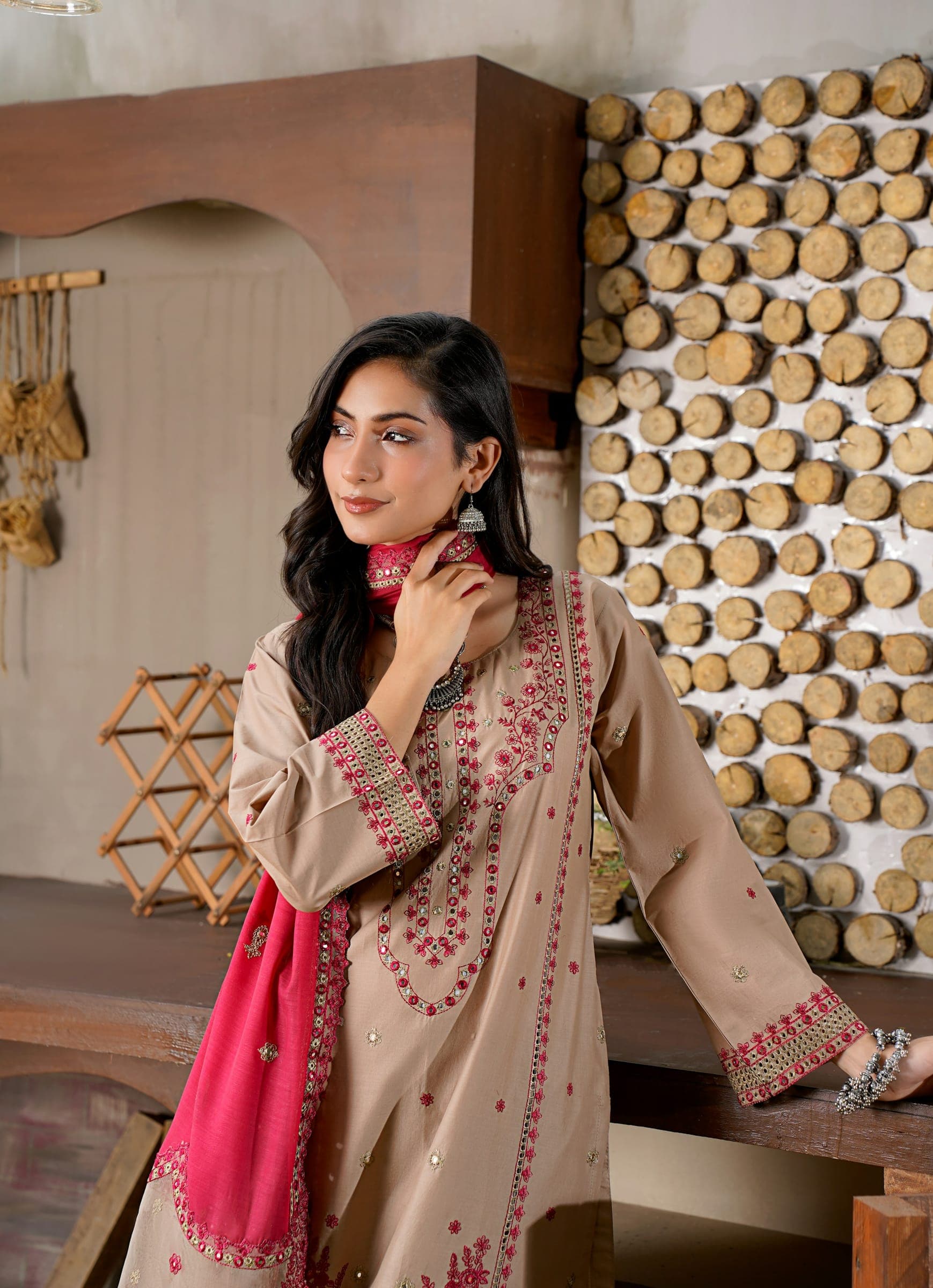
On a Pakistani unstitched suit, the label lists “shirt front”, “shirt back” and “shirt sleeves”: these are the pieces for the kameez, not a Western shirt. In speech, many people call a kameez their shirt, so “shirt length” means kameez length. Our guide to reading an unstitched suit label goes through the pieces.
“Blouse” in South Asia most often means the short, fitted top worn under a sari, sometimes called a choli. If you ask a tailor there for a blouse, that is likely what they will picture. A “top” or “short top” usually means a hip-length kurti or a Western-style top worn with jeans or trousers. The kameez and kurta family of names is set out in the styles guide to cuts, and you can check other words in our stitching glossary.
Wording that cannot be misread
The safest approach is to use the specific name and add a length and one or two features. A few examples show the idea.
- “Kameez, knee length, straight cut” rather than “shirt”.
- “Western-style button-front shirt with collar, hip length” rather than “shirt” on its own.
- “Sari blouse, short, fitted, back opening” rather than “blouse”, with a photo.
- “Loose hip-length top with round neck, to wear with jeans” rather than “top”.
Ordering any of them
On our quote form a kameez or kurta comes under “Kurta or kameez only” for a single top, or as part of a two- or three-piece outfit, and its length is chosen from hip to floor. Western tops and shirts come under Western wear. A sari blouse, or any style you are unsure about, is best described with a photo so we can confirm what is possible.
Start at the quote form or, if you have a picture, Send Your Design. If you are ordering from the UK, the UK page explains quotes in pounds. The garment, its length and its details are written into your quote before anything is cut; our guide to made-to-measure Western dresses covers the Western side in more depth.
Common questions
Is a kurta a shirt?
In Pakistani everyday speech it often is called one, but in English a kurta is a tunic that pulls on over the head, usually longer than a Western shirt and without a full button front.
Why does my suit label say shirt instead of kameez?
It is the usual label language on Pakistani packs. The shirt pieces are the fabric for the kameez, cut and stitched to whatever length and style you choose.
Is a tunic a top or a dress?
Usually a top: a long top reaching the hip or mid-thigh, worn over trousers or leggings. If it is long enough to wear alone, shops may call it a tunic dress.
