Embroidery and fancy work · 5 October 2026 · 4 min read
What is adda work? Hand embellishment on a frame
What is adda work? The adda is the wooden frame, and adda work is any hand embellishment done on it. What the label covers and how to read it in a listing.
 Inspiration
The answer
The adda is a wooden frame on which fabric is stretched tight for embroidery, and adda work is the name for any hand embellishment done on that frame. It describes how the work was made, not a particular stitch or material, so two pieces labelled adda work can look completely different.
The frame itself
An adda is a long rectangle: two beams that grip opposite edges of the cloth, and two cross bars that push the beams apart until the fabric is as tight as a drum. It rests on low supports so the embroiderers, known as karigars, can sit along both sides, and several can work on one length at the same time. Because the frame holds the cloth, both hands are free, one above the surface and one beneath it.
The design is traced onto the fabric first, and the embroidery is done while the cloth is still flat, either as a full length or as marked-out panels for the front, back and sleeves. Cutting and stitching come afterwards. You may also see the older word karchobi for frame work, and khatla work in parts of western India; they refer to the same way of working.
What usually falls under the label
Most adda work combines two or three of the following. Our guides to aari and dabka describe the commonest.
- Aari: chain stitch made with a hooked needle, in thread or metallic thread.
- Wire work: the coils and strips used in zardozi, such as dabka, naqshi and kora.
- Sequins, beads, pearls and stones: attached one at a time or fed along an aari thread.
- Hand thread embroidery: satin stitch and shaded fills in silky floss.
- Couched threads and cords: metallic thread or twisted cord laid on the surface and held with tiny stitches.
Adda work vs machine embroidery
Machine embroidery follows a digitised file. It is quick, even and identical from motif to motif, and it is made almost entirely of thread. Adda work is placed by hand, so it can use three-dimensional materials a machine cannot handle, and it shows slight variation from one motif to the next. Our machine or hand embroidery guide helps you choose between them.
- Texture: machine work is flat; adda work is often raised and has real depth.
- The reverse: machine work shows even bobbin thread and sometimes a paper-like backing. Adda work shows knots and short threads carried between elements.
- Weight and care: hand-applied metal and beads add weight and usually mean dry cleaning.
- Time: hand work takes far longer, which is the main reason it costs more.
Reading “adda work” and “hand work” in a listing
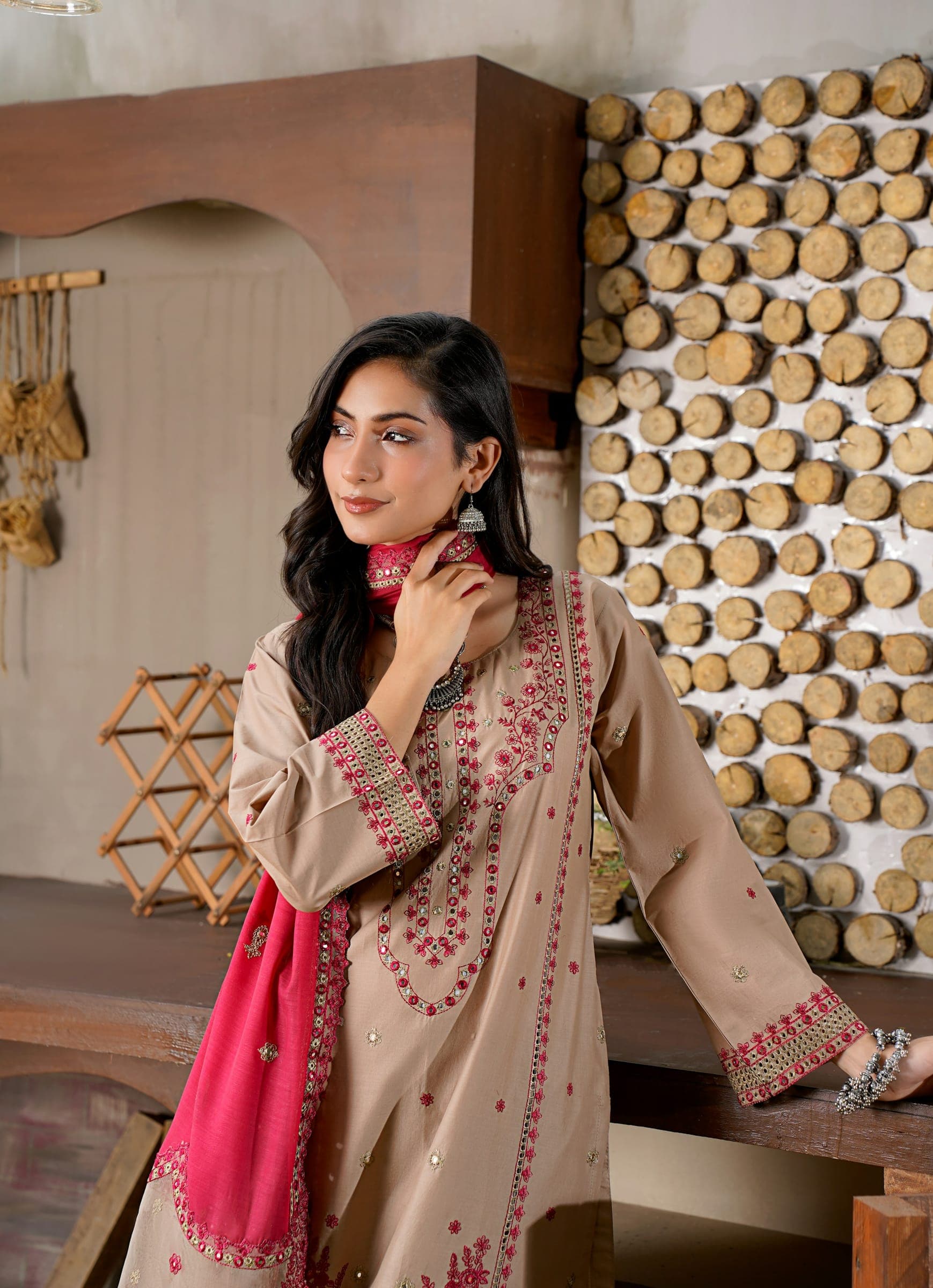
The label tells you the method, not the amount or the standard. A few beads on a neckline count as adda work, and so does a fully worked panel. Check how much of the garment is covered, which materials are used and whether the pieces sit firmly, and see how to tell good quality embroidery for the details to look at.
- Hand work suit: in most shops this means the same thing as adda work: embellishment applied by hand, normally on a frame.
- Machine embroidery with adda work: a machine-embroidered base with hand-applied sequins, beads or wire on top. This is the most common combination.
- Pure or full adda work: a claim that everything is hand done. Ask for close photos of the front and the reverse.
Asking about hand embellishment
If a hand-embellished look is what you want, send a photo and say where it should sit. No named technique or method is promised in advance; once we have seen your fabric and design, the written quote confirms what is possible. Embroidery can be planned on an outfit we stitch or on your own fabric or garment, as the custom embroidery page explains. Start a design quote when you have your photos together.
Common questions
Is adda work always done by hand?
Yes, by definition. The term refers to embellishment worked by hand on a stretched frame. A piece can still mix methods, with a machine-embroidered base and hand work on top, so check what a listing means.
Why is fabric embroidered before the outfit is stitched?
Flat cloth can be stretched evenly on the frame, which keeps the work smooth and stops it puckering. A finished garment has seams, curves and shaping that prevent even tension, so only small touches are usually added afterwards.
Is an adda work dress heavy to wear?
It depends on the materials and the coverage. Thread and a scatter of sequins add little, while dense wire and bead work is heavy and normally lined. Ask what the embellishment is made of and how much of the garment it covers.