Occasions and ordering · 8 October 2026 · 3 min read
Why an outfit looks different on you than on the model
Why do clothes look different on me than on the model? Height, proportion, clips and styling in reference photos, and which lengths to restate for your own frame.
 Inspiration
Height and proportion, mostly
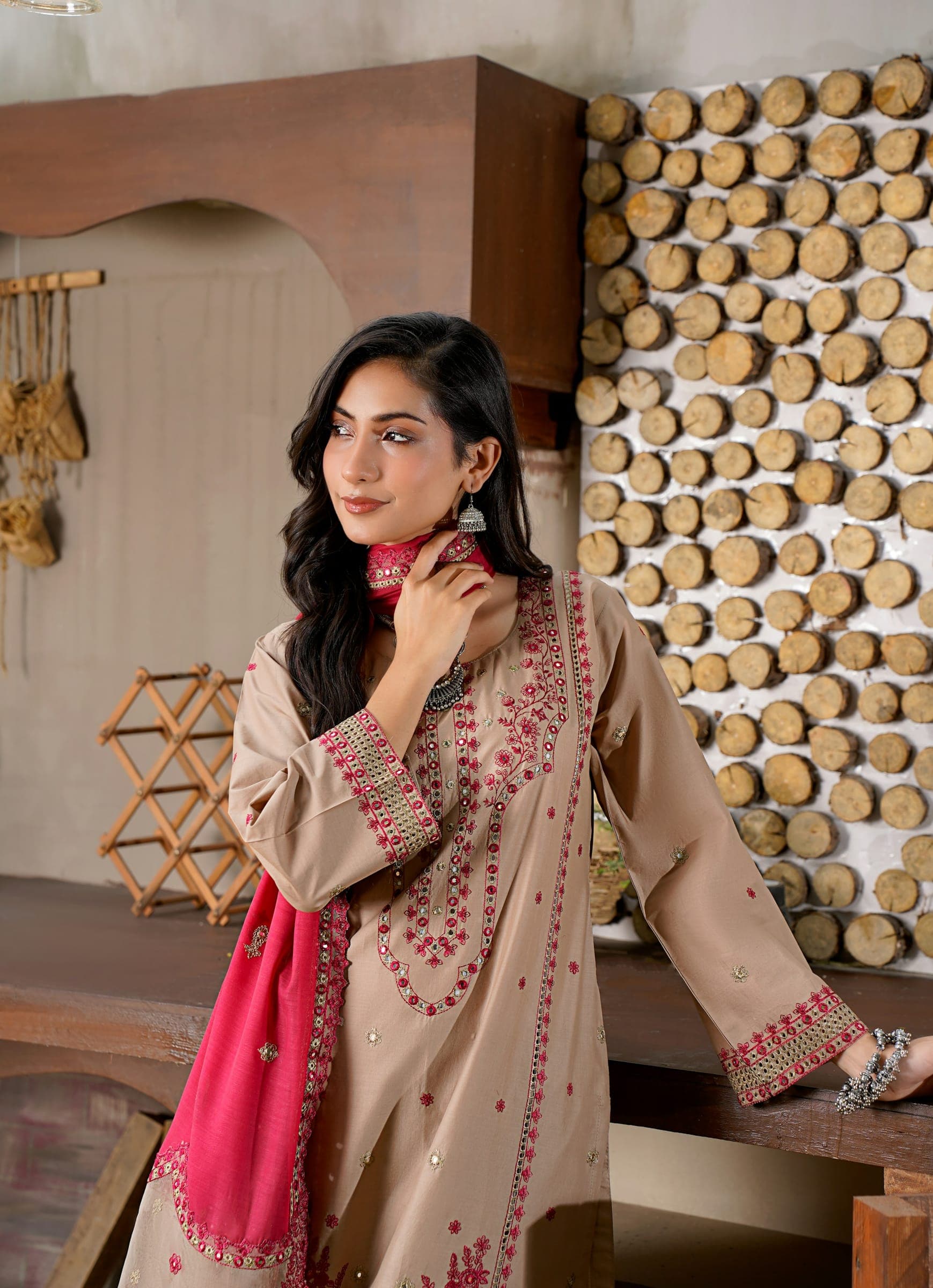
Mostly because of height and proportion. A kameez that reaches just below a tall model’s knee may fall to mid-calf on you, a slit that opens at her hip may start at your thigh, and the photo itself was pinned, steamed and posed for the camera. Even when the picture is honest, the design is the same but the lengths and ease are hers, not yours.
This matters most when you order from a reference photo. Copy the design, and restate the measurements for your own frame.
Every length is relative
Fashion models are often noticeably taller than average, with long legs and a long distance from shoulder to waist. A garment is cut to look balanced on that body. Move it onto a shorter or differently proportioned frame and every hemline shifts at once.
- Kameez length: the same number of inches covers more of a shorter body, so a knee-length look becomes calf-length.
- Side slits: a slit measured from the hem rises to a different point on your hip or thigh. See how side slits are usually placed.
- Sleeves: a three-quarter sleeve on long arms can reach the wrist on shorter ones.
- Waist and yoke lines: a seam meant to sit at her natural waist may land below yours.
- Trousers: a cropped cigarette pant on the model becomes full length on you, or the reverse.
What the camera does not show
Photo shoots are built to make clothes look their best, and most of the help is invisible. Samples are often made in one size and clipped at the back to shape them to the model, so a relaxed cut appears closely fitted from the front. Hems are pinned, dupattas are arranged to hide seams, heels add length to the leg, and a turned shoulder makes any outline slimmer. Studio light adds sheen; a breeze or a fan adds movement.
None of that is dishonest in itself. It just means a photo shows the garment at its most flattering moment, not as it sits when you walk around in it.
Reading a model photo for your own order
Instead of matching the model’s measurements, match where things fall on her body, then find those points on yours. Our guide to kameez length for your height helps with the most visible one. Give these numbers in inches or centimetres:
- Kameez length, measured from the highest point of your shoulder to where you want the hem: above the knee, at the knee, mid-calf.
- Slit height, as a measurement from the hem or as a point on your body.
- Sleeve length, from the shoulder to where you want it to end.
- Trouser length, to the ankle bone or the floor, depending on your shoes.
- How fitted, in words: fitted, comfortable or relaxed, because a clipped photo cannot tell the tailor.
Ordering from a reference picture
When you send your own design, the photo shows the look and your measurements decide the size and every length. If you are unsure how a length will look on you, say so and we suggest one in the written quote, which you approve before cutting. The size guide explains what to measure, and you can start a design quote with your photo attached.
Common questions
Should I order the length the model wears?
Only if you are a similar height. It is safer to decide where you want the hem to fall on your own body, then measure from your shoulder to that point.
Why did a loose kameez look fitted in the photo?
It may have been clipped or pinned at the back. Look for side or back views; if there are none, ask for the garment’s actual chest and waist measurements before you order.
Can a petite person wear designs shown on tall models?
Yes. Most designs scale well when the lengths are adjusted, and some details, such as a very long slit or a deep border, can be reduced to keep the balance.