
Embroidery and fancy work · 5 October 2026 · 3 min read
Aari vs zardozi: what is the difference?
Aari work vs zardozi: hooked-needle chain stitch set beside raised metal wire work on look, weight, fabric and care, and why listings pair the two words.
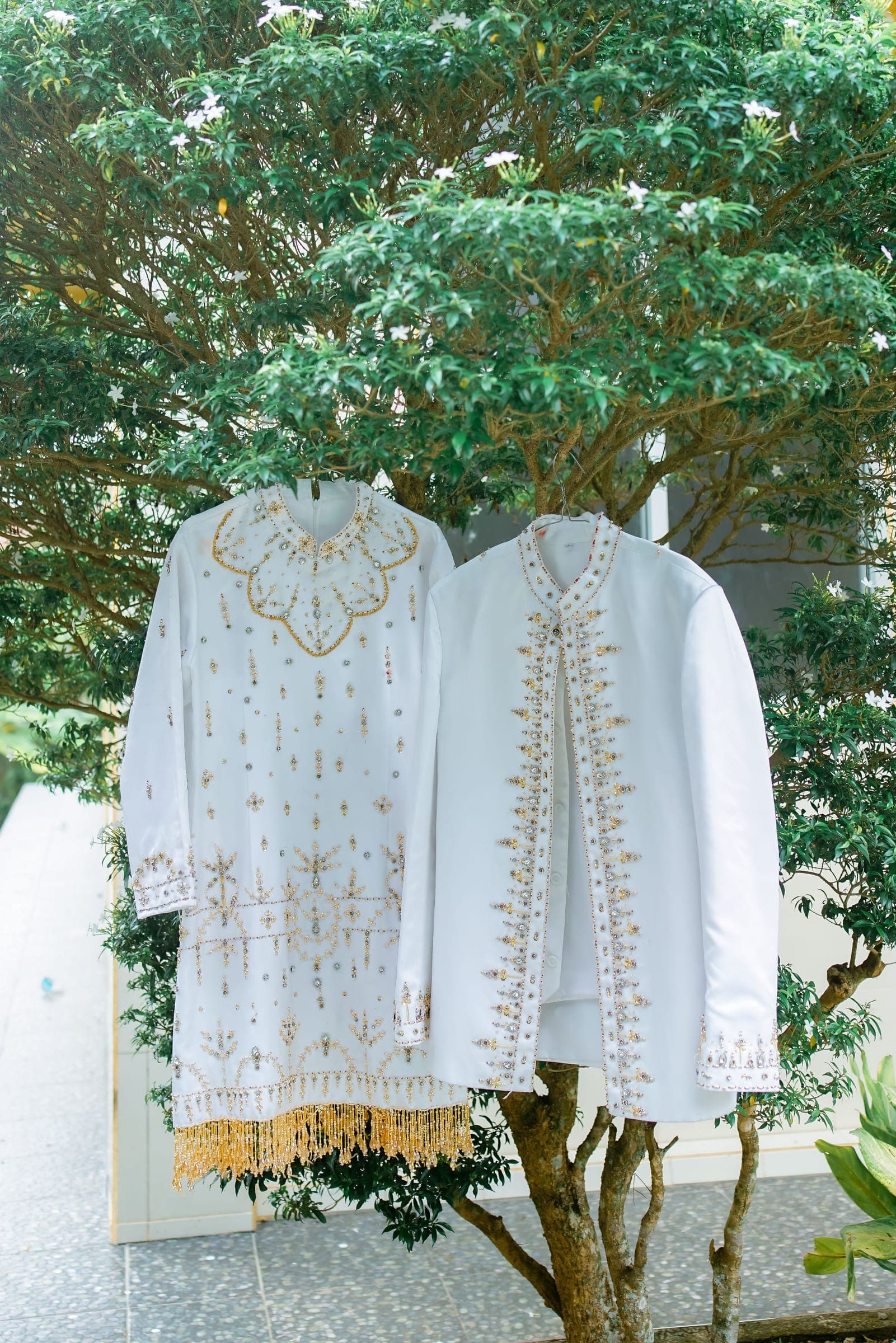 Inspiration
The difference in brief
Aari is fine chain stitch made with a hooked needle, so its designs are drawn in thread and lie almost flat on the fabric. Zardozi is built from metal: short lengths of coiled wire, strips and sequins stitched down one at a time, so it stands up from the surface and weighs more. One is line; the other is relief.
Aari and zardozi side by side
- Tool: aari uses a hook that pulls loops of thread up through the cloth. Zardozi uses an ordinary needle that picks up each piece of wire like a bead.
- Material: aari is worked in silk, viscose, cotton or metallic thread. Zardozi uses wire coils, flat metal strip, sequins and pearls, often over padding.
- Look: aari gives smooth, flowing lines and softly shaded fills. Zardozi gives a sculpted, glittering surface.
- Weight: aari adds very little. Zardozi is noticeably heavy when it covers a large area.
- Speed: aari is fast for hand work. Zardozi is slow, because every piece is cut and placed separately.
- Fabric: aari suits chiffon, georgette, organza, net and silk. Zardozi wants a firm base such as velvet, raw silk or jamawar.
- Care: aari in colourfast thread can often be washed gently by hand. Zardozi is dry clean only and should never be ironed from the front.
Why listings say “aari zardozi work”
The two words appear together so often that many shoppers assume they are one technique. The phrase can describe a real mixture or simply mean hand work, so when it matters, ask the seller which parts are thread and which are metal, and look at a close-up. There are three reasons for the pairing.
- Same frame: both are done on the adda, the wooden frame that holds the cloth taut, and usually by the same embroiderers. Our article on adda work explains the frame.
- Same design: a typical festive motif uses aari for the stems, outlines and fills, then zardozi for the raised centres and highlights.
- Loose usage: the aari hook is also the usual tool for attaching sequins and small beads, and in some markets “aari work” has become shorthand for all hand embellishment done on a frame.
Which suits your outfit
Choose by fabric and by how the piece will be worn. Aari generally involves fewer hours than zardozi over the same area, which is one of the factors in what makes embroidery cost more.
- A long Eid day in a light fabric: aari-style thread lines are comfortable, flexible and cool.
- An evening piece in velvet or raw silk: a little zardozi at the neckline or cuffs gives depth that thread cannot.
- A sheer dupatta: aari vines or a lattice keep it floating; heavy metal work drags it.
- Something to wash at home: thread work, without metal.
- The glow of metal without the weight: a thread design with a few raised metal highlights.
Asking for either look
You do not need the right word to order. Send a photo of the embroidery you like, say where it should sit, and choose a level on the quote form: delicate, detailed or statement. No named technique is promised in advance. Once we have seen your fabric and design, the written quote confirms what is possible, on an outfit we are stitching or on your own fabric or garment.
Our longer guides to aari work and zardozi go deeper into each, the custom embroidery page explains the service, and you can request a quote when you are ready.
Common questions
Is zardosi the same as zardozi?
Yes. Zardosi, zardozi and zardouzi are spellings of one Persian-derived word for metal embroidery. Aari is likewise written ari or aari. The spelling tells you nothing about the quality or the method.
Is aari work lighter than zardozi?
Yes. Aari is thread, so it adds almost no weight and keeps the fabric flexible. Zardozi is made of metal wire and often padded, so a heavily worked area is stiff and heavy and normally needs a lining.
Can aari and zardozi be used on the same outfit?
Yes, and they usually are on festive pieces. Thread lines carry most of the design and a small amount of metal work adds raised highlights, which keeps the outfit lighter than zardozi alone.
