Embroidery and fancy work · 24 November 2026 · 6 min read
A guide to Arabic calligraphy on modest clothing
Arabic calligraphy on an abaya or hijab: Naskh, Thuluth, Diwani, Kufic and Urdu Nastaliq, what reads well in thread, respectful placement and how to brief us.
 Design preview
The short answer
Arabic calligraphy looks lovely in thread when the script suits the size. Naskh is the clearest and survives small lettering; Thuluth and Diwani are decorative and need room; Kufic is angular and blocky; Urdu Nastaliq is the natural choice for an Urdu name but needs height. Keep sacred words away from the hem and anywhere you sit, have the text checked by someone who reads it, and approve the drawn lettering before a stitch is made.
We embroider names, initials and monograms in English letters, Arabic script and Urdu script on the abayas, hijabs and other modest pieces we make in Pakistan, and on suitable garments sent to us through our custom embroidery service. Every piece of lettering is drawn up and approved by you in writing before stitching, and placement, size and thread are agreed in the written quote.
The main scripts, in plain terms
Calligraphers spend years on a single script, so this is only a working guide to help you choose:
- Naskh. The rounded, evenly spaced script behind most printed Arabic and many copies of the Qur’an. It is the easiest to read, which makes it the safe choice for a name on a cuff or along the inside of a front edge.
- Thuluth. Tall, upright letters with long sweeping curves, often stacked and interlaced. It is the script of grand mosque inscriptions. On clothing it works best as a feature, across the upper back or along a hijab border, rather than as tiny lettering.
- Diwani. A flowing, slanted script with letters packed tightly together, first used in the Ottoman court. It is very ornamental and harder to read, so it suits a single name or a monogram better than a sentence.
- Kufic. The oldest of these, angular and built from straight lines. Square Kufic sits on a grid, which can look striking as a small block or a repeating border. Tell us which style of Kufic you have in mind and we confirm in the quote whether it suits your size and fabric.
- Urdu Nastaliq. The script Urdu is usually written in, developed in Persia, with words that slope down towards the line. It is graceful for an Urdu name, and it needs enough height that the stacked letters do not run into each other.
What reads well in thread at small sizes
Arabic letters often differ only by their dots. The letters for b, t and th share one shape and are told apart by one, two or three dots, so if the dots blur into the strokes, the word changes. That is the main reason small lettering needs a clear script and a slightly larger size than you might expect. Vowel marks are usually left off a name unless you need them to show the pronunciation, because they are tiny and crowd the line.
Hairline strokes are the next thing to go. The thin tails of Thuluth and Diwani look elegant on paper, but in thread they need enough length to show. Fabric matters too: smooth nida and crepe hold a fine line well, while dense lettering on light chiffon can pull the cloth, so we may suggest a larger size or a lighter fill. Whatever your fabric can carry clearly is confirmed in the quote.
For the thread itself, a tonal colour gives a quiet look that shows up close, and a contrast colour makes the words a feature. Gold or silver zari gives the metallic look many people picture for calligraphy. On a design of your own you can name hand or machine embroidery, zari, beadwork or sequins, and the quote confirms which suits the lettering.
Placing sacred words with respect
Many people choose not to have verses of the Qur’an, the name of Allah or the name of the Prophet anywhere they could touch the floor, be sat on or brush the ground. In practice that rules out the hem, the lower back and the seat area. The upper back, the chest, the cuffs and the front edges above the waist are the usual choices, and a hijab border can work if the words sit where the scarf does not hang loose. Some people also prefer not to wear sacred text in the bathroom, and choose a name or a short personal phrase for everyday wear instead.
Views on this differ, and we are not the right people to rule on it. If you are unsure, ask a scholar you trust. Tell us your wishes in the enquiry and we will plan the placement around them. Remember that some personal names, such as Abdullah, contain the name of Allah, so the same care can apply to a name.
Proofread before anything is stitched
Arabic letters change shape depending on where they fall in a word, and software that does not handle Arabic properly can split the letters apart or run them left to right. A name that looks fine to a non-reader can be quite wrong. Urdu adds letters that Arabic does not have, so an Urdu name spelt in Arabic letters, or the other way round, will not look right to a native reader.
So send the text twice: typed, and as a clear image of it handwritten or printed by someone who reads the language. When we send back the drawn lettering, ask that same person to check it before you approve. The approval is yours, and nothing is stitched until it is given. Our design approval page explains the sign-off.
How to brief us
A good brief saves a round of messages. Include these in your enquiry:
- The exact words, typed and as an image, with the meaning and how it is said, so we know what the lettering should read.
- The script, if you have one in mind: Naskh, Thuluth, Diwani, Kufic or Urdu Nastaliq. If not, tell us how readable you want it and we suggest one.
- The garment and fabric: an abaya, its hijab, a kaftan or another piece, in nida, crepe or chiffon for abayas.
- Where it goes and roughly how large, keeping the placement notes above in mind.
- The thread: tonal, contrast or zari, and the colour.
Where to start
If you want a short name or initials rather than a phrase, our article on initials on an abaya covers the quieter placements, and a lettered hijab pairs well with a matching scarf from the collection. Readers in the Gulf can see the pages for custom abayas in Saudi Arabia and custom abayas in the UAE, or read our Arabic abaya page. When your text and placement are ready, send your design and we reply with a written quote, with the lettering drawn up for your approval before any stitching.
Common questions
Can you embroider a name in Arabic and English together?
Yes. Names, initials and monograms can be in English letters, Arabic script or Urdu script, side by side or on different parts of the garment. The layout is drawn up for you to approve in writing first.
Which script is easiest to read at a small size?
Naskh. Its rounded, evenly spaced letters keep their dots clear in thread. Thuluth, Diwani and Nastaliq need more height to stay legible.
Do you check the spelling for me?
We draw the lettering from the text you send, but the approval is yours. Ask someone who reads the language to check the drawing before you sign it off.
Can I write to you in Arabic?
Yes. You can write in Arabic and we reply in Arabic, though English is preferred. The order form itself is in English.
Designs to start from
Make one of these your own
4 designs shown
- £79Regular £99· 20% offDesign previewSale20% offView product
abayas · eid
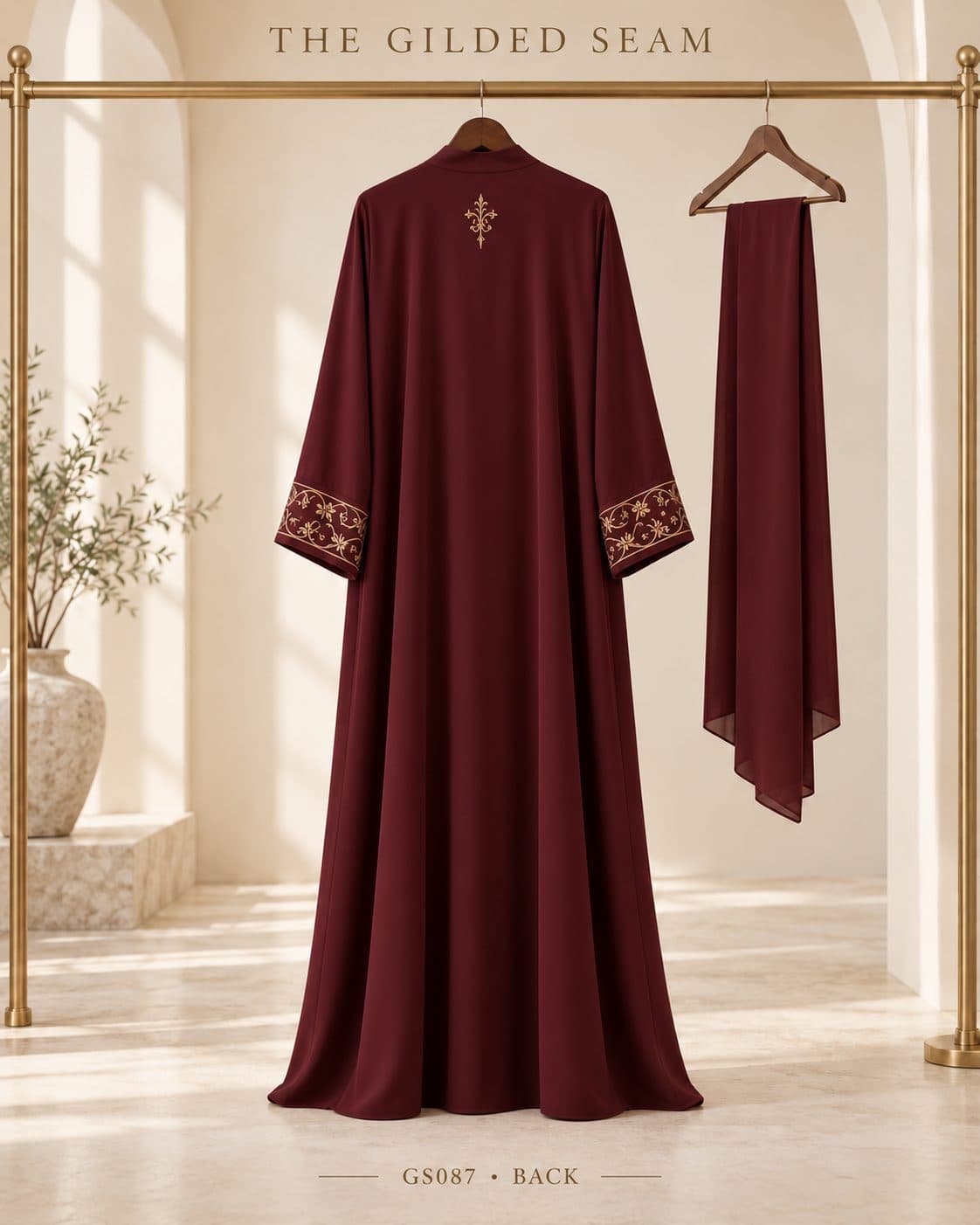
Arabesque tailored abaya
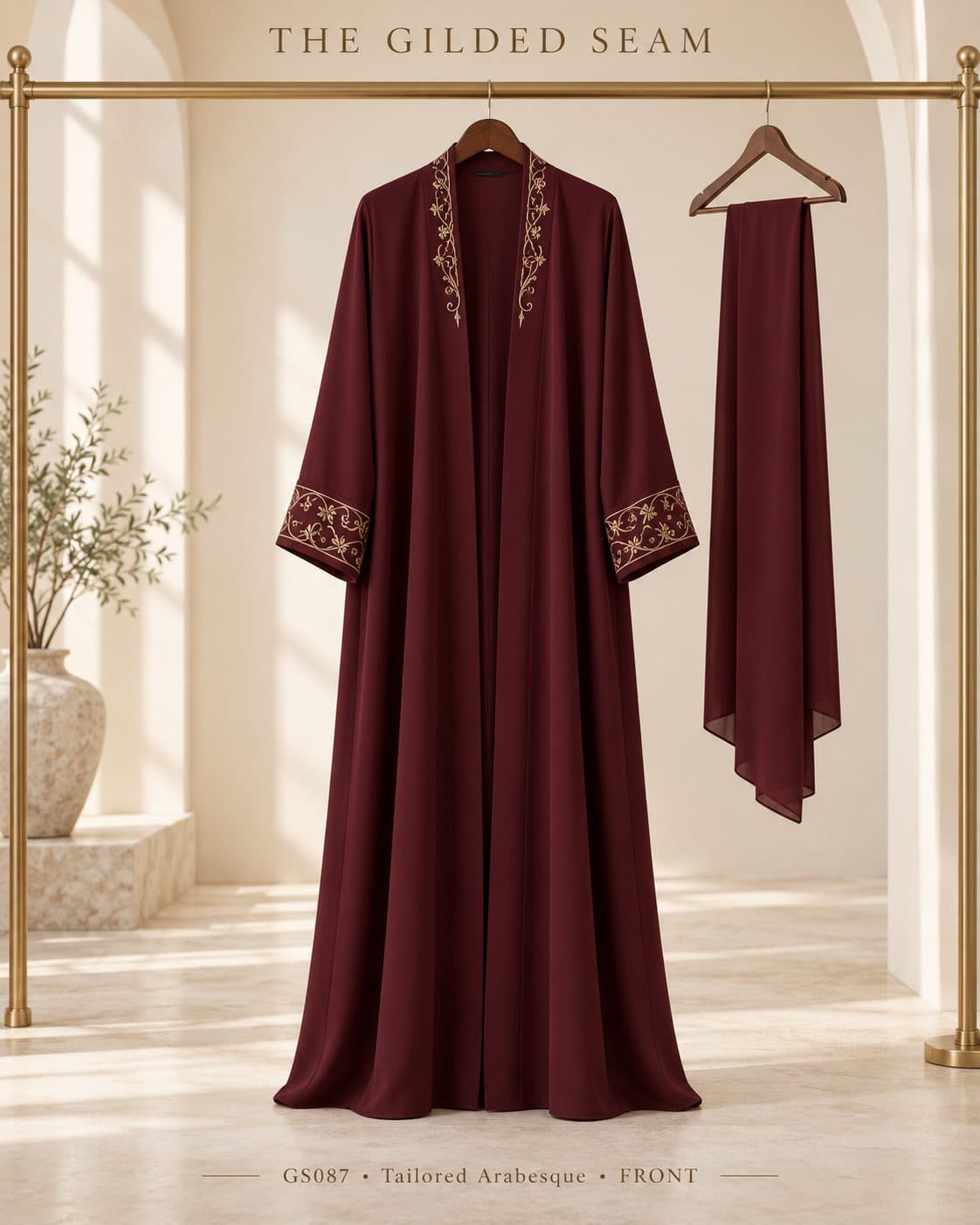
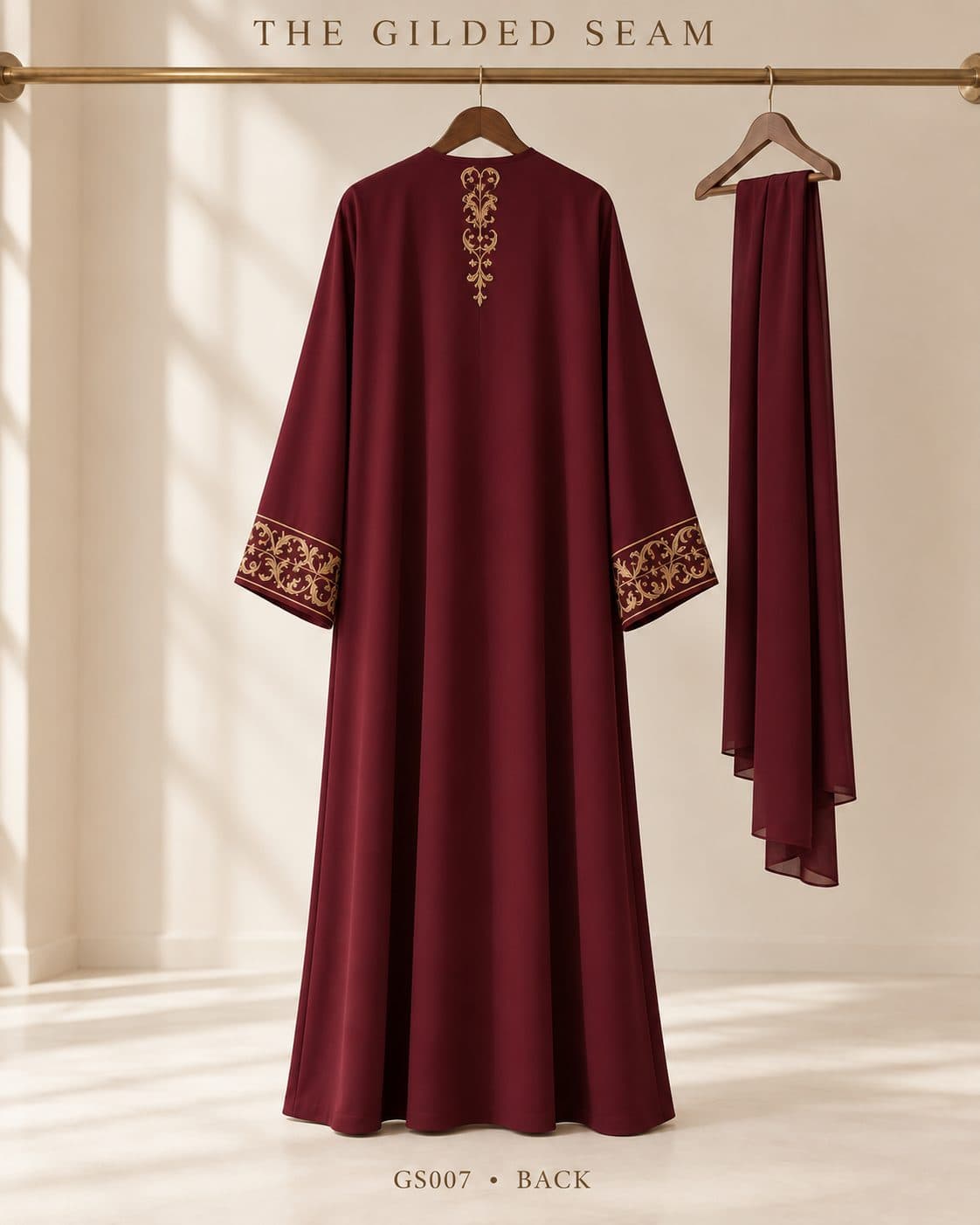
An open tailored abaya in burgundy with a shawl collar, embroidered with gold arabesque scrollwork along the shawl collar and around the cuffs. Comes with a matching scarf.
- Shawl collar
- Open front
- Arabesque embroidery
- Matching scarf
- Nida, crepe or chiffon
 £120Regular £150· 20% offDesign previewSale20% offView product
abayas · eid
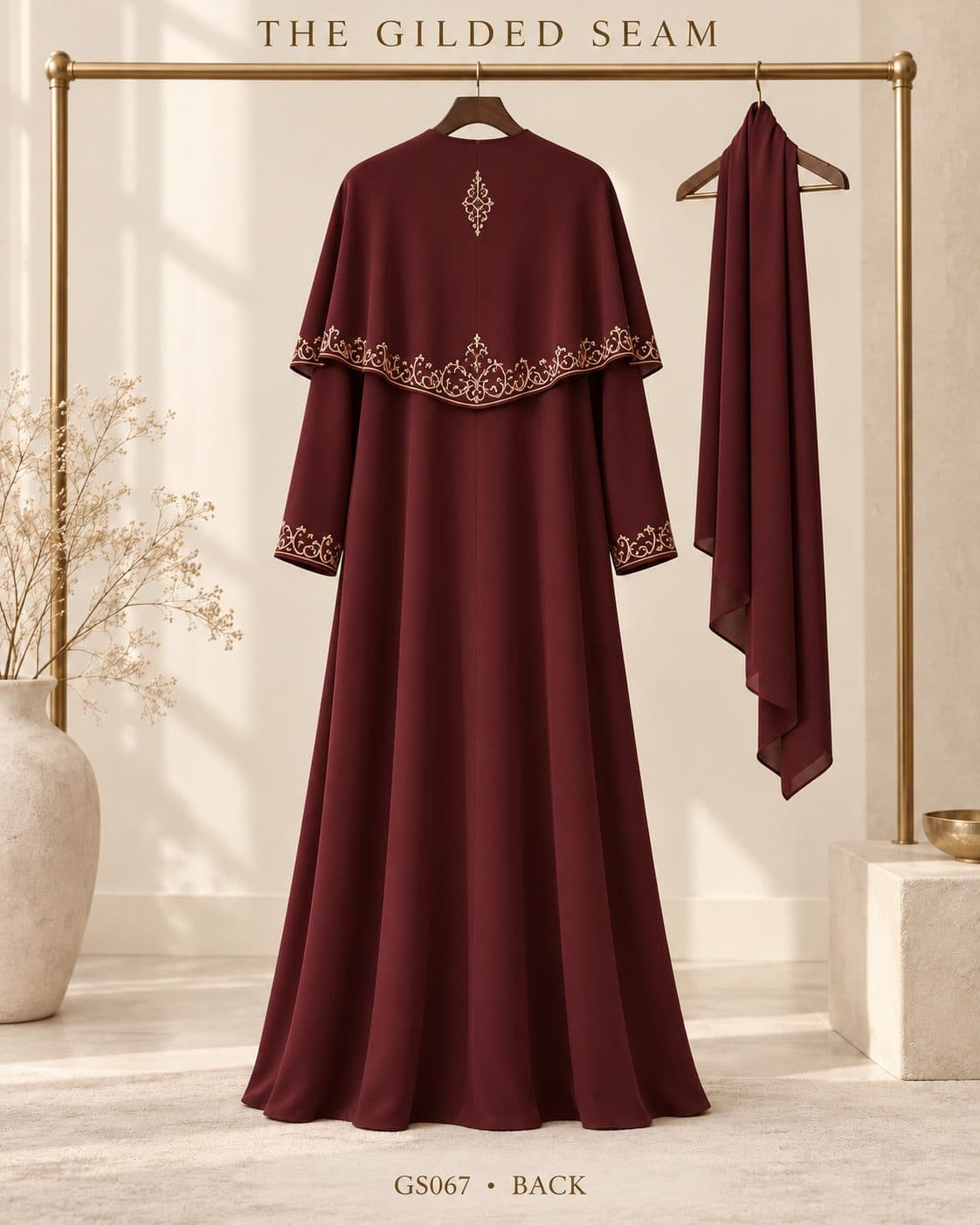
Arabesque cape abaya
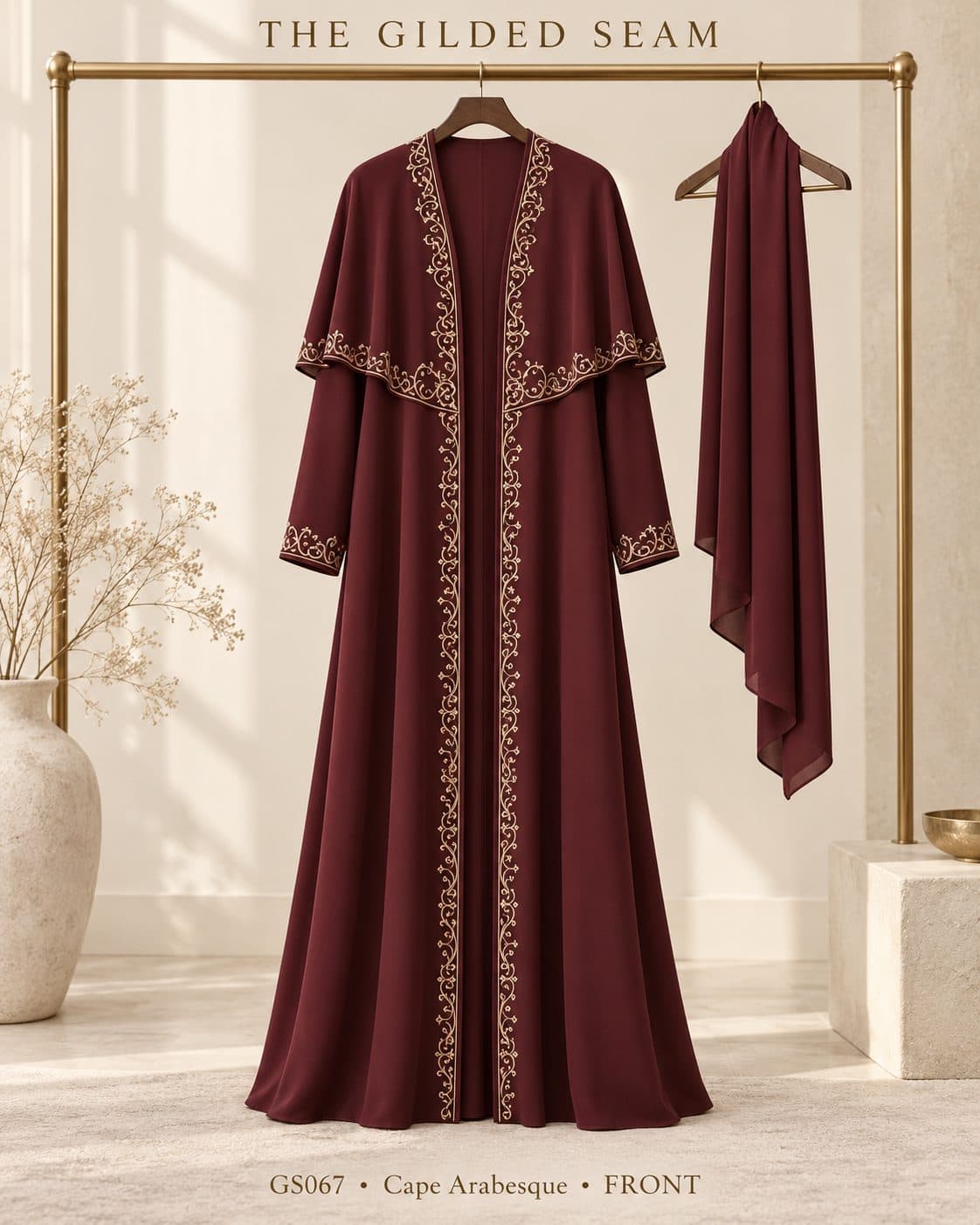
An open cape abaya in burgundy, embroidered with gold arabesque scrollwork along the edges of the cape, down both front edges and on the cuffs. Comes with a matching scarf.
- Cape layer
- Open front
- Arabesque embroidery
- Matching scarf
- Nida, crepe or chiffon
 £100Regular £125· 20% offDesign previewSale20% offView product
abayas
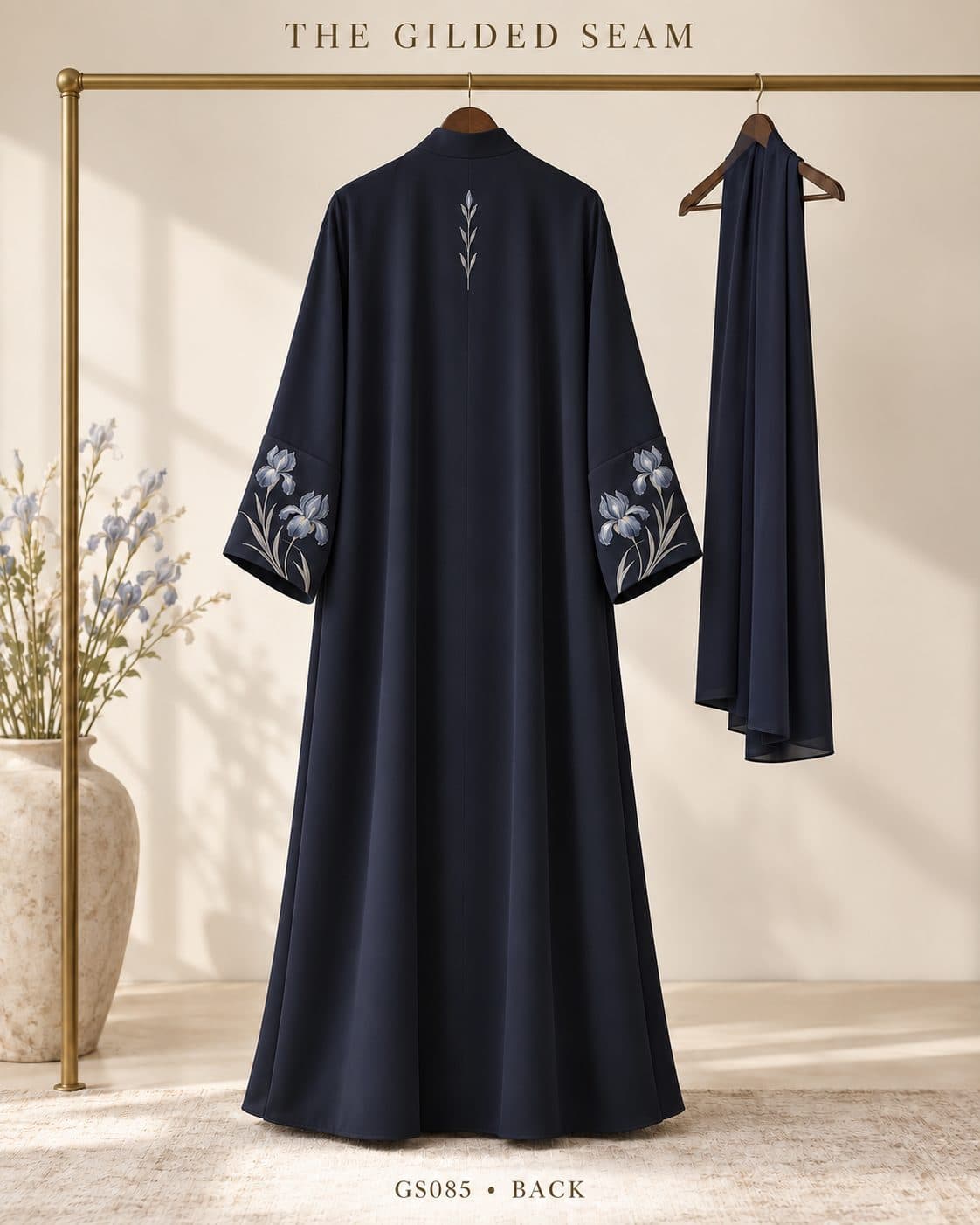
Iris tailored abaya
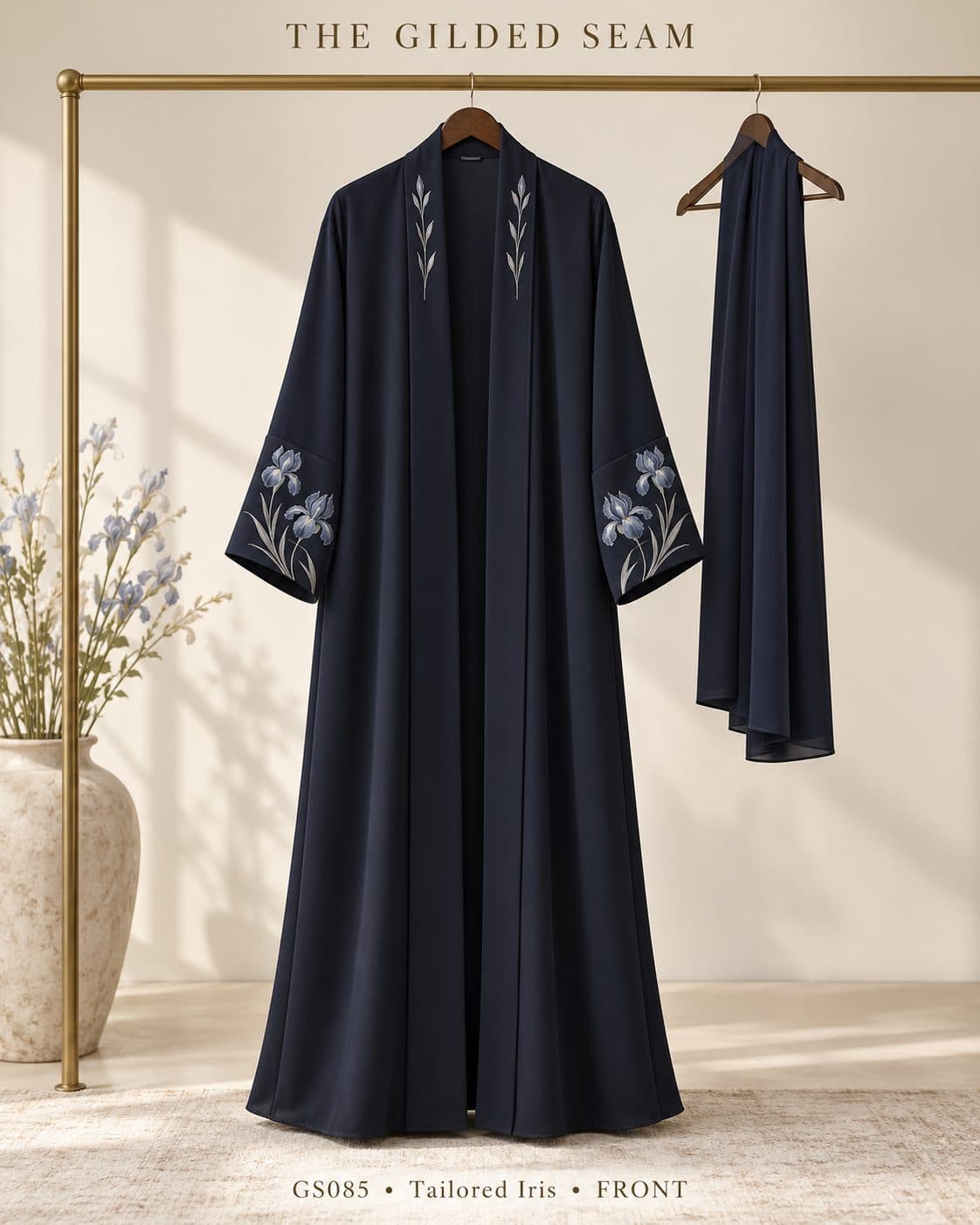
An open tailored abaya in navy with a shawl collar, embroidered with soft blue irises along the shawl collar and around the cuffs. Comes with a matching scarf.
- Shawl collar
- Open front
- Iris embroidery
- Matching scarf
- Nida, crepe or chiffon
 £100Regular £125· 20% offDesign previewSale20% offView product
abayas · eid
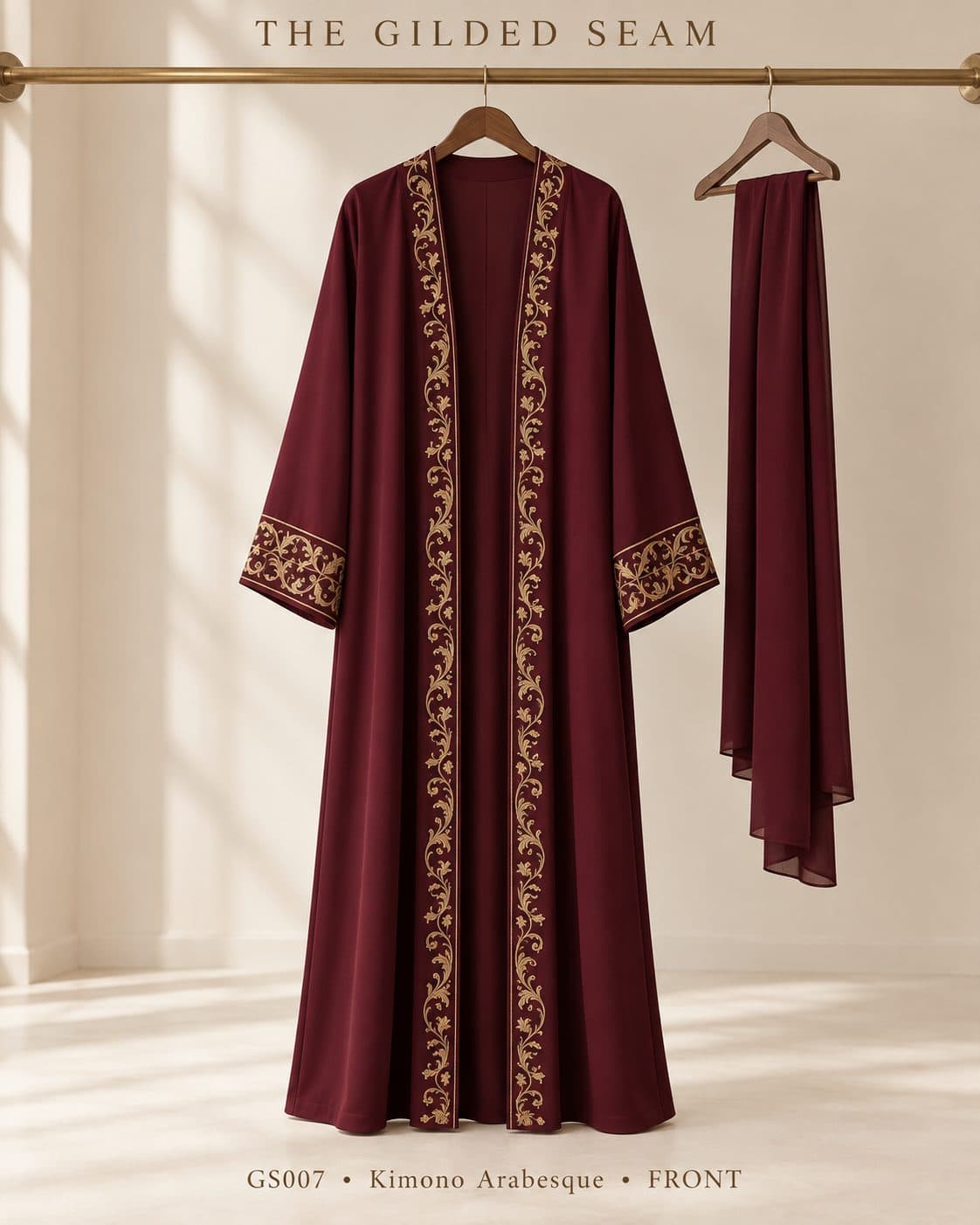
Arabesque kimono abaya
An open-front kimono abaya in burgundy, embroidered with gold arabesque scrollwork down both front edges and around the sleeve cuffs. Comes with a matching scarf.
- Kimono cut
- Open front
- Arabesque embroidery
- Matching scarf
- Nida, crepe or chiffon
More guides