Embroidery and fancy work · 24 November 2026 · 6 min read
Arabic name embroidery ideas for abayas
Arabic name embroidery ideas for an abaya: Naskh, Thuluth or Diwani, a name with a short dua, Arabic initials, mirrored layouts, Urdu Nastaliq and spelling checks.
 Design preview
The short answer
The prettiest Arabic name embroidery on an abaya is usually a single name in a script that suits the space: Naskh for a small, clear name on a cuff, Thuluth for a tall, formal name across the back, and Diwani for a flowing, decorative look. You can add a short dua, use an Arabic initial as a monogram, or set the name symmetrically on both cuffs. Urdu names can be drawn in Nastaliq.
We stitch names in English, Arabic and Urdu script. Whatever you choose, the lettering is drawn up and sent to you to approve in writing before any stitching, which is the moment to check every letter, dot and mark.
Three Arabic scripts and where each works
Naskh is the clear, rounded script most people know from printed books and the Quran. It stays legible when small, so it is the safest choice for a cuff, a hijab corner or a short name inside a front edge.
Thuluth is tall and sweeping, with long upright strokes and letters that overlap in layers. It needs height to breathe, so it belongs on the back yoke or a wide band, and it looks best when the name is given room rather than squeezed.
Diwani is cursive and ornate, with letters that curl into one another and often lean upwards to the left. It is beautiful as a decorative shape, though some readers find it harder to read at a glance. If you want people to read your name easily, choose Naskh; if you want it to feel like jewellery, Diwani is lovely.
Layout ideas
- A single name. Maryam (مريم), Zainab (زينب) or Khadija (خديجة), centred on the back yoke or along one cuff. Short names give the script the most space to show off.
- A name with a short dua. A name with Bismillah (بسم الله) above it, or Masha’Allah (ما شاء الله) beneath, works well on the back. For a graduation abaya, some choose rabbi zidni ilma (رب زدني علما), “my Lord, increase me in knowledge”. Some women prefer to keep sacred words away from the hem or any place that is sat on, so tell us how you feel and we place it to suit.
- Arabic initials. Arabic has no capital letters, so an Arabic monogram is usually one letter on its own, such as م for Maryam, or two letters drawn as a small linked emblem. Letters change shape depending on their position in a word, and a monogram uses the standalone form.
- Mirrored layouts. The simplest is the same name on both cuffs, each reading correctly. The more elaborate version is mirrored calligraphy, a Thuluth tradition where the name is drawn once and reflected to form a symmetrical emblem. It is striking on the back yoke, but one half reads backwards by design, so it is decorative first and legible second.
- Two languages. Arabic on one cuff and the English spelling on the other suits a family spread across countries or a gift for someone who reads both.
How right-to-left lettering sits on an abaya
Arabic reads from right to left, and that matters more on a garment than on paper. On the back yoke it is simple: the name is centred and reads normally to whoever stands behind you. On a cuff, decide who it is for. A name that reads correctly to someone facing you will look upside down when you glance at your own wrist, and the reverse is also true. Neither is wrong, but say which you want.
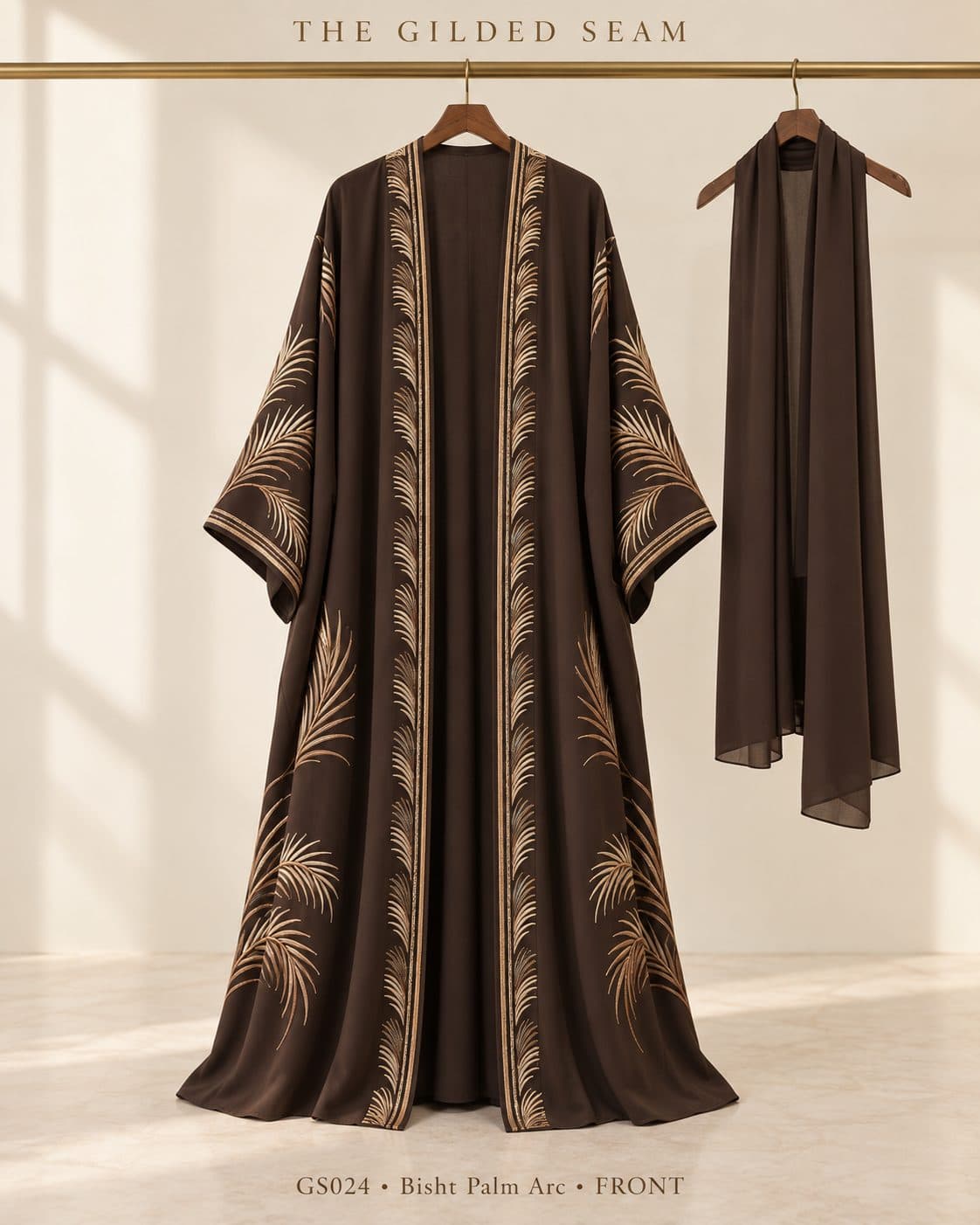
Down a front edge, the lettering has to turn on its side. Arabic and English both rotate, so tell us whether the name should start at the top or at the bottom. On the Palm Arc bisht abaya, where the palm fronds already run down both front edges, a name would sit more comfortably on the back or on the matching scarf. Our guide to embroidery placement with a hijab shows which areas stay visible once the hijab is on.
Spelling, dots and diacritics
In Arabic, several letters share one shape and differ only by their dots: ب, ت and ث, or ج, ح and خ. A missing dot changes the letter, so the lettering proof deserves a careful look. The same goes for hamza: Aisha is written عائشة, with the hamza on its seat, and Amina can be آمنة or أمينة depending on the name you were given. Ask a family member who reads Arabic to check if you are unsure.
Short vowel marks, the harakat, are optional in names. Adding them, or a shadda as in Ruqayya (رقيّة), makes the pronunciation clear, but tiny marks can crowd a small name on a cuff. On a larger back yoke they add a pleasant rhythm. Tell us whether you want them, and type the name with them if you do.
Urdu names in Nastaliq
Nastaliq is the script Urdu readers know from newspapers and poetry. It hangs from right to left on a gentle diagonal, with each word stepping downwards, so a name in Nastaliq is taller and more compact than the same name in Naskh. Give it a little more height than you would expect.
Urdu spelling also differs from Arabic in small ways. Fatima is فاطمة in Arabic but usually فاطمہ in Urdu, ending in the Urdu letter he rather than ta marbuta, and Ayesha is often written عائشہ. Urdu has its own letters too, such as ٹ, ڈ and ے. Type the name as you write it in Urdu, because the drawn Nastaliq will look different from the font on your phone, and you will check it on the proof.
How to send your Arabic or Urdu name
Choose a design from our custom abaya page, or send a photo of your own design. In the notes, type the name in Arabic or Urdu script, add the English spelling, and say which style you want, where it goes and roughly how large. You are welcome to write to us in Arabic, though English is preferred. Gold zari is a classic thread for calligraphy on dark abayas, as our guide to black abayas with gold embroidery shows.
The written quote confirms placement, size and thread, and our custom embroidery service covers lettering on a hijab or another piece. For a name on an abaya for a Gulf occasion, see custom abayas in Qatar, and for a step-by-step order guide, read how to get your name embroidered on an abaya.
Common questions
Which Arabic script is easiest to read on an abaya?
Naskh is the easiest to read. It stays clear at small sizes, so it is the usual choice for a name on a cuff or a hijab.
Can you embroider an Urdu name in Nastaliq?
Yes. Urdu names can be drawn in Nastaliq and stitched, and the lettering is sent to you to approve in writing before stitching starts.
Do I need to know Arabic to order an Arabic name?
No. Send the name in English and, if you can, in Arabic script copied from a trusted source. Then check the proof with someone who reads Arabic before you approve it.
Can the Arabic name go on my hijab as well?
Yes. The matching hijab can carry a name, initials or embroidery, agreed in the written quote.
Designs to start from
Make one of these your own
4 designs shown
- £120Regular £150· 20% offDesign previewSale20% offView product
abayas · eid
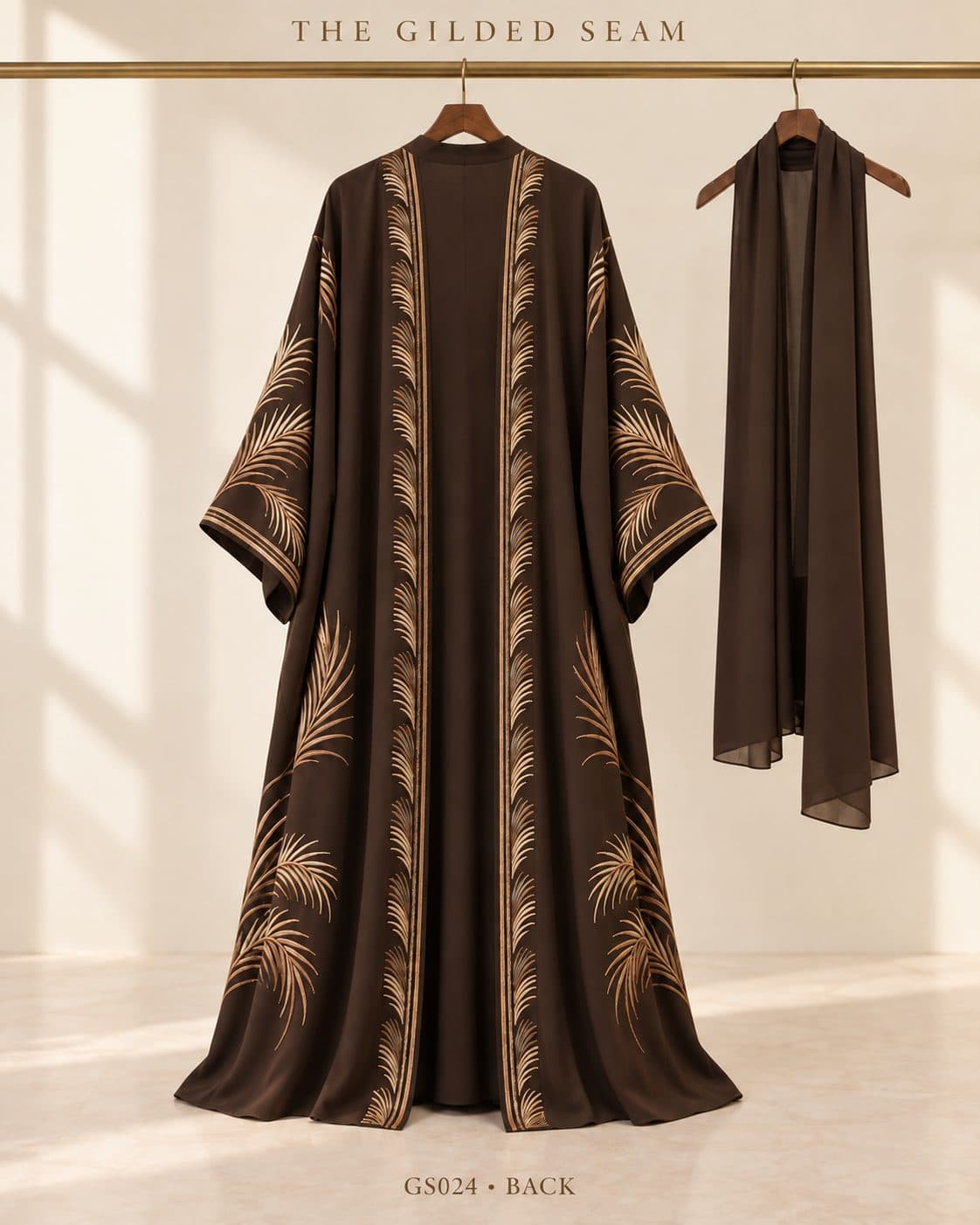
Palm Arc bisht abaya
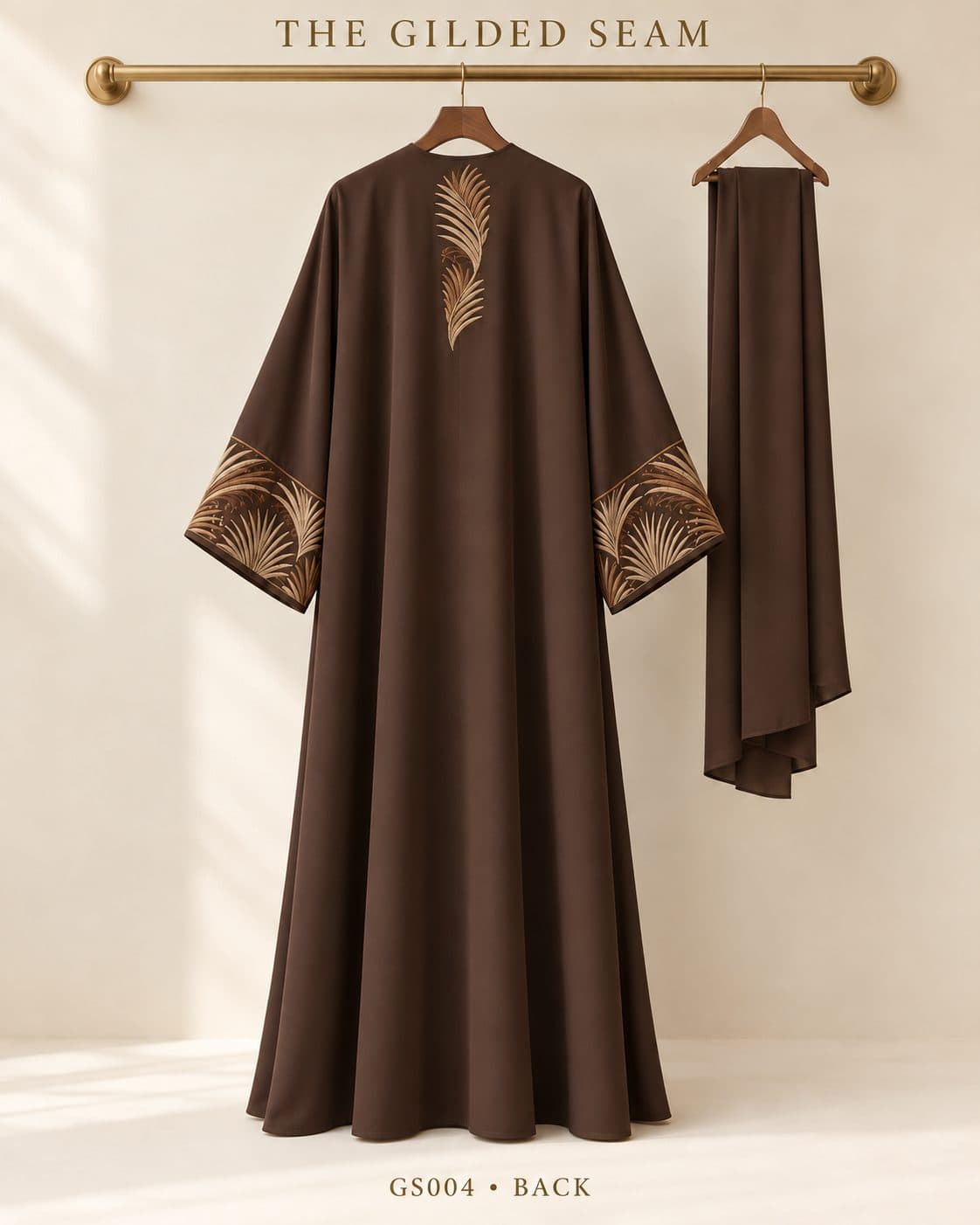
A flowing, open bisht-style abaya in chocolate brown, embroidered with gold and bronze palm fronds down both front edges and around the ends of the sleeves. Comes with a matching scarf.
- Bisht style
- Open front
- Palm frond embroidery
- Matching scarf
- Nida, crepe or chiffon
 £100Regular £125· 20% offDesign previewSale20% offView product
abayas · eid
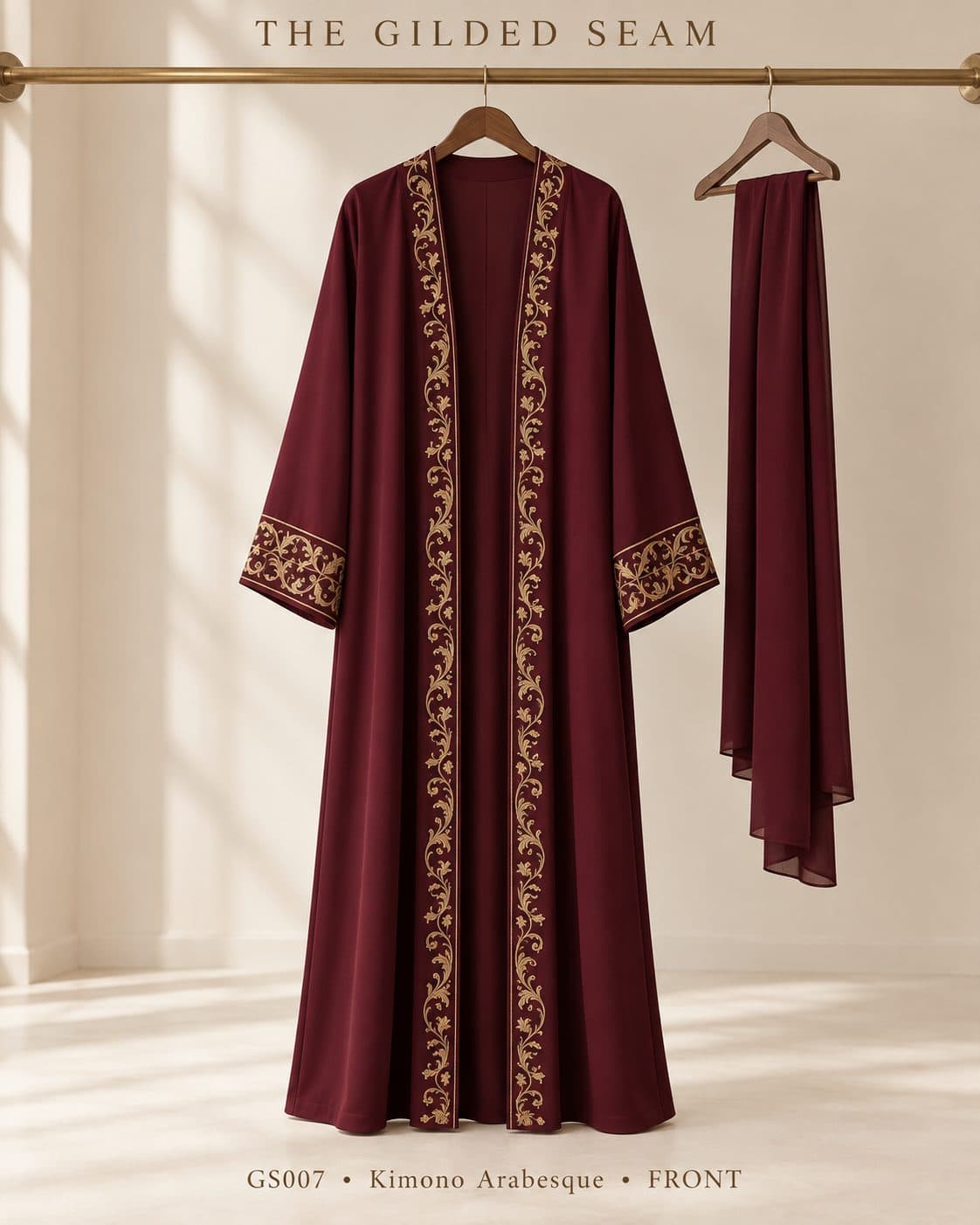
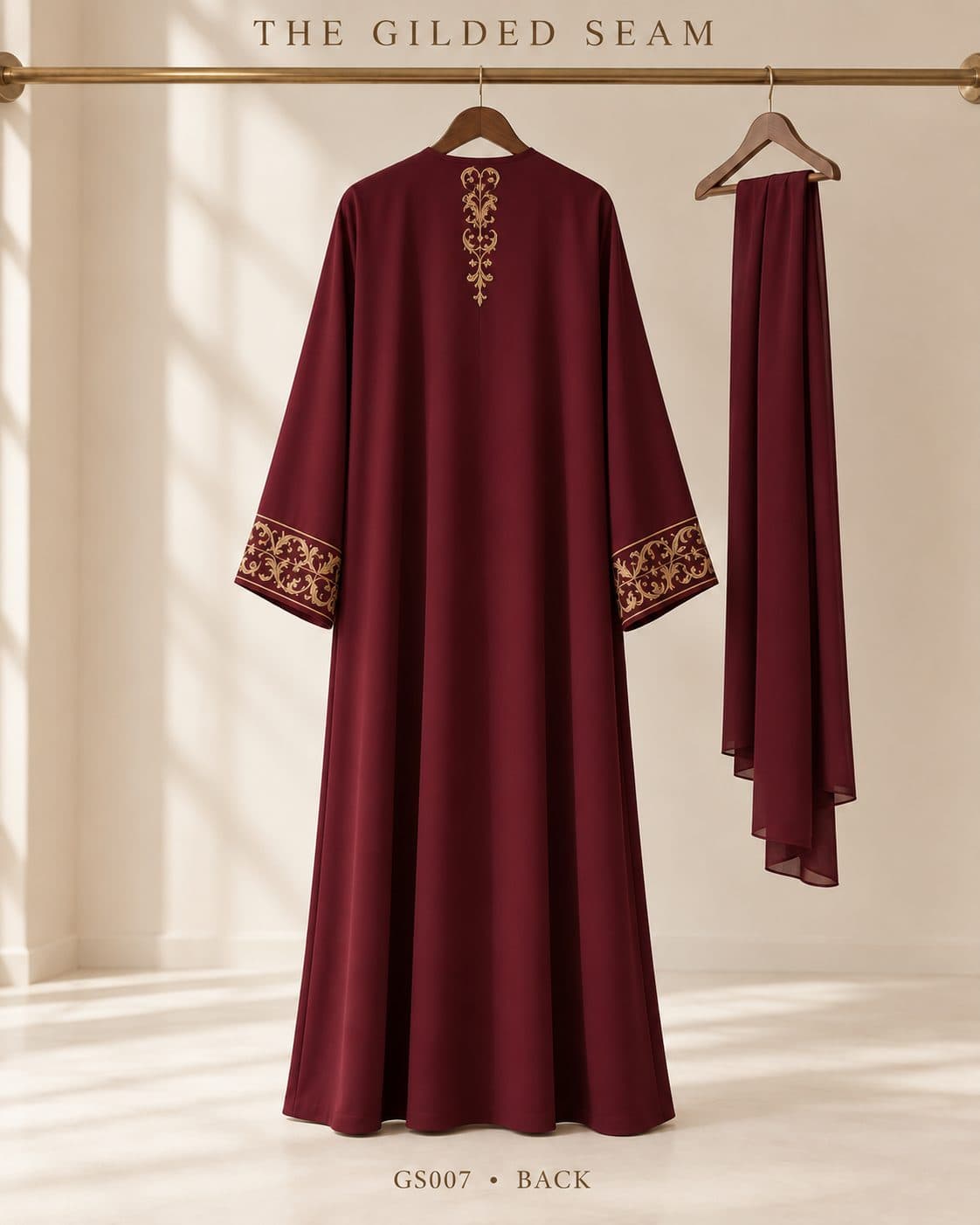
Arabesque kimono abaya
An open-front kimono abaya in burgundy, embroidered with gold arabesque scrollwork down both front edges and around the sleeve cuffs. Comes with a matching scarf.
- Kimono cut
- Open front
- Arabesque embroidery
- Matching scarf
- Nida, crepe or chiffon
 £120Regular £150· 20% offDesign previewSale20% offView product
abayas · eid
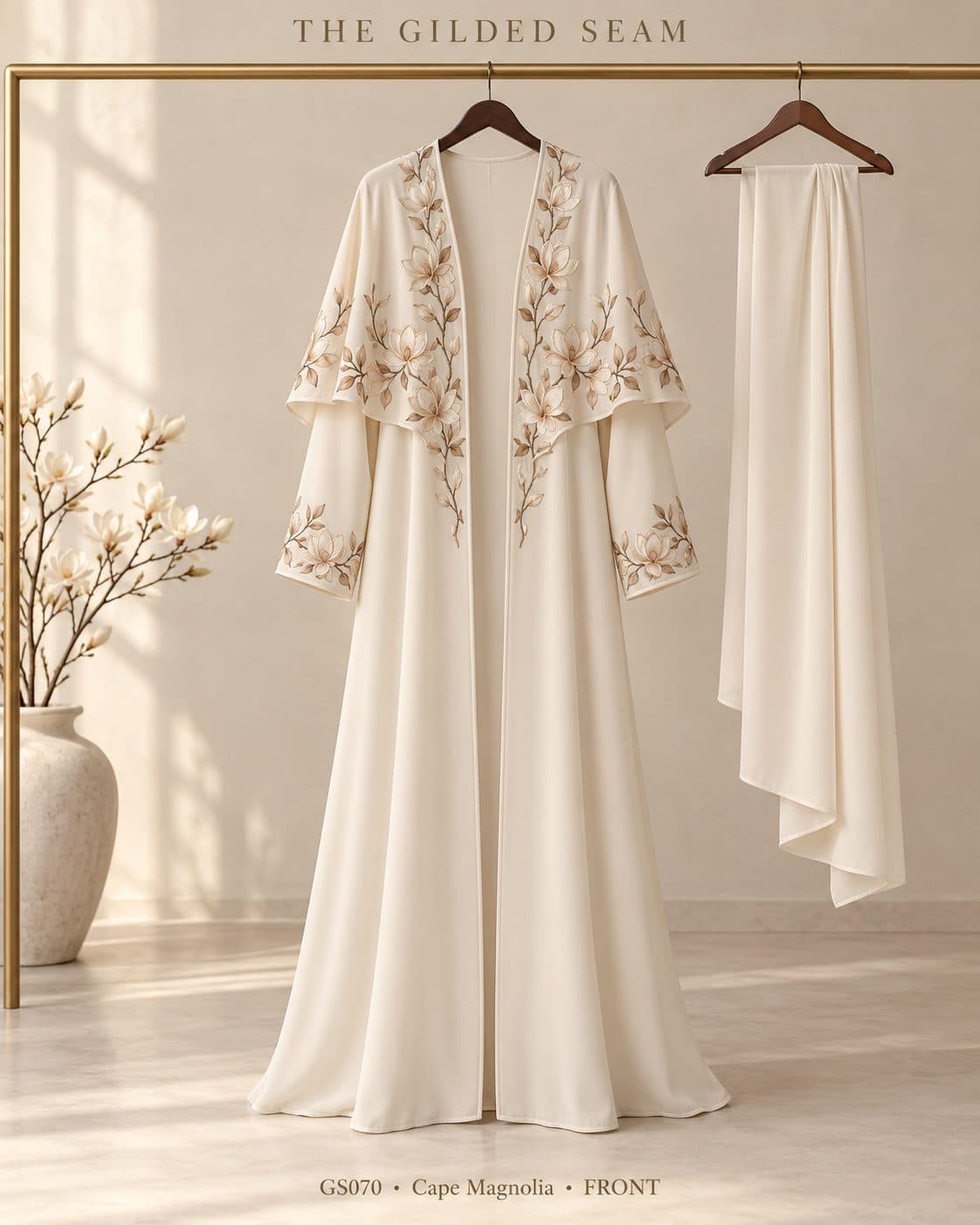
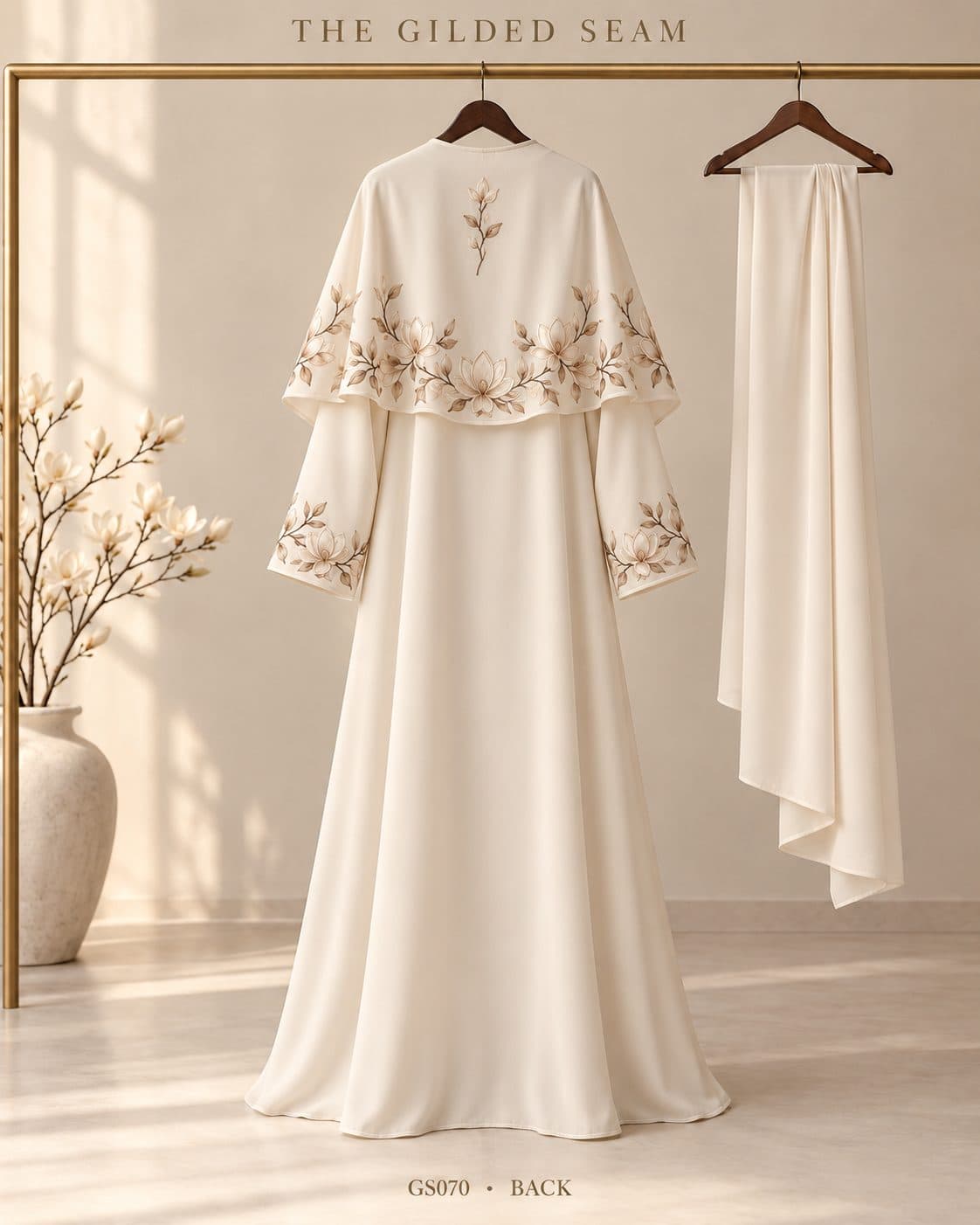
Magnolia cape abaya
An open cape abaya in ivory, embroidered with peach and gold magnolias along the edges of the cape, down both front edges and on the cuffs. Comes with a matching scarf.
- Cape layer
- Open front
- Magnolia embroidery
- Matching scarf
- Nida, crepe or chiffon
 £120Regular £150· 20% offDesign previewSale20% offView product
abayas · eid
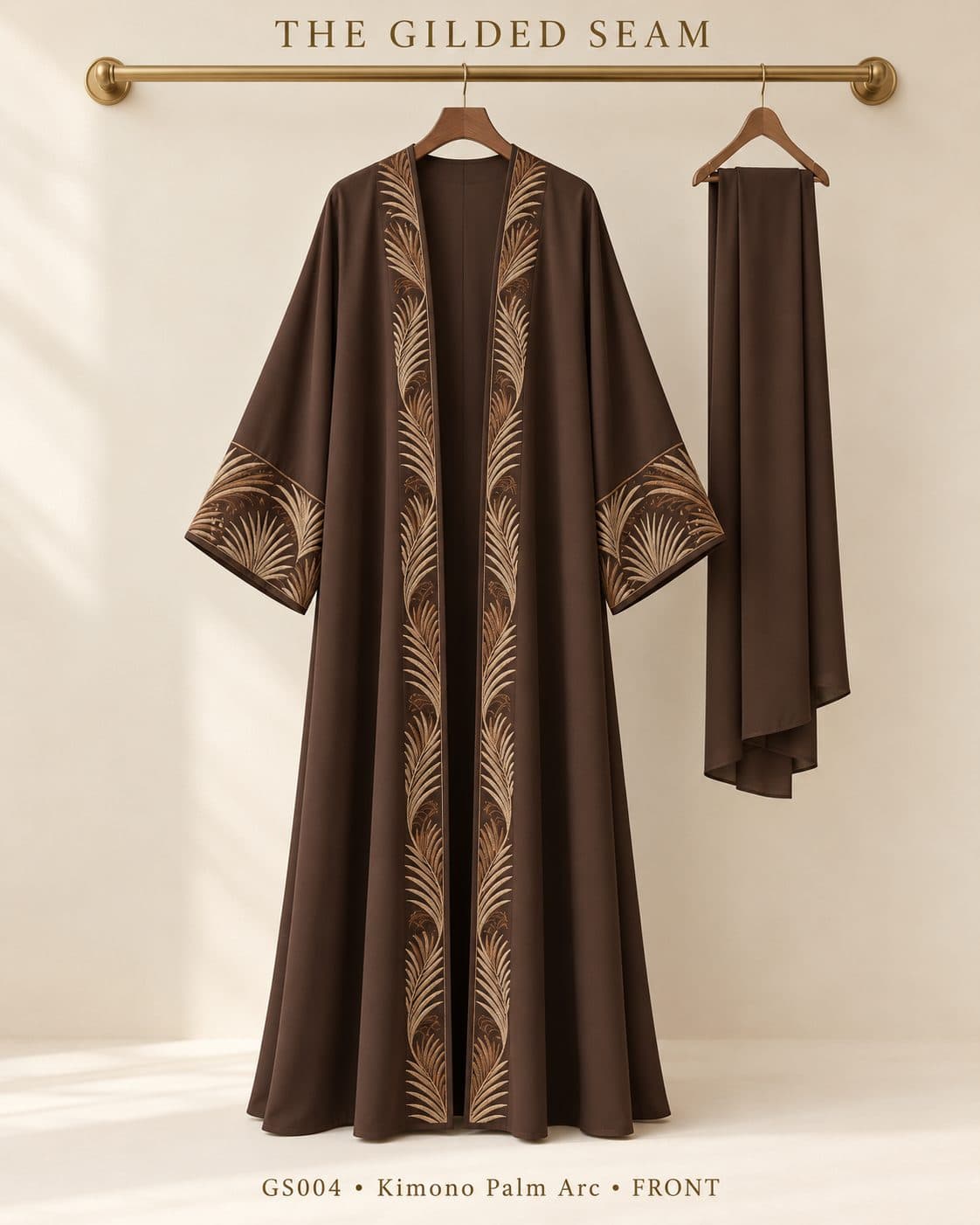
Palm Arc kimono abaya
An open-front kimono abaya in chocolate brown, embroidered with gold and bronze palm fronds down both front edges and around the sleeve cuffs. Comes with a matching scarf.
- Kimono cut
- Open front
- Palm frond embroidery
- Matching scarf
- Nida, crepe or chiffon
More guides
- Hand embroidery vs machine embroidery on an abaya
- A guide to Arabic calligraphy on modest clothing
- Embroidery or printing on a hoodie: which to choose
- Choosing embroidery placement for a suit, piece by piece
- Embroidery on organza: crisp, sheer and delicate
- What is jaal embroidery? All-over patterns explained