Embroidery and fancy work · 8 October 2026 · 3 min read
Where to place embroidery if you wear a hijab
Kurta embroidery with a hijab: why neckline work often disappears under the scarf, and how sleeves, the lower front and the hem can carry the detail instead.
 Inspiration
Put the work where the scarf stops
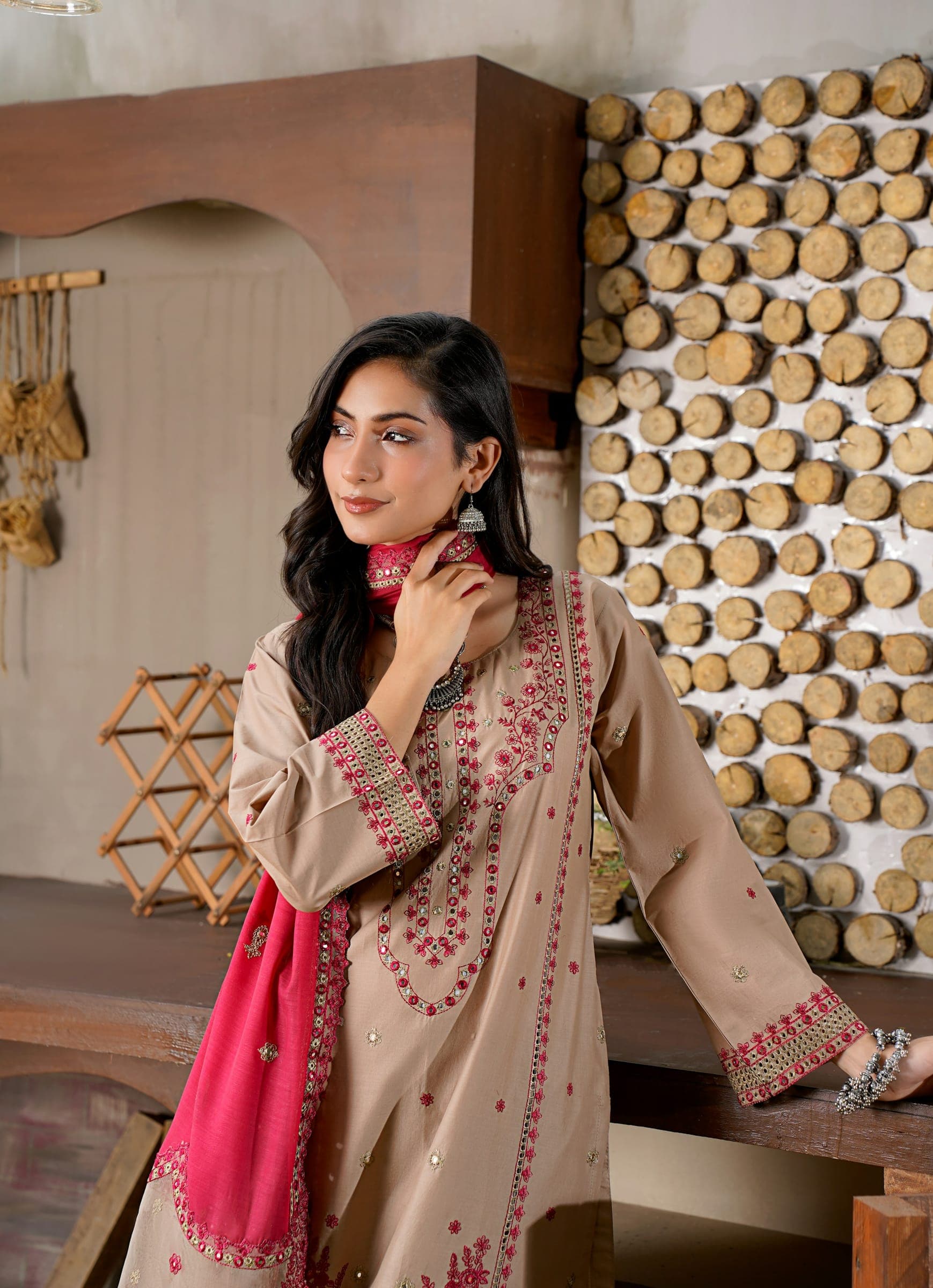
If you wear a hijab, the embroidery that people actually see is usually on the sleeves, the lower half of the front and the hem, so that is where most of the work should go. A neckline that took hours to embroider is often hidden the moment the scarf goes on, and you end up paying for detail that only shows in the mirror before you leave the house.
That does not mean the neckline has to be bare. It means you decide, before the design is agreed, which parts of the outfit are on show when you are dressed the way you normally dress.
Check where your scarf really falls
Scarf styles vary a lot, so look at yourself rather than at a rule. Put on a kameez you already wear, style your scarf as you usually do, and stand side on to a mirror. Note the lowest point of the scarf at the front, how far it covers the shoulders and whether it sits over the upper back.
A neatly wrapped hijab often covers the neck and the top of the chest only. A longer khimar or a wide dupatta worn over the head and shoulders can reach the bust or below, and covers the sleeve heads too. If you change between styles, plan for the one that covers most.
Placements that stay on show
These areas are rarely covered by a scarf, and each can carry anything from a fine line of thread to fuller work. The general guide to embroidery placement explains how each zone reads; here is how they work with a hijab.
- Lower sleeves and cuffs. Your hands are always in view, so a worked cuff or a band above it gets noticed. On full sleeves the work can climb towards the elbow on the outer arm.
- The lower front panel. A motif or panel that starts below the bust line sits below most scarves and draws the eye down the length of the kameez.
- The hem or daman. A border at the hem is always visible, and on a long kameez it balances the length nicely.
- The side slits. Work tracing the edges of the side slits shows when you walk and stays clear of the scarf altogether.
- The trouser hem. A little matching work at the ankle ties the outfit together from top to bottom.
Pins, brooches and snags
Where the scarf touches the kameez, texture matters as much as looks. Raised metallic thread, beads and sequins under a scarf pin can catch the scarf fabric, pull threads in chiffon or jersey and loosen the stitching on the kameez. A pin pushed through the scarf near the shoulder also tends to land on whatever embroidery is there.
If you want some detail near the neck, keep it flat and smooth: fine thread work, tonal colours or a neat piped edge rather than anything raised. Leave the area where you usually pin plain, and let the scarf slide freely over it.
Asking for a hijab-friendly layout
In your quote notes, say that you wear a hijab and roughly where it falls, for example “scarf covers to mid chest, so please keep the neckline simple and put the detail on the sleeves and hem”. Choose an embroidery level that suits the occasion; the three levels are explained here. Our modest dressing guide covers sleeves and lengths that go with this kind of layout.
Embroidery is added on outfits we stitch, or on your own fabric or garment through custom embroidery. Describe the look or send a photo when you start a design quote, and we confirm what is possible on your fabric and design in the written quote.
Common questions
Will sleeve embroidery wear out under a coat or abaya?
Flat thread work copes well with an outer layer on top. Raised or metallic work on the forearm rubs against coat linings, so if you often wear a coat or abaya over the kameez, keep the sleeve work flatter and lighter.
Can I have neckline work for days when I wear the scarf loosely?
Yes. Ask for a light, flat neckline detail as well as the main work lower down. It shows on days the scarf sits back and does no harm when it is covered.
Which embroidery level suits an everyday hijab-friendly kurta?
Delicate work on the cuffs and a small motif or border lower down usually feels right for daily wear. Keep fuller work for Eid and gatherings, where a wider hem border or worked sleeves have more room to show.
More guides
- Choosing embroidery placement for a suit, piece by piece
- Embroidery on organza: crisp, sheer and delicate
- What is jaal embroidery? All-over patterns explained
- Types of lace for suits: names, looks and uses
- Embroidered trouser hems: what a paincha can carry
- What is kantha embroidery? Running stitch explained