
Fit, measuring and alterations · 8 October 2026 · 4 min read
Why does my kameez gape at the back of the neck?
Back neckline gaping on a kameez comes from posture, a back neck cut too wide or extra length above the shoulder blades. How to tell which, and what to ask for.
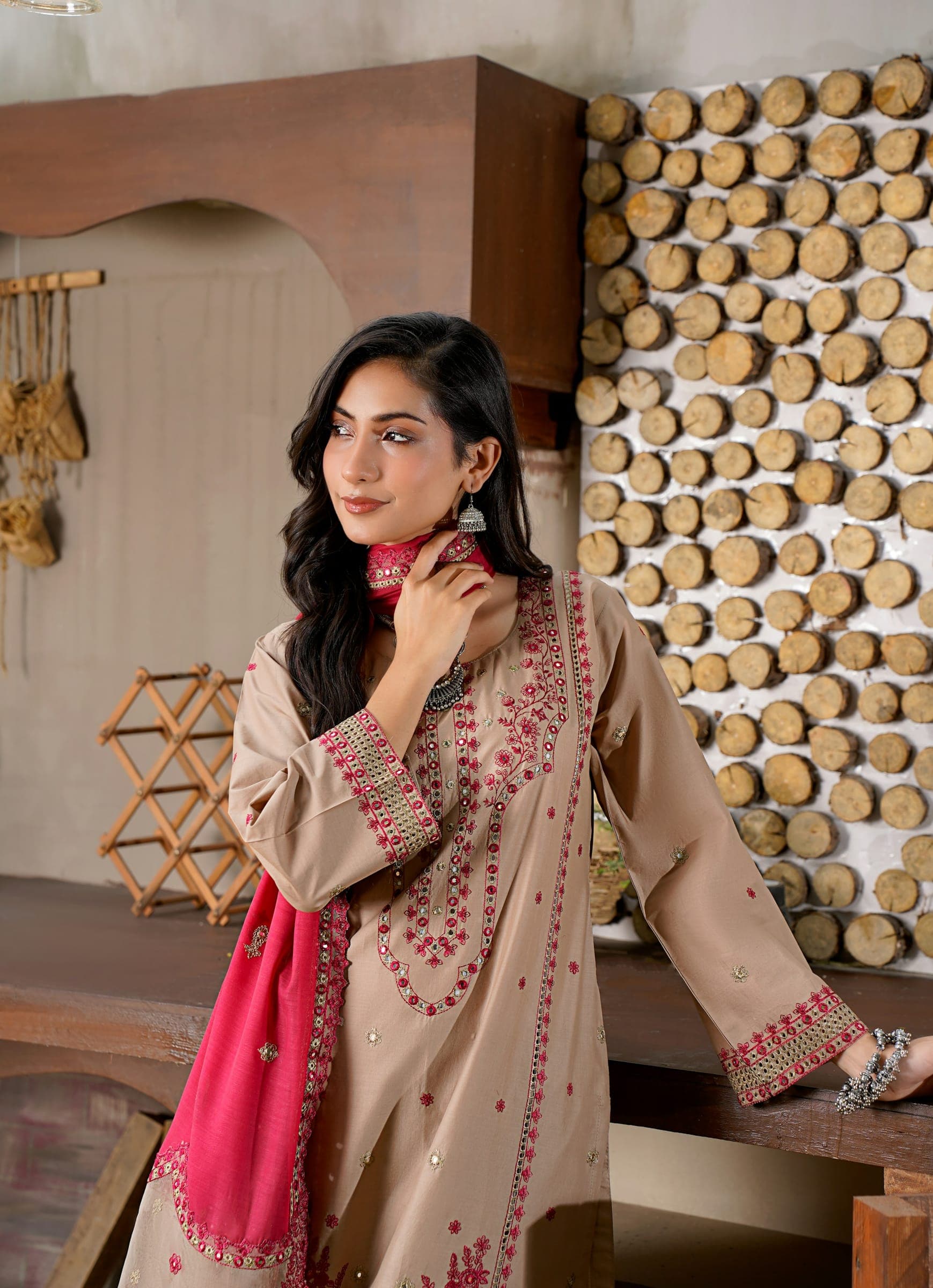 Inspiration
Three usual causes
A kameez gapes at the back of the neck for one of three reasons: the way you stand carries your neck forward of the neckline, the back neckline was cut wider or deeper than your neck needs, or the back has more length between the neck and the shoulder blades than your body uses. Each one leaves a slightly different clue, and each one is solved by a different note on your next order rather than by going up or down a size.
This article is only about the back. A gap at the front, or a neckline that slips sideways, has other causes; for those, our guide to armhole and shoulder problems is a better starting point.
Reading the gap in a mirror
Put the kameez on, stand as you normally would (not as straight as you can manage) and take a photo of your back and one of your side with a phone on a timer. Then compare what you see with the list below. Many people have a mix of two, which is fine: you simply mention both.
- The collar or neckline stands off the neck, but the shoulders lie flat: your head and neck sit a little forward, so the garment hangs behind them. Very common in people who spend long hours at a desk or a phone.
- The opening looks too big all round, and the shoulder seams creep outwards: the back neck is simply cut too wide for your neck.
- A soft horizontal fold or bubble sits a hand’s width below the neckline: there is more fabric between the neck and the shoulder blades than your upper back needs, so it buckles and lifts the edge.
- The gap appears only when you wear a dupatta or heavy front work: weight at the front is pulling the whole kameez forward.
Why posture changes the back neckline
A pattern is drafted for an average upright stance. When the neck leans forward even slightly, the front of the garment has to travel a shorter distance and the back neckline is left behind. On a band collar this is obvious, because the stiff band stands out like a little wall; on a plain round neck it shows as a curve of skin between the edge and your nape.
The answer is not to make the neckline smaller, which can feel tight at the front. A tailor reshapes the back instead, bringing the back neck point up and closer to the neck. That is why a side photo is so useful: it shows the angle of your neck, which no tape measure records.
What to measure and write down
If you have a kameez whose back neck sits well, it is worth more than any figure: lay it flat and measure the width of the back neck opening and how far it dips below the shoulder seams, as in using a kameez that fits as your template.
Otherwise, a soft tape and a second pair of hands will do. Our measuring help page shows the basic method, and these are the figures and notes that matter for the back of the neck:
- Nape to waist: from the bone at the base of the back of your neck straight down to your natural waist.
- Back neck depth you want: how far below that bone the neckline should sit, or “close to the neck” if you prefer.
- A posture note: for example “head sits slightly forward” or “upper back very straight”.
- The style: band collar, round neck or a deeper back design, because each needs a different shape at the back.
Putting it on your order
On a custom stitching order, add the measurements above to your notes along with the two photos. The design and measurements are agreed in writing before cutting, so you will see your back neck details in the quote and can correct anything before work starts. If you are choosing a neckline at the same time, the band collar page explains why collars are the least forgiving shape at the back.
When you are ready, request a quote and mention that the last kameez stood away at the back. That single line tells us where to look.
Common questions
Will a smaller neckline stop the back from gaping?
Not usually. If the cause is posture or extra length in the upper back, a smaller opening just feels tighter at the front while the back still stands away. The back needs reshaping, which is a pattern change made before cutting.
Does a band collar gape more than a round neck?
It shows more. A band collar is stiff and stands upright, so any gap at the back is easy to see. A round neck in a soft fabric can lie closer even when the shape underneath is not quite right.
Can a dupatta cause the back neck to lift?
It can. A heavy dupatta worn over the front, or dense embroidery on the front panel, adds weight that pulls the kameez forward. Pinning the dupatta at the shoulder or choosing lighter front work often helps.
