
Styles and design · 8 October 2026 · 4 min read
Closed-side kameez: does it work with no slits at all?
A kameez without slits works when the hem is wide enough to walk and sit in, as on short, A-line and flared cuts. When it does not, a covered slit gives the room.
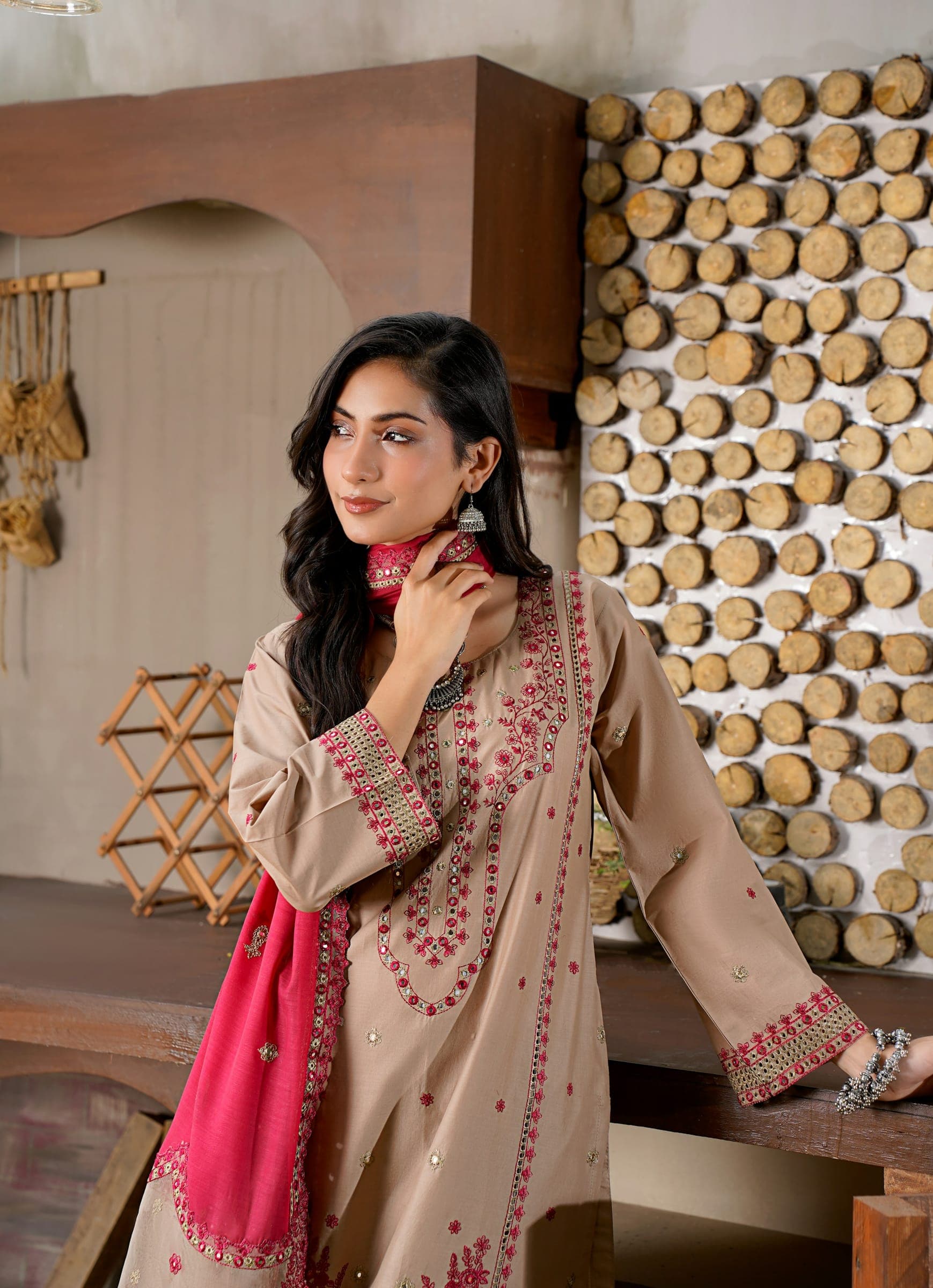 Inspiration
Yes, if the hem gives you room
A kameez with no slits works well when its hem is wide enough to walk and sit in: short kurtis, A-line and flared cuts, and frock styles. A long, straight kameez with closed sides usually does not, because the hem has to pass round both legs mid-stride. For that shape, a covered slit with a panel behind it, or a pleat at the side, gives the closed look with the room you need.
What slits are actually for
A straight kameez is cut close to the hip measurement all the way down. Standing still, that is fine. Take a step, climb a stair or sit down and the distance round your legs at hem level grows, and the slits open to make up the difference. The longer the kameez, the lower the hem sits on your legs, and the more extra width a step needs at that height. That is why a hip-length kurti can do without slits while a calf-length straight kameez almost never can.
Cuts that work closed
These shapes build the extra width into the hem itself, so slits become optional:
- Short kurtis and tops ending at or just below the hip.
- The A-line kameez, which widens steadily from the underarm to the hem.
- The kalidar frock and other panelled flared cuts.
- Peplum tops, where the flare starts at the waist.
- Gently flared tunics in soft, draping fabric.
Walking and sitting in a closed straight cut
If a straight kameez is made without slits and without extra width, a few things happen. The hem rides up and bunches across the hips when you sit. Your stride shortens, which you notice on stairs and getting into a car. The side seams near the hem take the strain and may start to pull. Lighter, stretchier fabrics hide this a little; crisp cotton and khaddar show it straight away.
A simple test before ordering: stand with your feet apart in a natural long step, and measure round both legs at the height where the hem will end. The finished hem needs to measure more than that, with some room to spare, to move freely. If it does not, the cut needs flare, a panel or slits. Our guide on ease explains how much room a kameez usually carries, and kameez length for your height shows where a hem tends to fall.
The covered slit and other in-between options
If you like the line of a straight kameez but want no skin or trousers showing at the sides, there are ways to keep the room. Send a photo or describe the look, and we confirm what suits your fabric and design in the written quote.
- Covered slit: an ordinary slit with a panel of fabric set behind it, in a matching or contrast colour, so it opens as you move but shows only fabric.
- Side pleat: an inverted pleat folded into each side seam near the hem, closed when you stand and open when you walk.
- Side panel: a flared wedge of fabric set into each side seam from the hip down.
- A short slit: a few centimetres only, enough for comfort without the look of a full chaak.
- A back vent: a single slit at the centre back, if you prefer the sides closed.
Putting it in your order
Say in your notes that you want closed sides and which option you prefer if a straight cut needs room; the choices for slit height and finish are in our chaak and side slits guide. Panels and flare use more fabric, so mention it early if you are sending your own. With custom stitching, you can send your design with a reference photo and it is agreed in writing before cutting.
Common questions
Is a closed-side kameez more modest?
It shows less at the sides, but a covered slit or a side pleat gives a very similar look while leaving room to move. Many people find those more practical for a long kameez.
Does a no-slit kameez need more fabric?
Only if the room comes from flare, panels or pleats, which all add width at the hem. A short kurti without slits needs about the same fabric as one with them.
