Embroidery and fancy work · 8 October 2026 · 3 min read
Does embroidery change how a kameez fits and hangs?
Does embroidery make fabric stiff? Dense work does: it adds weight, removes give and changes how a kameez hangs. Where it matters and what to mention when ordering.
 Inspiration
Yes, when the work is dense
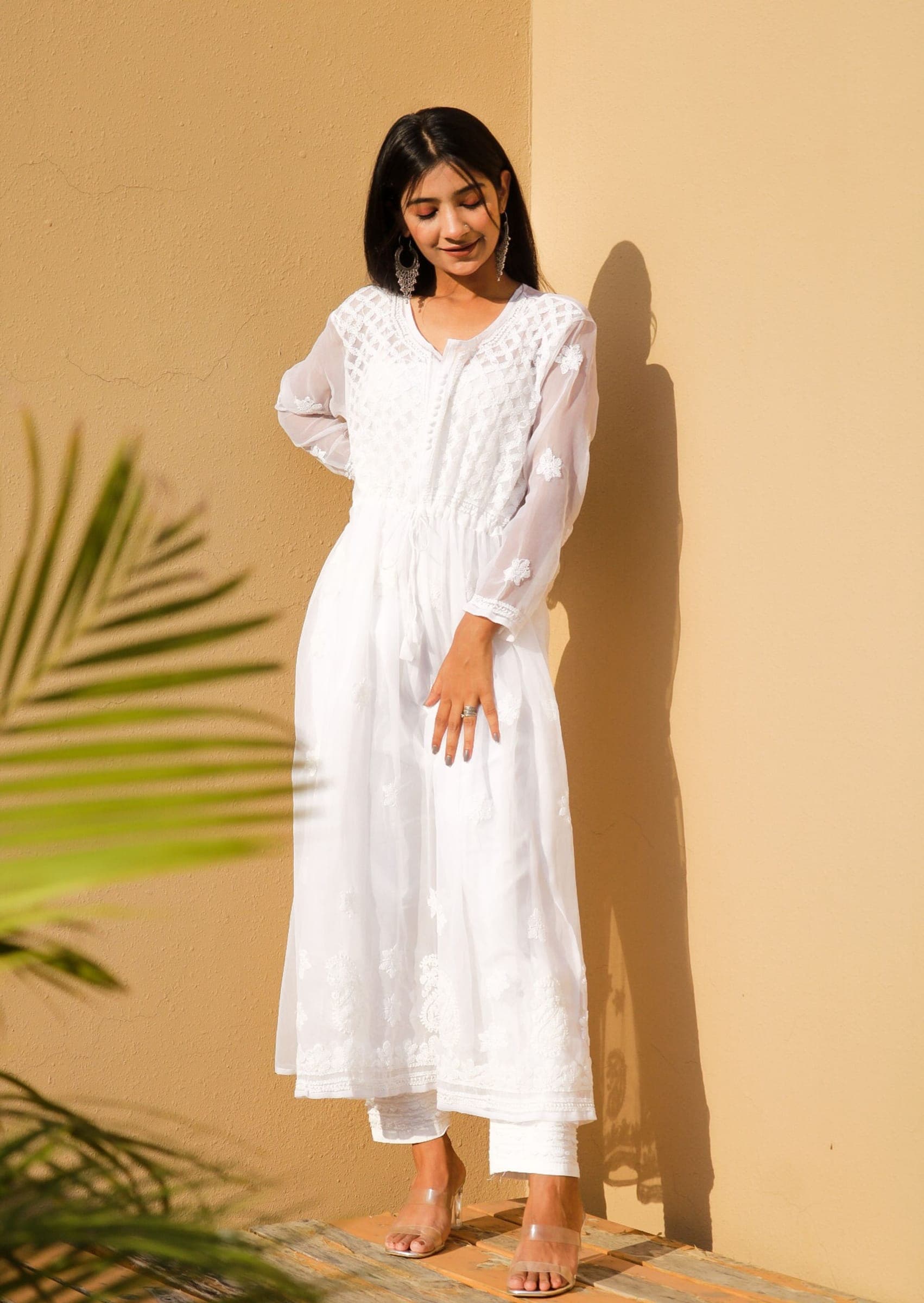
Dense embroidery makes fabric stiffer and a little heavier, so a heavily worked area has less give, hangs more rigidly and can change how the kameez sits on you. Light or scattered work, such as a few small motifs or a fine line at the cuff, makes almost no difference. The more of an area that is covered in stitches, the more it behaves like a different fabric.
What stitches do to cloth
Every stitch locks the threads of the weave in place, so they can no longer shift and stretch slightly the way plain cloth does. Fill stitches pack thread on top of the fabric, adding thickness and weight. Machine work is often done over a backing or stabiliser, and some of it may stay behind the design, which stiffens it further. Metallic threads, beads and sequins add more weight again.
On a firm fabric such as karandi or raw silk, the change is modest. On soft lawn, chiffon or georgette it can be striking: the worked part stands away while the rest of the cloth falls softly.
Where you will notice it
The effect depends on where the work sits, and each zone behaves a little differently.
- Across the chest. A densely worked front panel loses the small amount of give a plain front has. A close cut that feels fine in plain cloth can feel snugger when the front is fully worked.
- At the neckline. A stiff worked neckline can stand away from the neck or press against it, and the reverse of the stitches may scratch.
- At the hem. A heavy border weighs the hem down, so an A-line or flared kameez hangs straighter and swings more. On a cut with curved or bias edges, the weight can drop the hem a little over time.
- On the sleeves. Fully worked sleeves bend less easily at the elbow and are harder to push up the arm.
What to mention when you send measurements
Measure your body exactly as you normally would; the measuring method does not change. What helps is telling us how the outfit will be worked and how you like it to feel. Our guide to ease explains the room a kameez needs, and measuring help covers the method.
- The embroidery level and where it goes, especially across the chest or at the hem.
- Whether you like the bust and waist close or relaxed.
- Whether you push your sleeves up when you work or cook.
- How you want the hem to move: crisp and straight, or with some swing.
- If you supply the fabric, what it is and how heavy it feels.
Planning around it
Dense work suits firmer fabrics and cuts that do not rely on stretch. If you love a soft, floaty fabric, lighter work keeps its drape. When you request custom embroidery or a stitched outfit, describe the look and send a photo; we confirm what is possible on your fabric and design, and how it affects the cut, in the written quote. Start a quote here.
Common questions
Does light embroidery change the fit?
Hardly at all. A few small motifs or a narrow band leave most of the cloth free to move, so the kameez fits and hangs much as it would plain.
Should I measure differently for an embroidered outfit?
No. Take your body measurements in the usual way and describe the embroidery and how you like the fit to feel. Any allowance for dense work is a design decision agreed before cutting.
Will a heavy border stretch my hem over time?
On a firm, straight hem it usually holds its shape. On soft fabric or curved edges the weight can drop the hem slightly, so store such pieces folded rather than hanging for long periods.
More guides
- Choosing embroidery placement for a suit, piece by piece
- Embroidery on organza: crisp, sheer and delicate
- What is jaal embroidery? All-over patterns explained
- Types of lace for suits: names, looks and uses
- Embroidered trouser hems: what a paincha can carry
- What is kantha embroidery? Running stitch explained