Embroidery and fancy work · 8 October 2026 · 3 min read
Can you embroider over a printed fabric?
Embroidery on printed fabric can look lovely if it picks out the print, takes thread colours from it and stays light on busy patterns. Here is what to ask for.
 Inspiration
Yes, with a few conditions
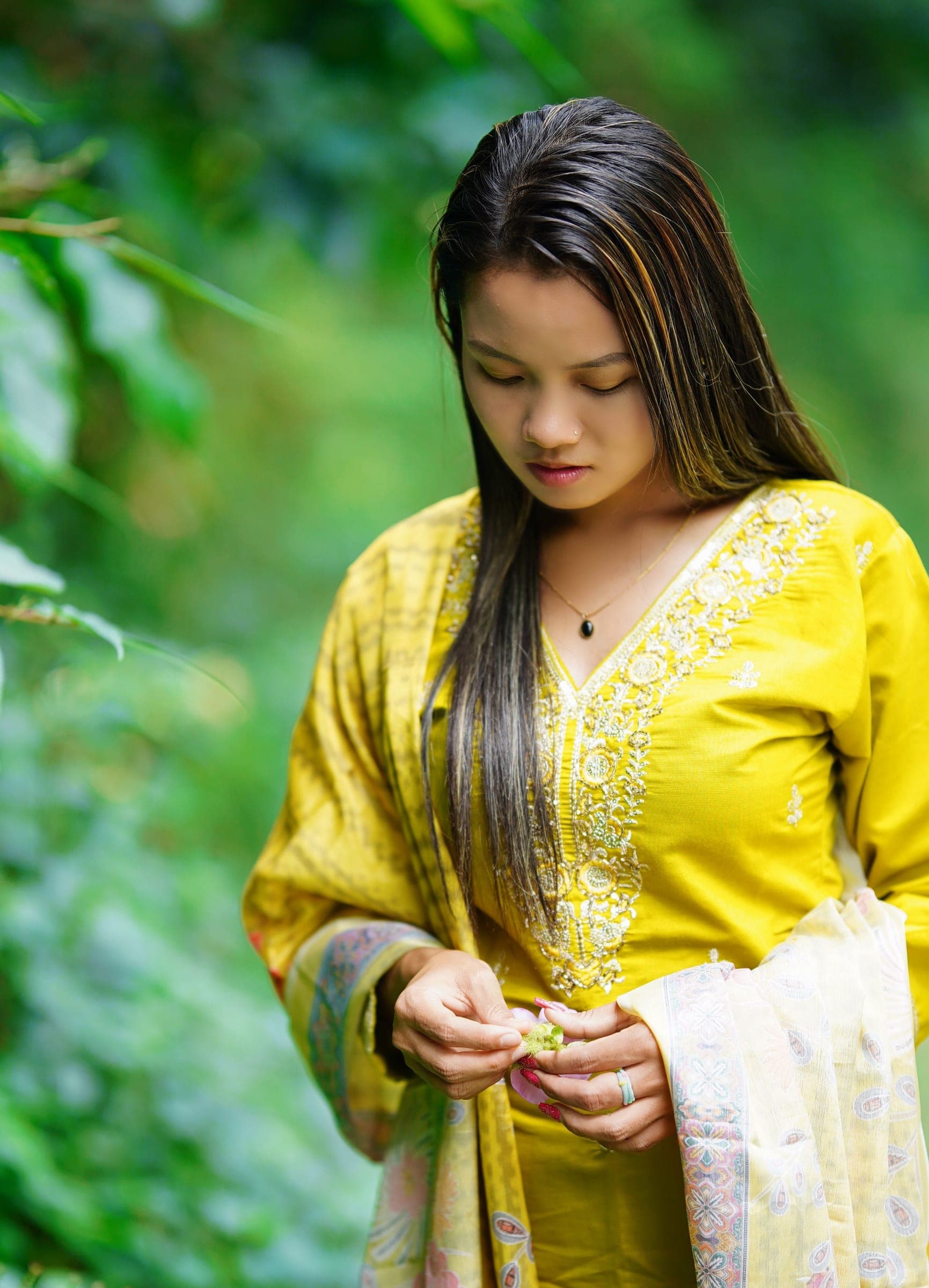
You can embroider over a printed fabric, and done well it adds texture and depth that print alone cannot. It works best when the stitching picks out parts of the print rather than fighting it, uses thread colours taken from the print itself, and stays light on busy patterns where heavy work would simply get lost.
Printed lawn and cotton suits are a common starting point, and our comparison of printed and embroidered unstitched suits shows why many people end up wanting a bit of both.
Ways to work with a print
The print already gives you a design, so the embroidery can follow it. Some approaches that sit naturally:
- Outlining: a fine line of stitching around selected flowers or shapes makes them stand forward.
- Filling centres: stitching just the hearts of printed flowers, or a few leaves, adds texture in small doses.
- Highlighting a border: many printed suits have a printed border at the hem; embroidering along it turns a flat band into a raised one.
- A worked neckline over the print: embroidery at the neck, kept within the printed motifs nearby, frames the face.
- Small scattered accents: a few knots, dots or small sparkles on chosen motifs, spread across the front.
Choosing thread colours
The safest palette is the print’s own. Pick one or two colours that already appear in it, usually a darker shade for outlines and a brighter one for highlights. Tone-on-tone thread, matching the ground colour, adds texture without adding colour at all, which suits a very busy print.
A fully contrasting thread can work on a simple, open print, but on a crowded one it tends to look like a mistake rather than a choice. Gold or silver thread is the exception many people like, because metal reads as a separate layer of shine rather than a new colour.
When to hold back
Busy, small-scale prints swallow embroidery. If the pattern is dense, keep the work to one area, such as the neckline or the hem, and let the rest of the print speak. Larger, more open prints, or prints with plain areas between motifs, give embroidery room to be seen.
The print method matters too. Digital prints on smooth synthetic fabrics show every needle hole if stitching is unpicked, while block-printed cotton is more forgiving. Our guide to block, digital and screen prints explains the difference. Printed motifs are also not always perfectly straight on the grain, so embroidery that follows the print may sit very slightly off the line of the garment.
Asking for embroidery on a print
Send a clear daylight photo of the print, and mark or describe which motifs you want worked and in which colours. If the fabric is an unstitched suit you already have, it can come to us through Stitching Only with embroidery agreed as part of the design, or on its own for embroidery on your own fabric. We confirm in your written quote what is possible on your fabric and design. Ask for a Stitching Only quote to begin, and see pairing printed and plain pieces for the rest of the outfit.
Common questions
Will embroidery over a print look homemade?
Not if it follows the print closely and uses colours from it. Embroidery that ignores the print, or is placed at random, is what tends to look out of place.
Can the printed dupatta be embroidered as well?
Often, yes. A few motifs picked out at the corners or along the edge tie it to an embroidered shirt without making it heavy.
Does embroidery on lawn need a backing?
Dense work on lawn usually needs some support behind it to stop puckering. Light outlining and small accents often need very little.
More guides
- Choosing embroidery placement for a suit, piece by piece
- Embroidery on organza: crisp, sheer and delicate
- What is jaal embroidery? All-over patterns explained
- Types of lace for suits: names, looks and uses
- Embroidered trouser hems: what a paincha can carry
- What is kantha embroidery? Running stitch explained