
Embroidery and fancy work · 8 October 2026 · 4 min read
Gold or silver embroidery: which suits your outfit?
Gold or silver embroidery? Choose by fabric colour, the jewellery you wear and the occasion, with antique and rose tones and when mixing metals works.
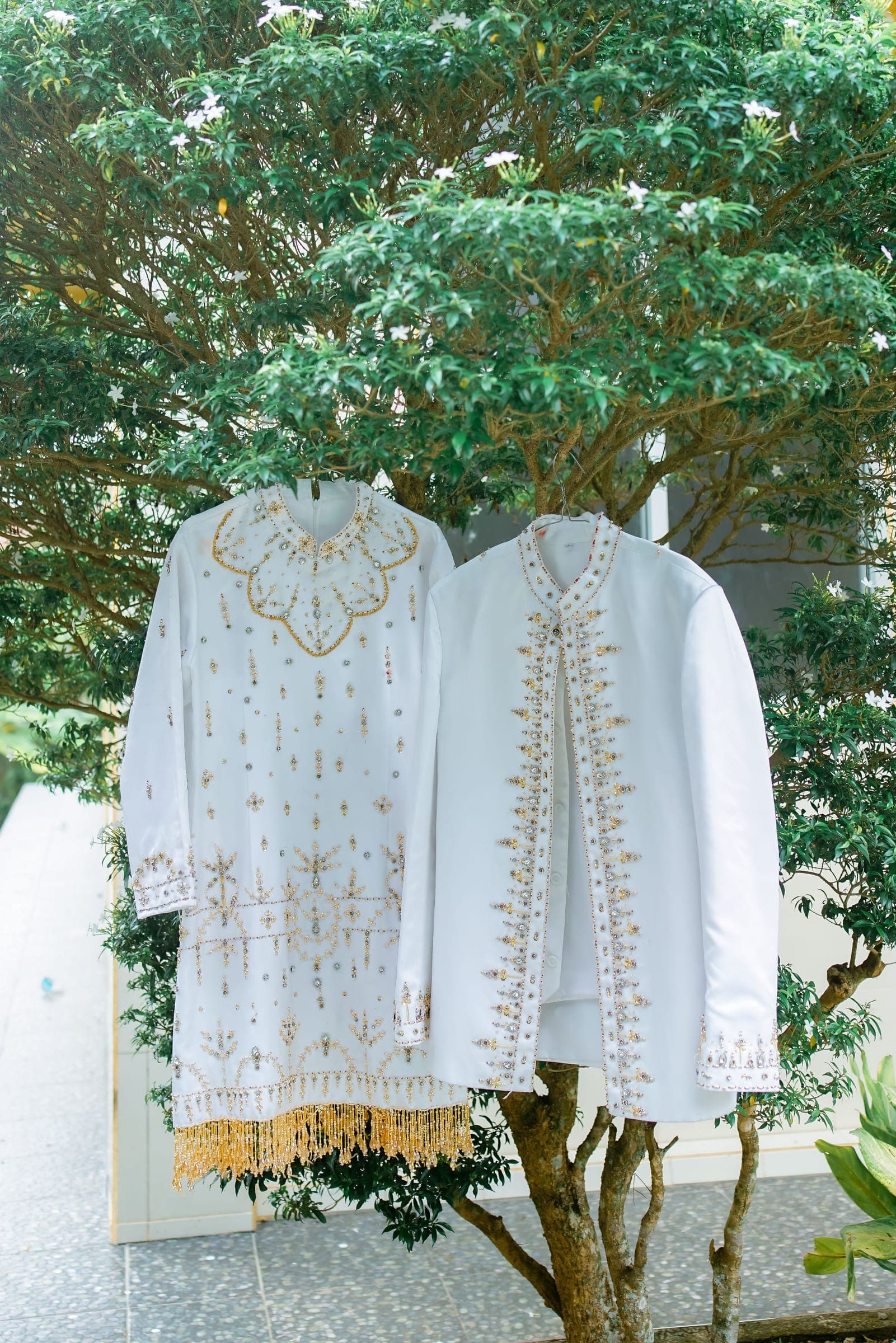 Inspiration
The quick answer
Choose gold embroidery for warm fabric colours and gold jewellery, and silver embroidery for cool colours and silver, white gold or pearl jewellery. On black, white, ivory and deep navy, either works, so let your jewellery and the occasion decide. Antique and rose tones sit between the two and are the easy choice when you are unsure.
The rest of this guide explains why, and how to describe the finish you want. It applies to any metallic work, whatever the technique.
Start with the fabric colour
If the fabric is printed, look at the print for a clue: a design with cream, mustard or coral in it wants gold, and one with grey or blue wants silver. Our guide to choosing colours that suit you covers the wider question of warm and cool shades. For plain fabric:
- Warm colours: red, maroon, rust, mustard, olive, bottle green, peach and cream lean towards gold, which shares their warmth.
- Cool colours: grey, ice blue, lilac, mint, cool pinks and pure white lean towards silver, which looks clean and crisp on them.
- Deep jewel tones: emerald, teal, plum and royal blue take either. Gold makes them richer; silver makes them sharper.
- Black and navy: gold looks classic and festive, silver looks modern and cooler.
- Pastels: bright yellow gold can overpower them. A pale champagne gold or a soft silver is gentler.
Antique, rose and other in-between tones
Metallic thread comes in far more than two shades. Antique gold embroidery is the most widely useful of them: it works across more fabric colours than bright gold and does not compete with jewellery. The tilla guide shows these shades on one kind of metallic thread, and our comparison of metallic work explains how the techniques differ.
- Antique gold: darker and browner than bright gold, with less yellow. It looks aged instead of shiny, flatters earthy and jewel colours and is forgiving in daylight.
- Light or champagne gold: pale and soft, a good partner for ivory and pastels.
- Rose gold and copper: pink or orange in tone. Lovely on blush, dusty pink, teal and grey.
- Antique silver or gunmetal: a darker, smoky silver that suits charcoal, black and deep blue and avoids the bright white flash of new silver.
Jewellery and occasion
Jewellery is the simplest test. If you wear gold every day and will not take it off, silver embroidery on a suit will always look slightly separate from you, and the same is true the other way round. Pearls, diamonds and white stones sit happily with silver and with pale gold. Coloured stones go with either.
The occasion sets the amount of shine. In daylight, bright metallic thread can look harsh, so matte, antique or light tones work for lunches, Eid mornings and the office. Evening light flatters a brighter finish, which is why gold on a deep colour is such a common choice for dinners and wedding guests. Silver on a pale fabric gives a cool, quiet look that suits summer events.
Can you mix gold and silver?
Yes. Gold and silver worked together is an old idea in South Asian metal embroidery, sometimes called ganga jamuni after two rivers that meet. It looks deliberate when both metals appear throughout the design, for example silver flowers with gold stems, and accidental when one small silver detail sits on an otherwise gold outfit. A mixed design also frees you to wear either kind of jewellery.
Putting it in a quote
Colour words are slippery, so combine a name with a picture. Write gold-tone, antique gold, rose gold or silver-tone in your notes, say whether you want it bright or matte, and attach a photo that shows the shade in daylight. Screens shift metallic colours, so a small difference between a photo and the thread is normal. Whether the embroidery is for an outfit we stitch or for your own fabric, we confirm what is possible on your fabric and design in the written quote, without promising a named technique in advance. See custom embroidery, and send your photos through the Send Your Design form.
Common questions
Does metallic embroidery tarnish?
Most metallic thread today is a synthetic film wrapped round a core, which holds its colour far better than real metal. It can still dull with perfume, perspiration and damp storage, so let outfits air before putting them away and keep them wrapped in cotton or tissue.
Which is more versatile, gold or silver embroidery?
Antique or light gold is usually the more versatile, because it works with warm and neutral fabric colours and most jewellery. If your wardrobe is mostly grey, blue and white, silver will earn its place more often.
Does gold or silver look better in photos?
Bright gold reads strongly on camera and can flare under flash. Silver can look white or grey in photos. Matte and antique finishes photograph closest to how they look in person.
More guides
- Choosing embroidery placement for a suit, piece by piece
- Embroidery on organza: crisp, sheer and delicate
- What is jaal embroidery? All-over patterns explained
- Types of lace for suits: names, looks and uses
- Embroidered trouser hems: what a paincha can carry
- What is kantha embroidery? Running stitch explained
